Tucked beneath one of Amsterdam’s most architecturally curious parking garages, Waterkant transforms an unlikely urban space into the city’s most beloved waterfront hangout. This Surinamese-inspired bar and restaurant occupies the canal-side edge of the Europarking on Marnixstraat, turning what was once a derelict homeless shelter into a vibrant cultural destination that pulses with tropical energy year-round.
The venue takes its name from the historic Waterkant waterfront in Paramaribo, Suriname’s capital. That original Waterkant is the oldest street in Paramaribo, a UNESCO World Heritage Site where colonial-era wooden buildings line the Suriname River and locals gather for food, drinks, and conversation. Amsterdam’s Waterkant channels that same spirit of communal hospitality, creating a pocket of Caribbean warmth along the Singelgracht canal.
From derelict shelter to destination venue
The catering team behind popular Amsterdam venues Bukowski Bar, Café Kuijper, and Maxwell opened Waterkant in August 2014. They transformed a forgotten corner beneath the Q-Park Europarking into an instant success. The parking garage itself carries architectural significance: designed by modernist architect Piet Zanstra and completed in 1971, its distinctive spiral-shaped access ramps have earned it the local nickname “de billen van Zanstra” (Zanstra’s buns). The building’s brutalist concrete forms an unexpected backdrop for Waterkant’s colorful, tropical aesthetic.
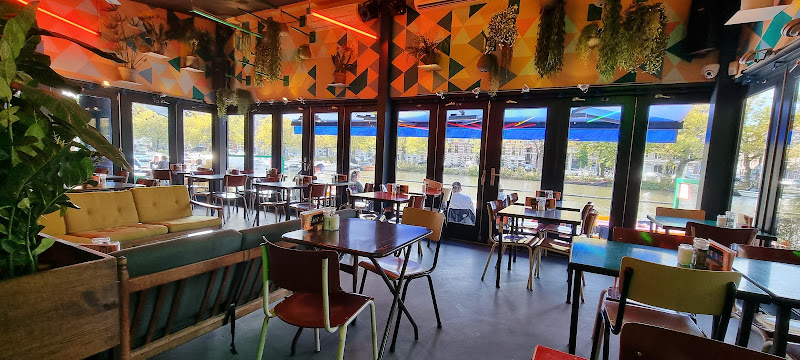
Amsterdam interior design studio Studio Modijefsky handled the transformation. Shipping containers create intimate spaces beneath the garage’s heavy concrete circles, providing warm winter refuge while maintaining the venue’s industrial edge. The concept maximizes outdoor terrace space during summer months, with colorful tables and benches stretching along the canal.
The Surinamese connection
The venue represents something deeper than casual hospitality. Over 350,000 people of Surinamese descent live in the Netherlands, with Amsterdam hosting the largest Surinamese population outside of Paramaribo itself. This diaspora traces to the colonial relationship between the two countries, which lasted from 1667 until Suriname’s independence in 1975. Mass migration occurred in the years leading up to and following independence, and Surinamese culture has become woven into Amsterdam’s identity.
Waterkant serves as a cultural bridge, introducing Surinamese flavors and hospitality to visitors while providing a gathering place for the local community. The menu draws from Suriname’s multicultural culinary traditions, which blend African, Indian, Indonesian, Chinese, and Dutch influences.
What to eat and drink
Surinamese cuisine reflects centuries of immigration and cultural exchange. At Waterkant, expect dishes like:
Roti with chicken or jackfruit served with potatoes, snake beans, and spicy masala sauce. Peanut soup, a creamy Surinamese comfort food staple. Bakkeljauw, salted codfish prepared with cassava, pickles, and Surinamese peanut sauce. Dirty Duck spring rolls filled with hoisin-glazed duck and cucumber. Pom, a traditional Surinamese casserole made with grated tayer root and citrus-marinated chicken.
The bar pours Parbo beer, Suriname’s national lager brewed in Paramaribo since 1955. Local brewery Brouwerij ‘t IJ created Biri specifically for Waterkant in 2017. This tropical lager, brewed with corn for extra refreshment, became so popular that it’s now available throughout the Netherlands. For those seeking something stronger, ginger mojitos and other tropical cocktails complement the food.
Terrace life on the Singelgracht
The massive waterfront terrace defines the Waterkant experience. On sunny days, the venue fills from midday through sunset with a diverse crowd: students sharing afternoon drinks, professionals unwinding after work, travelers seeking canal-side atmosphere, and locals returning to their favorite spot. Boats glide past on the Singelgracht, and the twin towers of the parking garage frame views across the water to Nassaukade.
The terrace operates year-round. Winter brings heated tents, warm drinks, and an intimate atmosphere that maintains the tropical spirit despite Dutch weather. String lights and colorful furnishings create Caribbean warmth regardless of the season.
Weekend club nights
Waterkant transforms after dark on Fridays and Saturdays. DJs spin hip-hop, Afrobeats, R&B, and dancehall from 23:00 until 3:00. The dance floor isn’t formal; people move wherever the music takes them. These club nights draw a young, international crowd and require no reservation or entry fee. The energy shifts from canal-side relaxation to full-on tropical party as the evening progresses.
Practical information
- Address: Marnixstraat 246, 1016 TL Amsterdam
- Opening hours: Sunday to Thursday: 11:00-01:00. Friday and Saturday: 11:00-03:00
- Contact: [email protected]
- Reservations: Not required for regular visits; contact [email protected] for private parties
- Payment: Cards accepted
- Accessibility: The venue is accessible from Marnixstraat via stairs near the Q-Park entrance; canal-side access from Nassaukade is not available
Getting there
From Amsterdam Centraal, tram 17 toward Osdorp brings you to the Marnixstraat/Leidseplein stop in roughly fifteen minutes. The venue sits a short walk south along Marnixstraat. Cyclists can follow the Singelgracht canal path directly; bike parking is available nearby.
The location surprises first-time visitors. Look for a small sign near the stairwell adjacent to the Q-Park. From Nassaukade, you can spot the venue across the canal but cannot access it from that side. Once you descend toward the water, the concrete surroundings give way to Waterkant’s colorful, welcoming atmosphere.
A gathering place for everyone
Waterkant’s tagline, “Fawaka,” comes from Sranantongo, the Surinamese Creole language. It translates roughly as “What’s up?” and captures the venue’s inclusive spirit. Origin, age, gender, and social class play no role here. The crowd reflects Amsterdam itself: locals and tourists, young and old, artists and professionals sharing tables and conversation.
For travelers seeking an authentic slice of Amsterdam’s multicultural character, Waterkant delivers something no canal cruise or museum visit can replicate. This is where the city relaxes, celebrates, and comes together over food and music from one of its most significant immigrant communities. The unlikely setting beneath a 1970s parking garage only adds to its charm; Waterkant proves that Amsterdam’s best experiences often hide in unexpected places.
Frequently asked questions
Do I need a reservation? Not for regular visits. Walk-ins are welcome, though popular sunny afternoons fill up quickly. Contact the venue directly for private events or large groups.
Is the venue dog-friendly? Yes. Dogs are welcome on the terrace, and you’ll often see locals arriving with their pets.
What’s the dress code for weekend club nights? Casual. The atmosphere stays relaxed and inclusive regardless of the hour.
Can I access Waterkant from Nassaukade? No. The only entrance is from Marnixstraat, via stairs near the Q-Park garage.
Is the food vegetarian-friendly? Yes. The menu includes vegetarian options like jackfruit roti and gado gado (Indonesian vegetable salad with peanut sauce), along with gluten-free choices.
What’s the best time to visit? Sunny afternoons offer peak terrace atmosphere. For a quieter experience, try weekday evenings. Friday and Saturday nights transform the venue into a club setting.