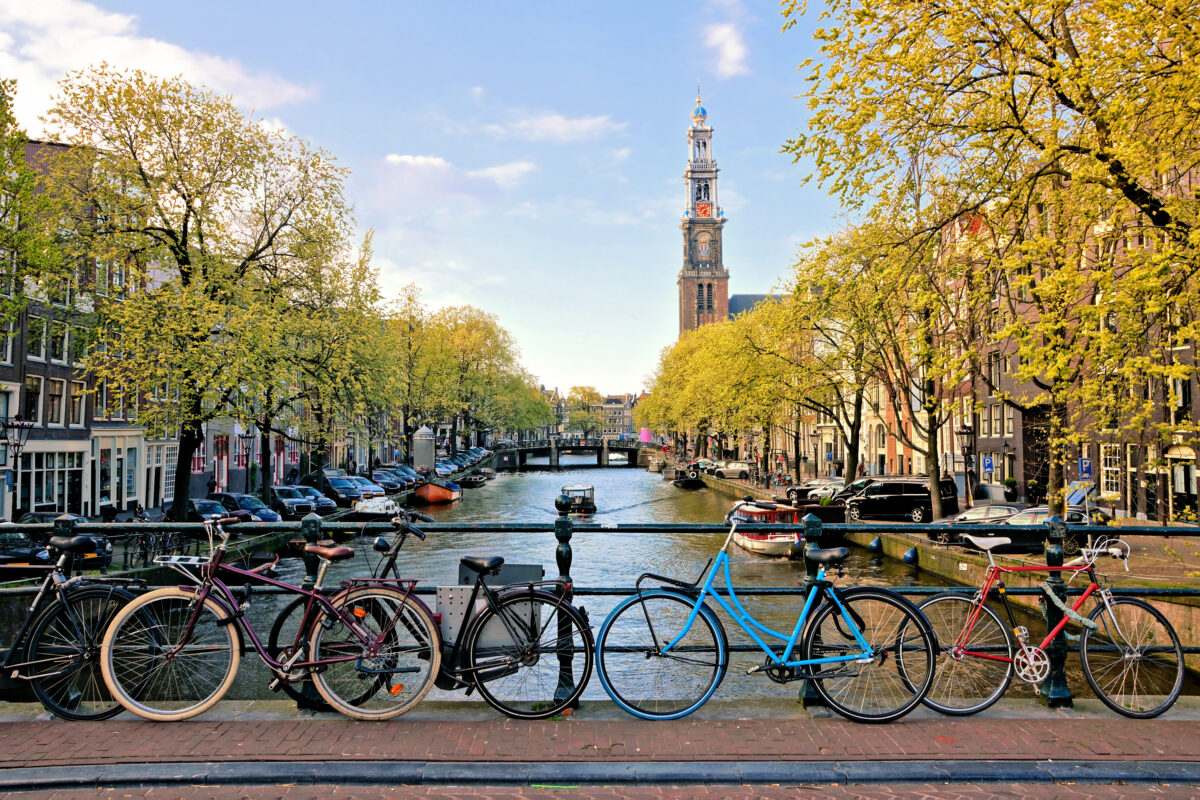
Depending on how you count, Amsterdam has hundreds of thousands of trees—I amsterdam cites 400,000+, while the city notes ~1 million overall (about 300,000 managed by the municipality). Either way, autumn doesn’t arrive here; it sweeps in.
Below are the precise corners, bridges, courtyards, and gardens locals actually use when the city turns copper and gold. Save this and walk it like a pro.
Quick‑glance route (90 minutes, on foot + tram if you like)
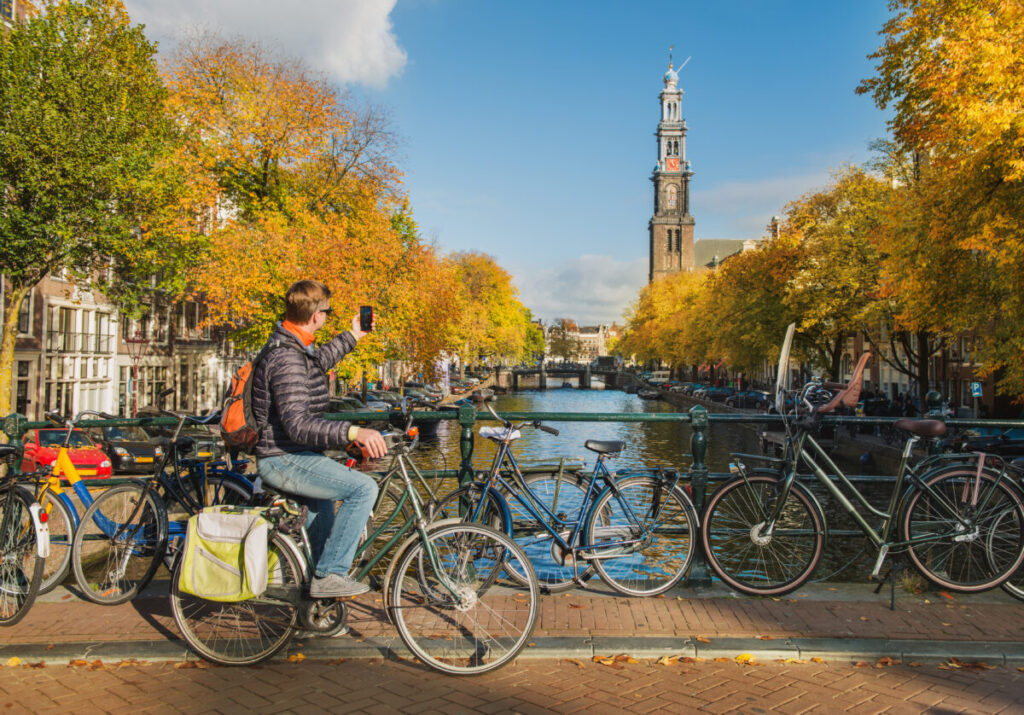
Begijnhof → Staalmeestersbrug (Monet view down Groenburgwal) → Reguliersgracht × Herengracht (Seven Bridges) → Amstelveld → Vondelpark Rosarium & Blauwe Theehuis loop. Add Amstelpark or Flevopark for a quieter, deeper leaf fix.
1) Lomanstraat (the tree‑tunnel street), Oud‑Zuid
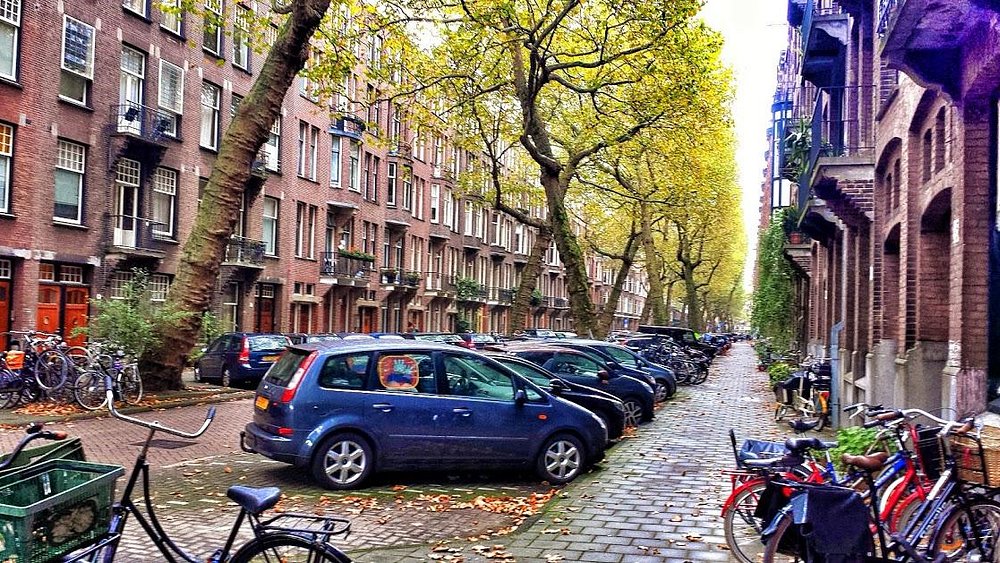
When the London plane trees lean in and lock branches, Lomanstraat becomes a glowing tunnel of leaves. It’s residential and wonderfully quiet—go gently and you’ll feel like the street is yours. Local photo nerds time it for early morning or golden hour in late October.
Where to stand: Mid‑block between Amstelveenseweg and Koninginneweg for the longest “cathedral” effect.
Why it dazzles in fall: Those planes blaze orange; the arch concentrates the color like stained glass.
Pro tip: Keep voices low, don’t climb façades or trees, and step aside for residents’ bikes—this is very much a lived‑in street.
2) Reguliersgracht × Herengracht (Seven Bridges view)
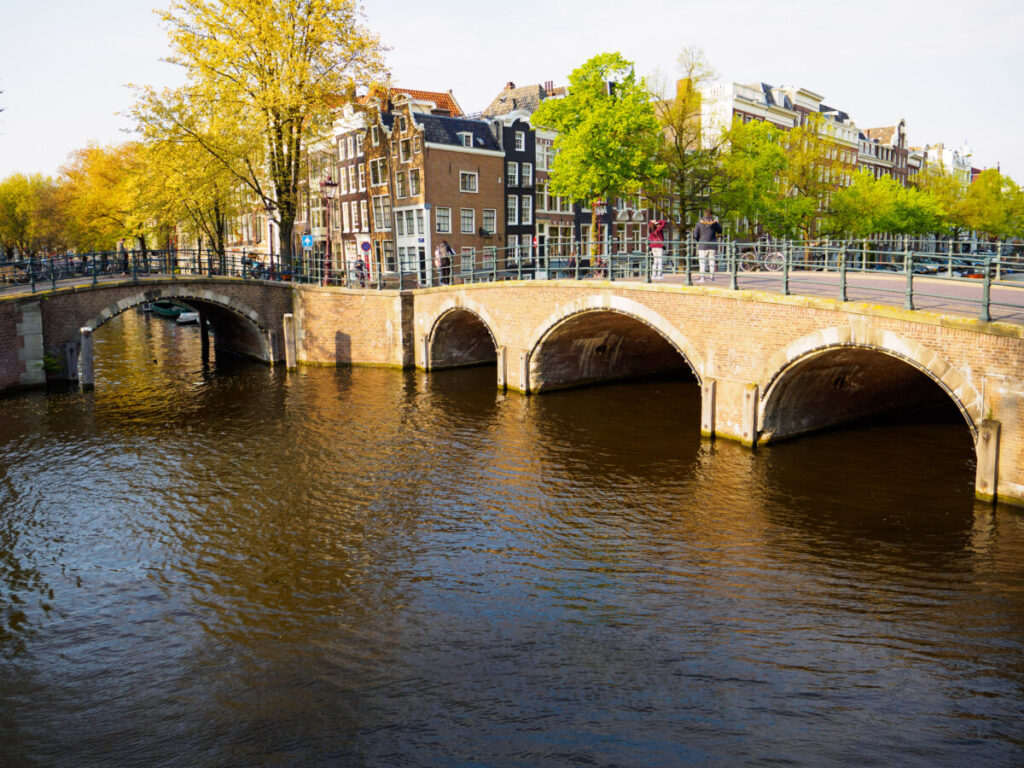
At this exact corner, look down Reguliersgracht and you’ll see the famed run of arched bridges. From street level, you’ll catch part of the stack; from a low canal boat, you see the full line‑up—arguably Amsterdam’s most cinematic fall frame.
Where to stand: Herengracht side of the intersection, facing southeast down Reguliersgracht; or grab an open‑top canal boat.
Why it dazzles in fall: Canal‑side trees flame yellow, and the brick arches layer into a golden corridor.
Pro tip: Arrive at sunset as bridge lights flick on and the water mirrors the foliage.
See Related: How to Visit Amsterdam on a Tight Budget: 8 Insider Tips From an American Local to Save Big
3) Groenburgwal from Staalmeestersbrug (Bridge 227)
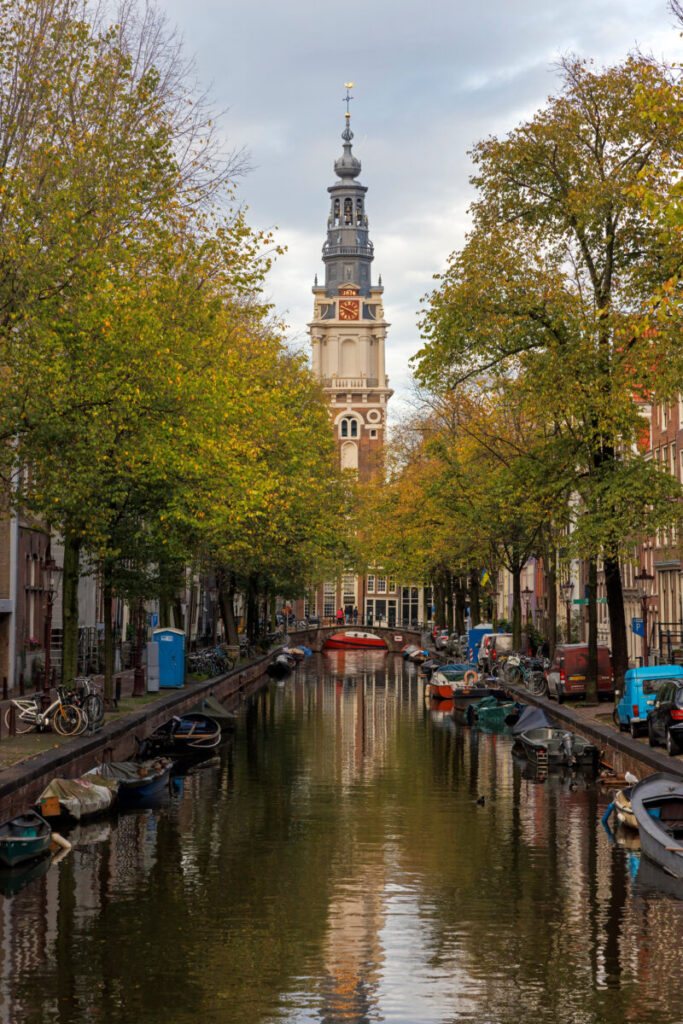
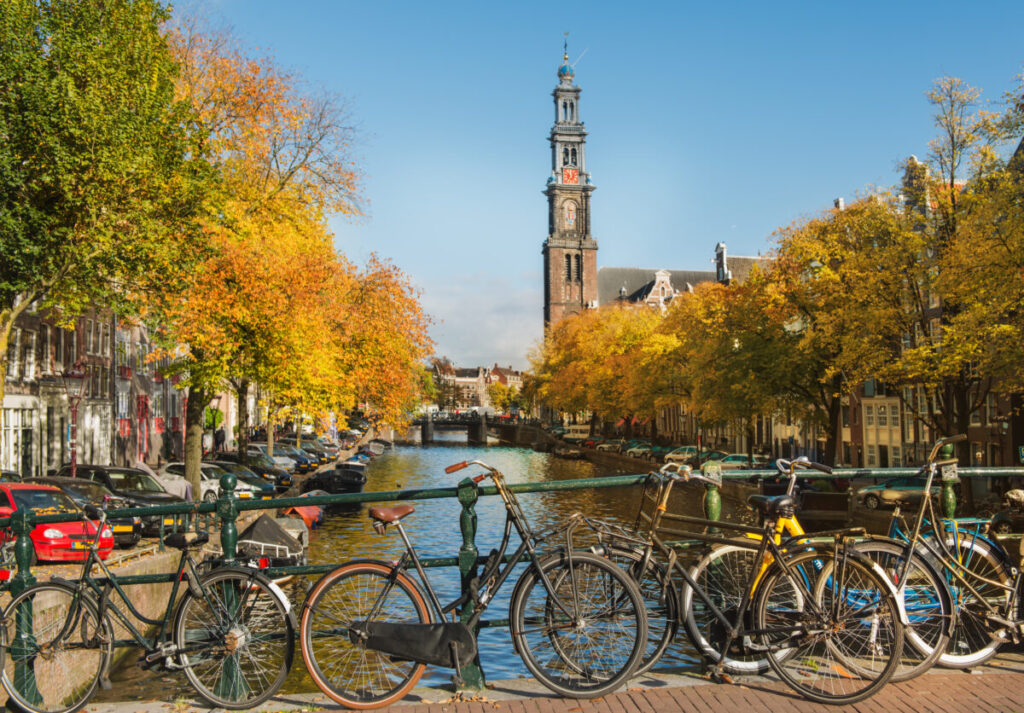
Stand on the white drawbridge on Staalstraat and look toward the Zuiderkerk: Monet painted this exact view. In autumn, canal trees warm to amber and the church tower sits like a bookmark at the end of a copper page.
Where to stand: Center of Staalmeestersbrug (bridge no. 227).
Why it dazzles in fall: Close‑planted canal trees frame the Zuiderkerk with leaf‑glow and reflections.
Pro tip: Cross back and forth—each side of the bridge gives a subtly different composition.
4) Begijnhof Courtyard Garden (Spui)
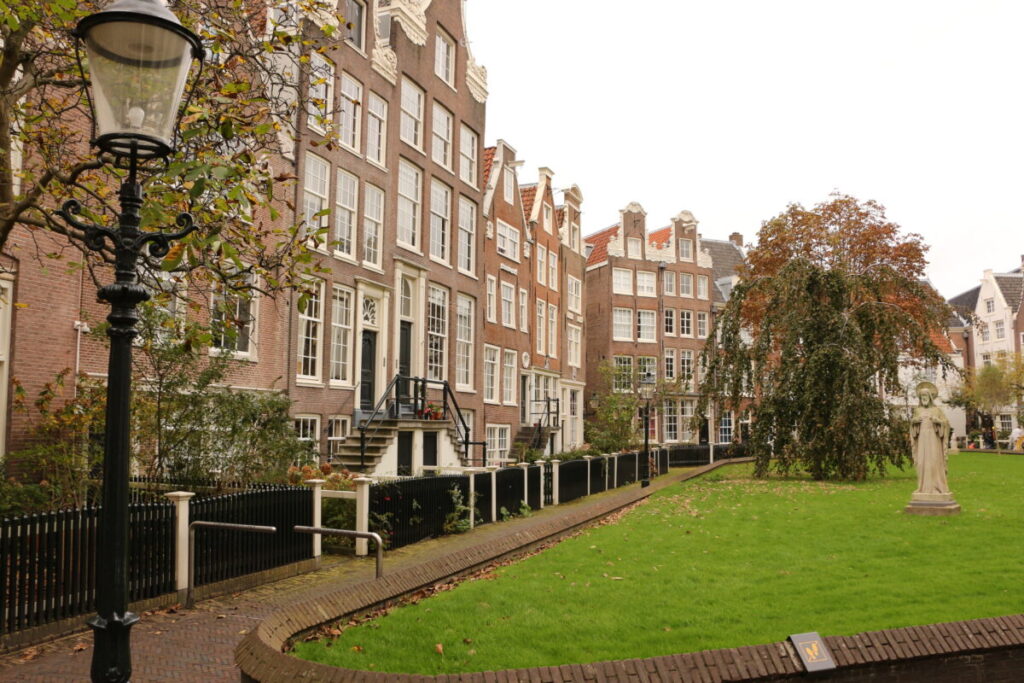
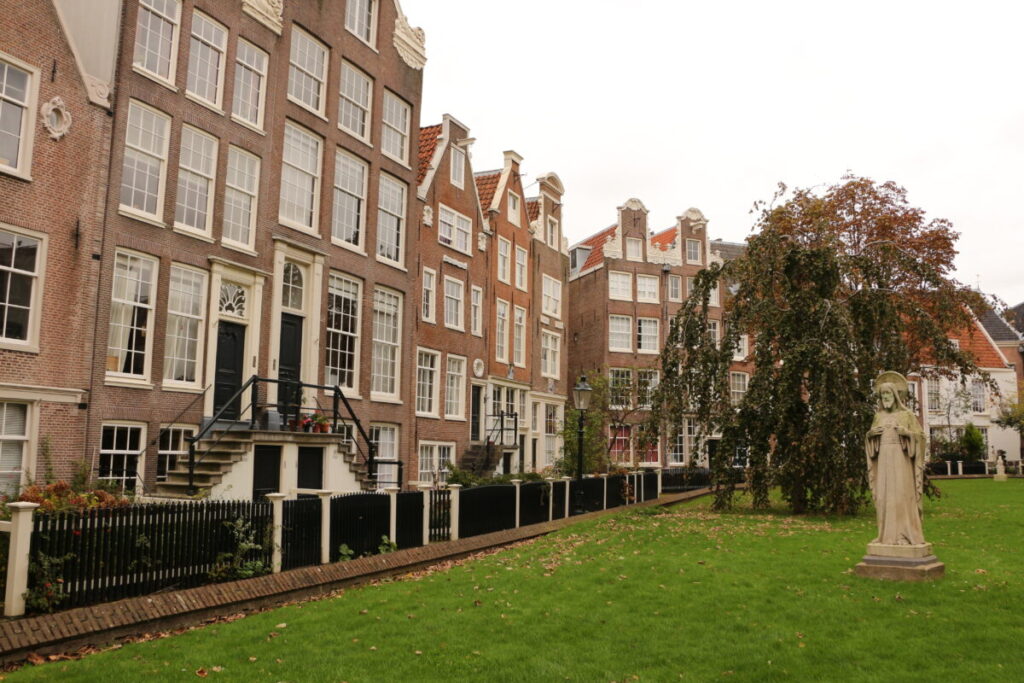
Slip through the Begijnhof gate and the city hushes. The lawn, mature trees, and centuries‑old façades turn this hidden enclave into a pocket of sepia calm—perfect for a slow lap and respectful pause. Free; daylight hours only.
Where to stand: The center path facing the English Reformed Church for a full sweep of leaves and gables.
Why it dazzles in fall: Wind drops a soft leaf‑cover over the green, while timber and brick glow warm.
Pro tip: Keep voices down; it’s residential and sacred. Check hours (typically 09:30–18:00).
5) Amstelveld Square (by the wooden Amstelkerk)
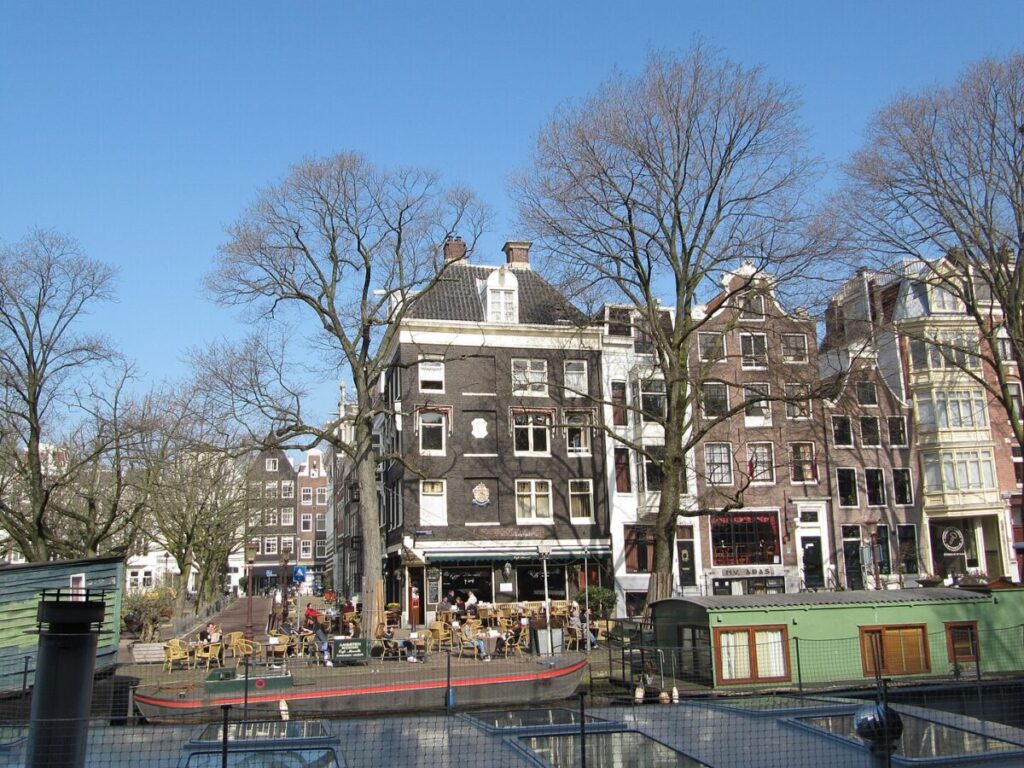
This brick square is ringed by 46 Caucasian wingnut trees and anchored by the 17th‑century wooden Amstelkerk—quiet on weekdays, neighborly on market days. Under a copper canopy, it feels like a village green.
Where to stand: Northeast corner by the Amstelkerk for a diagonally framed view across the square.
Why it dazzles in fall: Those wingnuts turn buttery‑gold, their broad leaves drifting over café terraces and the church steps.
Pro tip: Monday flower/plant market often runs here—arrive early for clean sightlines before stalls fill the square.
6) Vondelpark’s Rosarium & Blauwe Theehuis loop
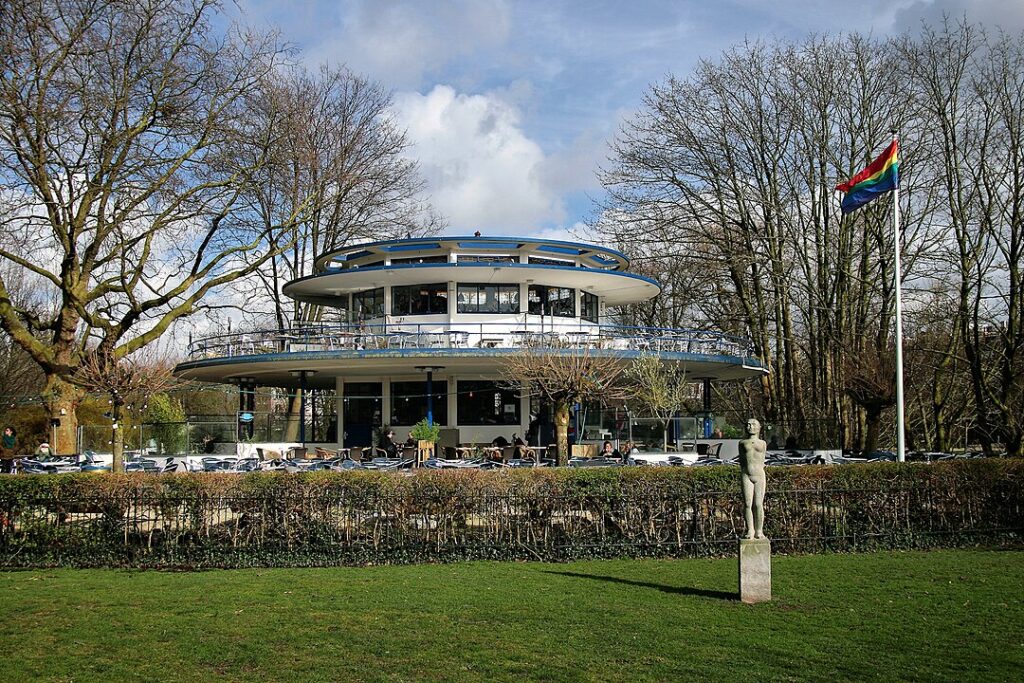
Skip the park‑wide wander and pin this loop: enter via Kattenlaan, circle the Rosarium (rose garden), then continue to the Modernist Blauwe Theehuis. Every bend gives water, lawns, and mature trees in layered color—plus a cozy stop for a warm drink.
Where to stand: Rosarium path looking back toward the pergola; then the circular terrace of Blauwe Theehuis for 360° foliage views.
Why it dazzles in fall: Mixed species around the Rosarium create a painterly gradient; reflective ponds double the color.
Pro tip: On breezy days, watch for “leaf showers” along the Rosarium edge after 15:00—great for slow‑mo video.
7) Amstelpark’s Japanese Garden (by the Grote Vijver)
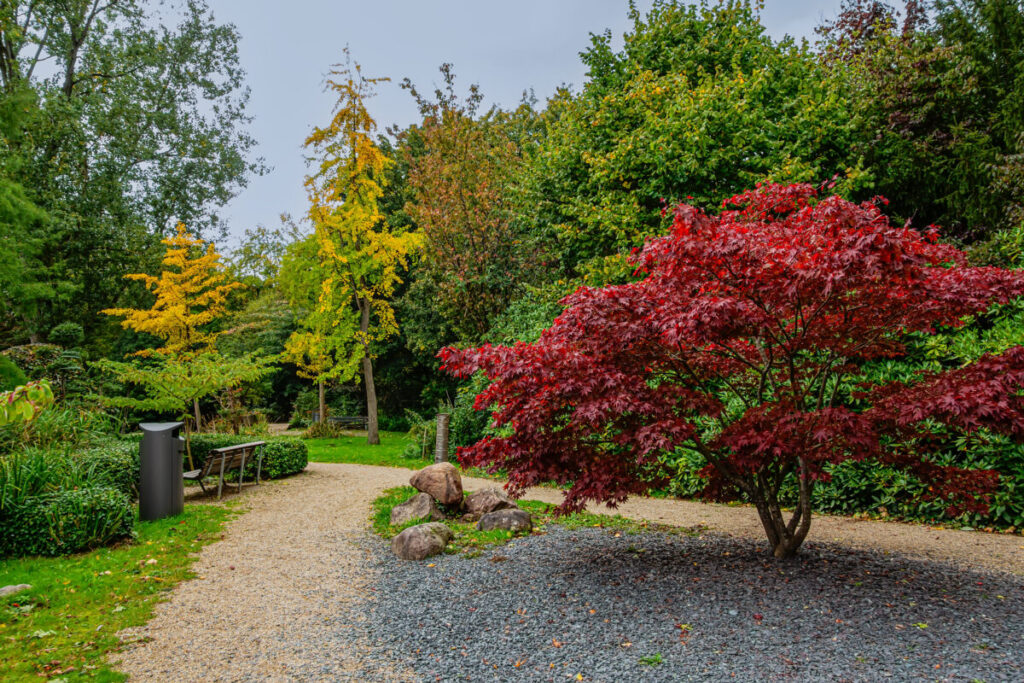
Amstelpark was designed as a world garden—and it shows. The Japanese Garden hugs the main pond with maples that flame red and calm pathways even on sunny weekends. Consider it your zen leaf‑peeping fix.
Where to stand: Small footbridge and waterside paths near the garden’s edge, facing rock clusters across the pond.
Why it dazzles in fall: This corner concentrates scarlets and burnished golds around mirror‑still water.
Pro tip: Bring a thermos and sit quietly at the water’s edge; the reflections do the rest.
See Related: Amsterdam’s Hidden Gems: 12 Off-the-Beaten-Path Attractions
8) Park Frankendael (Period Garden → Landscape Garden)
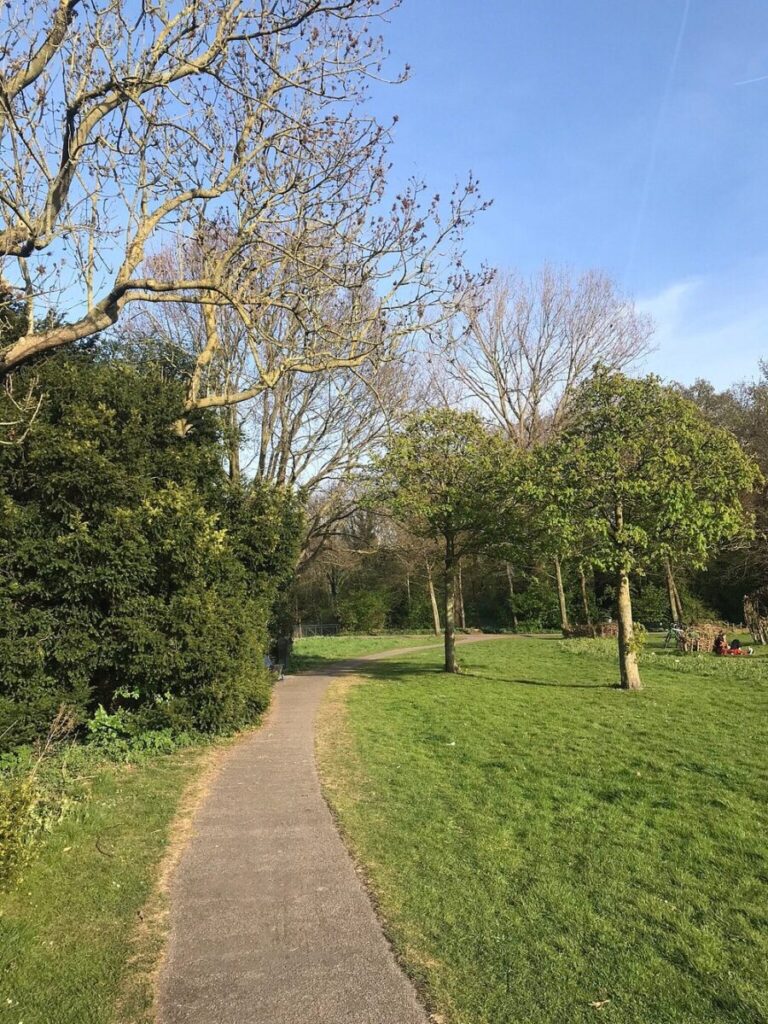
The city’s only remaining 17th‑century country estate delivers two autumn moods: formal hedges and clipped axes in the Period Garden, and wild, marshy edges in the Landscape Garden where reeds and tall trees warm to bronze. It’s romantic and rarely crowded.
Where to stand: From Huize Frankendael, frame the manor through yellowing foliage; then cross to the marsh paths for textured, quiet color.
Why it dazzles in fall: Historic sightlines + wetlands mean layered tones and long perspectives—perfect for portraits or contemplative strolls.
Pro tip: If your visit lands on a “Pure Markt” Sunday, grab a warm cider and wander the alleys of leaves (event dates vary).
9) Flevopark Lake & Distillery ’t Nieuwe Diep
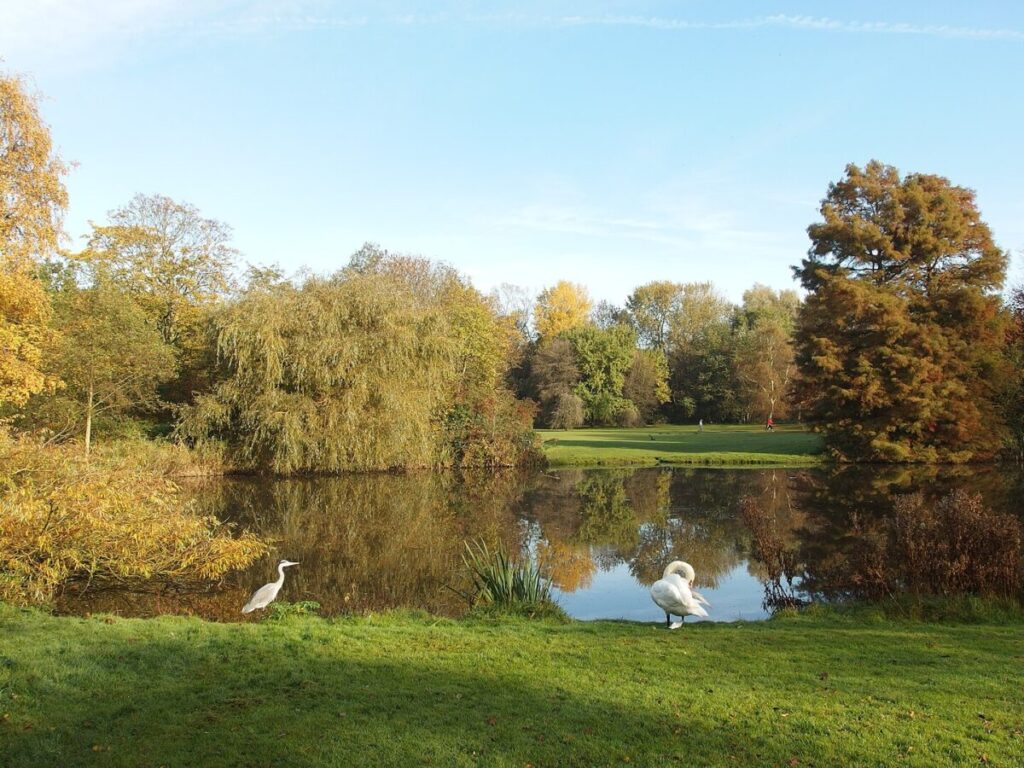
East‑side residents come here for space and stillness. The plane‑lined avenues and lakeside paths glow yellow, and a tiny 19th‑century pumping‑station‑turned‑distillery sits on the water—about as cozy as autumn gets.
Where to stand: On the shore opposite the distillery for a straight‑on view of the building cupped by trees.
Why it dazzles in fall: Wind‑still afternoons give perfect reflections; ducks weave through fallen leaves like confetti.
Pro tip: Warm up with a tasting if the proeflokaal is open (hours are seasonal; check the site).
10) Sarphatipark (north‑pond arc), De Pijp
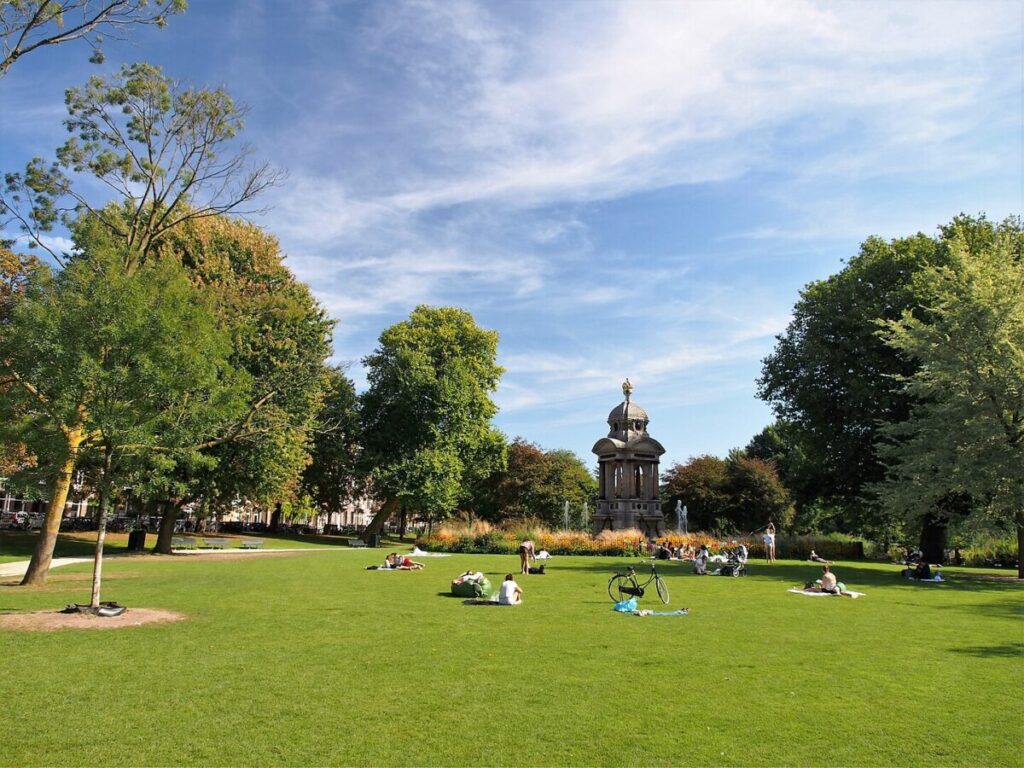
Two compact city blocks, one big autumn payoff. Aim for the north side of the pond, where willows and lindens curve into the water and benches face the best angles—steps from cafés and the Albert Cuyp Market.
Where to stand: Ceintuurbaan side, pond’s north arc, for layered trees with the water foreground.
Why it dazzles in fall: The pond doubles whatever the canopy’s doing; even a cloudy day looks painterly.
Pro tip: Arrive just after market hours for quieter paths and open benches.
How to catch peak color (and keep it cozy)
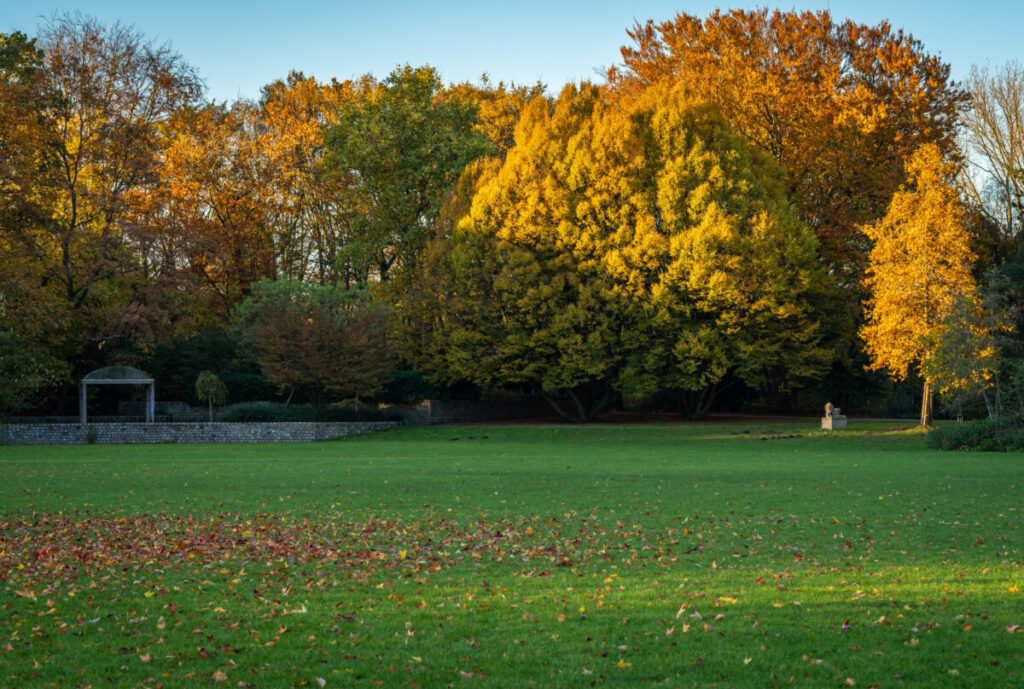
- Timing: Amsterdam’s leaf window typically runs early October to mid‑November; later weeks can be deepest, but wind/rain can shorten the show. I amsterdam’s autumn hub is a great cross‑check.
- Light: Color pops in low sun—09:00–11:00 and golden hour. Bridges glow after dusk as the arches light up (hello, Seven Bridges).
- Etiquette: Hofjes (like Begijnhof) and residential lanes (Lomanstraat) require extra quiet. Respect posted hours and residents.
Photo kit (smartphone‑friendly)
- Lens cloth + polarizer clip (cuts canal glare).
- HDR off for contrasty silhouettes; HDR on for even light.
- Expose for leaves; keep sky from blowing out.
- Slow‑mo for “leaf showers” at Rosarium edges on breezy afternoons.
P.S. If you’re leveling up with rented gear, our fall‑foliage newsletter roundup includes a Lensrentals code you can use on your first rental.
See Related: Photogenic Spots in Amsterdam: Where to Capture the Perfect Picture
FAQs (quick answers)
Does Amsterdam really have that many trees?
Yes. I amsterdam cites 400,000+; the municipality’s data portal states ~1 million trees city‑wide (with ~300,000 under city management). Both are true depending on what’s counted (public vs. private).
Best single spot for that “seven bridges” shot?
Stand on Herengracht at Reguliersgracht, looking southeast (bonus: take a low canal boat to see the full stack).
Is Begijnhof free and open daily?
Yes—generally 09:30–18:00; it’s residential and sacred, so stay hushed.