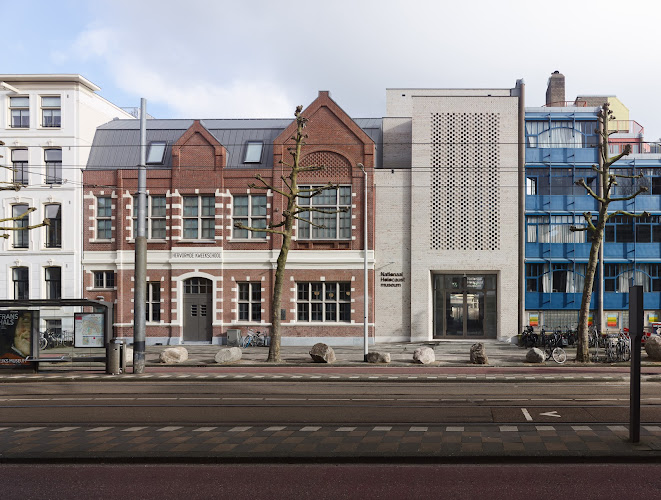
The National Holocaust Museum (Nationaal Holocaustmuseum) is the Netherlands’ first museum to tell the full story of the Nazi persecution of Jews across the country—before, during, and after the occupation. It opened to the public in March 2024 in Amsterdam’s Plantage area, inside the former Hervormde Kweekschool (Reformed Teacher Training College).
Heads-up: This is heavy material. The Jewish Cultural Quarter recommends the museum for ages 10+.
What this Holocaust museum covers (and why it matters)
This museum isn’t a single-story experience. It follows how discrimination became policy, how policy became daily reality, and how daily reality ended in deportation and murder—while also showing rescue, resistance, survival, and what came after liberation. The focus stays grounded in the Netherlands, with human-scale stories and objects rather than abstract timelines.
If you’ve already visited the Anne Frank House: think of this as the national context that sits around (and beyond) that diary—how systems were built, who enforced them, who resisted, and how remembrance has evolved in Dutch public life.
What you’ll see inside
The permanent exhibition, The Netherlands and the Shoah, is designed for close attention. Expect original objects, photographs, film, and testimonies—supported by a museum layout that repeatedly pulls you back from “history” to “one person.”
- “Wallpaper” of anti-Jewish measures — gallery walls filled with the actual texts of regulations that stripped rights step by step, creating a veneer of legality for segregation, theft, deportation, and murder.
- “Forget-me-nots” displays — a series of showcases, each centering a single victim with a memento, portrait, short text, and audio/video fragments.
- Objects with sharp provenance — items donated or documented through survivors and witnesses (the museum’s collection includes objects linked to deportation and camps, and items tied to resistance and rescue).
A free audio guide is available on-site (Dutch and English), and it’s worth using. It adds context without interrupting the flow of the exhibition.
Why the location is part of the story
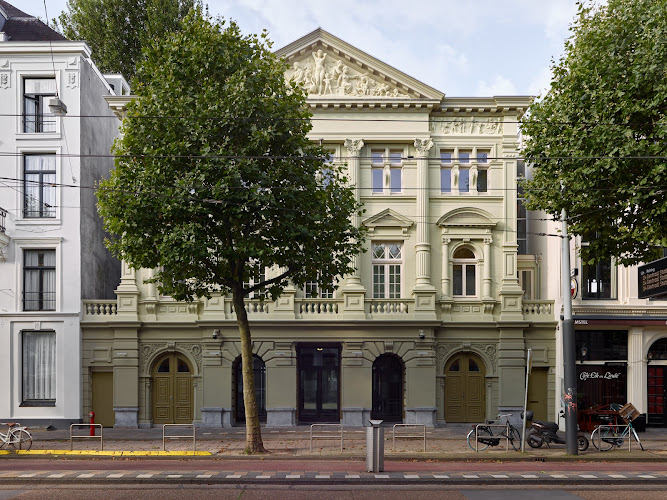
The building itself is not a neutral container. During the occupation, the Hollandsche Schouwburg across the street was used as an assembly point for Jews ordered to report for deportation. Children were placed in a daycare center nearby, and a rescue network used the adjacent teacher training college—today’s museum site—to move some children into hiding.
In the summer of 1943, Jewish children from the daycare center next door were brought into the college and then moved to hiding places. Around 600 children were saved through this network, involving caregivers, resistance groups, and people inside the school.
This proximity changes the way you experience the museum: you’re not only reading about events—you’re standing on an address that was part of them.
Visitor essentials
- Address: Plantage Middenlaan 27, 1018 DB Amsterdam
- Opening hours: typically 10:00–17:00 (with occasional closures/adjusted hours on holidays and specific dates)
- Minimum recommended age: 10+
- Audio guide: free (Dutch & English)
- Photos: personal-use photography allowed
- Payment: card-only (debit/major credit cards)
How long to plan
Most visitors will want 1.5–2.5 hours for the museum, depending on how much audio guide content you listen to and how often you pause. If you’re also visiting the Hollandsche Schouwburg memorial site across the street, add extra time.
Tickets and time slots
Tickets are managed by the Jewish Cultural Quarter. There’s a dedicated ticket for the National Holocaust Museum, and there are also multi-site tickets if you’re combining locations.
- National Holocaust Museum ticket: €20
- Combi ticket (all four Jewish Cultural Quarter locations): €30 (valid for one week)
- Hollandsche Schouwburg: free entry
- Discounts/free entry: available for children/students and several cards (including Museumkaart and I amsterdam City Card)
Time slot reality: if you’re visiting the National Holocaust Museum, demand can push time slots to sell out—especially on weekends and during peak travel periods. Buying online ahead of time is the safest way to avoid arriving to a fully booked day.
Best time to visit
If you want space to read, listen, and reflect, aim for a weekday and book an earlier entry window. Weekends and mid-afternoons tend to compress people into the same rooms, which changes the feel of the visit.
Give yourself buffer time afterwards. This museum is intellectually dense and emotionally draining in places—many people appreciate having a quiet walk (or a café stop) planned immediately after.
How to get there
The museum sits on Plantage Middenlaan in the wider Jewish Cultural Quarter area.
- From Amsterdam Centraal (public transport): take tram 14 to Artis for the National Holocaust Museum and Hollandsche Schouwburg.
- From Amsterdam Centraal (metro option for the wider area): metro 51, 53 or 54 to Waterlooplein, then walk toward the Jewish Cultural Quarter sites.
- Walking: roughly 25–30 minutes from Centraal, depending on route and pace.
- Cycling: easy ride from the city center—use designated bike parking and ride defensively if you’re not used to Amsterdam traffic.
If you’re driving, expect limited street parking. Nearby underground garages are listed by the Jewish Cultural Quarter for the area.
Make it a meaningful half-day
The museum pairs naturally with other Jewish Cultural Quarter locations and a few nearby WWII/history sites. This approach gives you context, commemoration, and (importantly) a change of pace.
- Hollandsche Schouwburg (across the street): a memorial site at a historic deportation location; free entry.
- Jewish Museum + Portuguese Synagogue (short trip away): broader Jewish history and culture in Amsterdam and the Netherlands.
- Dutch Resistance Museum (nearby): strong complement if you want a wider view of WWII in the Netherlands.
Practical tips for a smoother visit
- Arrive on time. If you’ve booked a slot, plan to be there within the entry window.
- Travel light. Lockers and cloakroom options are available; small bags may be allowed inside.
- Use the audio guide. It adds crucial nuance without turning the visit into a lecture.
- Keep it respectful. Lower your voice, silence your phone, and think twice before taking photos—allowed doesn’t always mean appropriate.
- Pay by card. This is a PIN/card-only venue.
Quick FAQ
Is the National Holocaust Museum in Amsterdam worth visiting?
If you want more than a headline-level understanding of the Holocaust in the Netherlands, this museum delivers. It’s carefully built around evidence, individual stories, and the local machinery of persecution—while keeping the human cost front and center. It’s not an “easy” visit, but it’s a serious one.
How long does it take to go through the Holocaust museum in Amsterdam?
Plan for 1.5–2.5 hours for the museum itself. Add extra time if you’re combining it with the Hollandsche Schouwburg memorial site or other Jewish Cultural Quarter locations.
Where is the National Holocaust Museum?
It’s at Plantage Middenlaan 27 in Amsterdam, with tram 14 providing a straightforward public transport route from Central Station.