Amsterdam’s museums are world-class. No argument there.
But here’s the part most visitors miss: some of the city’s most interesting art is not behind a ticket desk. It is on side walls, in parks, beside tram routes, between apartment blocks, on old industrial land, and in neighborhoods many travelers never think to explore.
Amsterdam even has an official name for it: Buitenkunst Amsterdam, or outdoor art. The city describes itself as one large open-air museum, with public artworks on streets, squares, parks, building façades, and other spaces visible from public areas. More than 1,000 artworks across Amsterdam and Weesp can now be found through one official public-art website and map.
That makes this one of the easiest, smartest, and most local-feeling free things to do in Amsterdam. Not another museum day.
Not another “take the same canal photo as everyone else” loop. This is Amsterdam as locals actually pass it: on foot, by bike, and at street level.
Quick Answer: What Is Buitenkunst Amsterdam?
Buitenkunst Amsterdam is the city’s official public-art collection map. It includes sculptures, murals, monuments, fountains, façade art, and other works visible in public space.
You can search by artwork or artist, use the map, follow art routes, and save favorites for later. The City of Amsterdam’s outdoor collection alone holds close to 1,600 sculptures and monuments, part of a tradition of placing art in public space that goes back more than a century.
The best way to use it as a visitor is simple: pick one neighborhood, open the map, and build a small self-guided art walk around two or three artworks. You will see more real Amsterdam in an hour than you will from another loop through Damrak.
Why Outdoor Art Is One of Amsterdam’s Best Hidden Gems
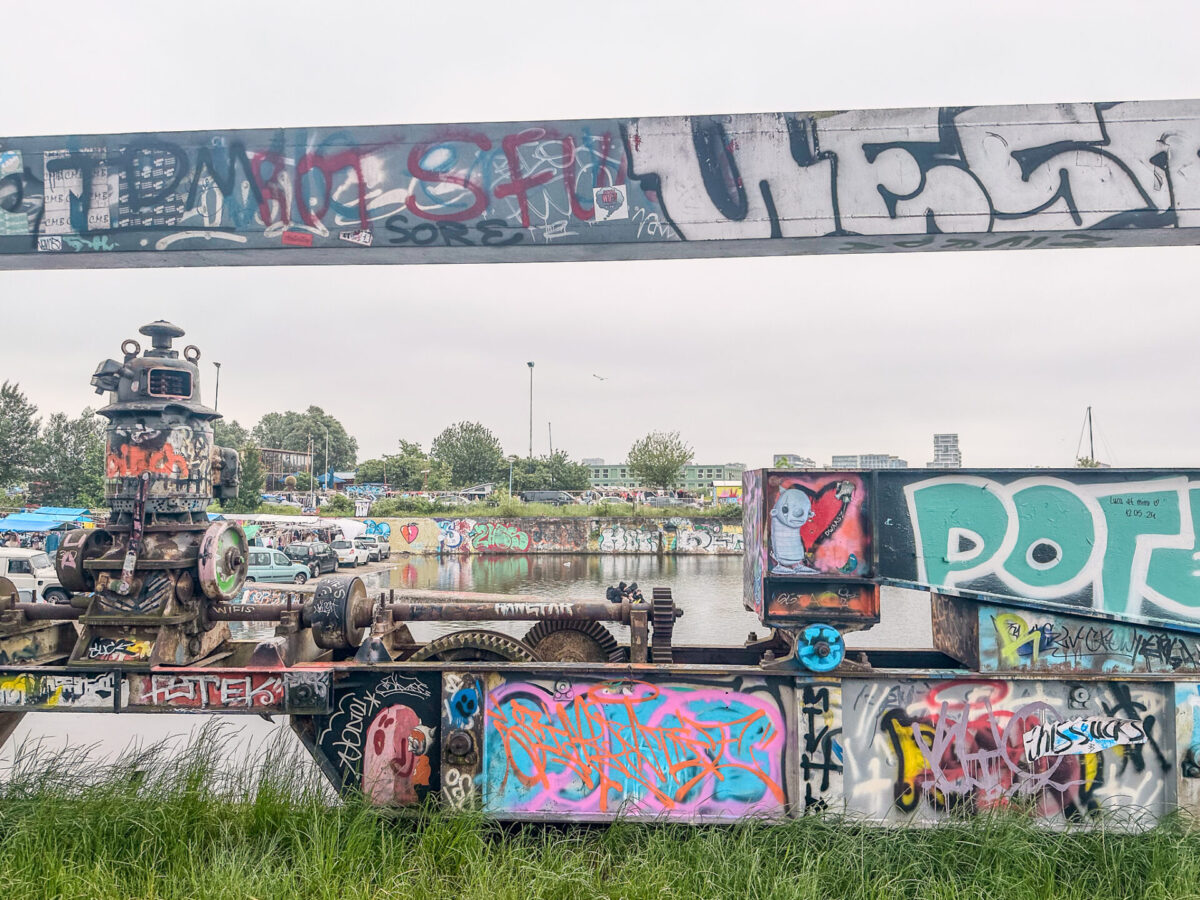
Amsterdam’s public art matters because it sits where everyday life happens. You do not need a ticket. You do not need a reservation.
You do not need to understand Dutch art history before you start. You just need to slow down.
The city says outdoor art brings culture closer to residents in every neighborhood and helps make streets and squares more pleasant. Public art is also part of Amsterdam’s formal arts and culture policy, updated through the city’s Kunstenplan every four years.
That gives this guide a nice local truth: Amsterdam’s outdoor art is not decoration. It is urban memory.
Some pieces talk about climate. Some about migration. Some about slavery and freedom.
Some are playful. Some are strange.
Some look like they were dropped there by accident until you read the story. Start with these.
1. Rokin Fontein: Two Immovable Heads

- Neighborhood: Centrum
- Best for: First-time visitors, a quick city-center art stop
- Look for: Two connected bronze heads with water flowing between them
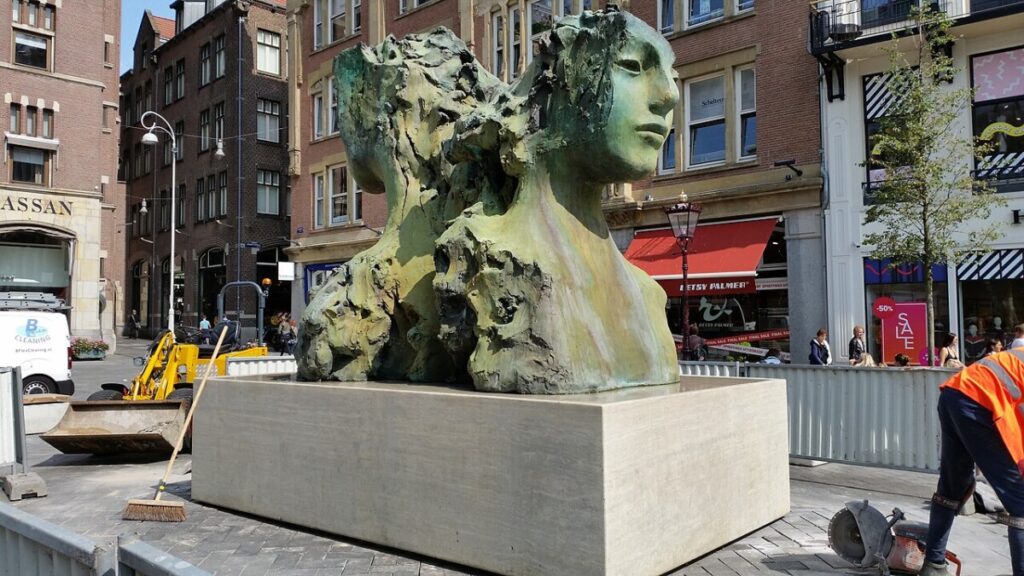
If you only see one public artwork in central Amsterdam, make it Rokin Fontein, also known as Two Immovable Heads by Dutch artist Mark Manders. It sits on Rokin, close to Dam Square, which means thousands of people pass it without really seeing it. That is part of the magic — the work was made for the street, not the museum.
The two androgynous heads are joined at the neck, each looking in a different direction — one out toward Dam, the other toward Muntplein — with water flowing down between the rough bronze forms like a waterfall. It was unveiled in September 2017, and the water is turned off during winter. Manders wanted a timeless piece of street furniture that looks like it has been there for centuries.
The local move: stand still for 60 seconds. Let everyone else rush toward Dam Square. Watch how the faces feel ancient and brand-new at the same time.
Pair it with: Spui, the Begijnhof, the Allard Pierson area, or a slow walk toward the Amstel.
2. Aan Tafel by Pris Roos

- Neighborhood: West / Staatsliedenbuurt
- Best for: Murals, social history, inclusive Amsterdam
- Look for: Women gathered around a table
Aan Tafel by Pris Roos is a mural with a deeper message than it first lets on. The work shows women from different backgrounds sitting together and eating soup.
But “coming to the table” also means being part of decisions — politics, business, media, and public life. Women are underrepresented at those tables, and women with migration backgrounds even more so.
This is exactly why Amsterdam’s public art is worth chasing. It turns a neighborhood wall into a conversation about who gets seen, who gets heard, and who gets invited in.
Pair it with: Westerpark, Van Limburg Stirumstraat, coffee in Staatsliedenbuurt, or a local food stop away from the canal crowds.
3. If You Know You Know

- Neighborhood: Nieuw-West
- Best for: Community-led street art
- Look for: A two-part artwork on the façade of residential complex Podium
Nieuw-West often gets ignored by visitors, which is a mistake. The district has some of Amsterdam’s most interesting community art, and If You Know You Know is a good reason to go west of the usual map.
The work is on the façade of residential complex Podium on Willem Frogerstraat. It was created with young people from the district and artists Narges Mohammadi and Zeinab El Bouni. The artwork has two connected parts: a carpet and a poem.
That detail matters. It does not feel like art parachuted into a neighborhood. It feels like something made with the people who actually live there.
Pair it with: Sloterplas, Osdorpplein, or a cycling route through Nieuw-West.
4. NAP Stedemaagd: Amsterdam Half Underwater
- Neighborhood: Zuid / De Pijp edge
- Best for: Street art with climate meaning
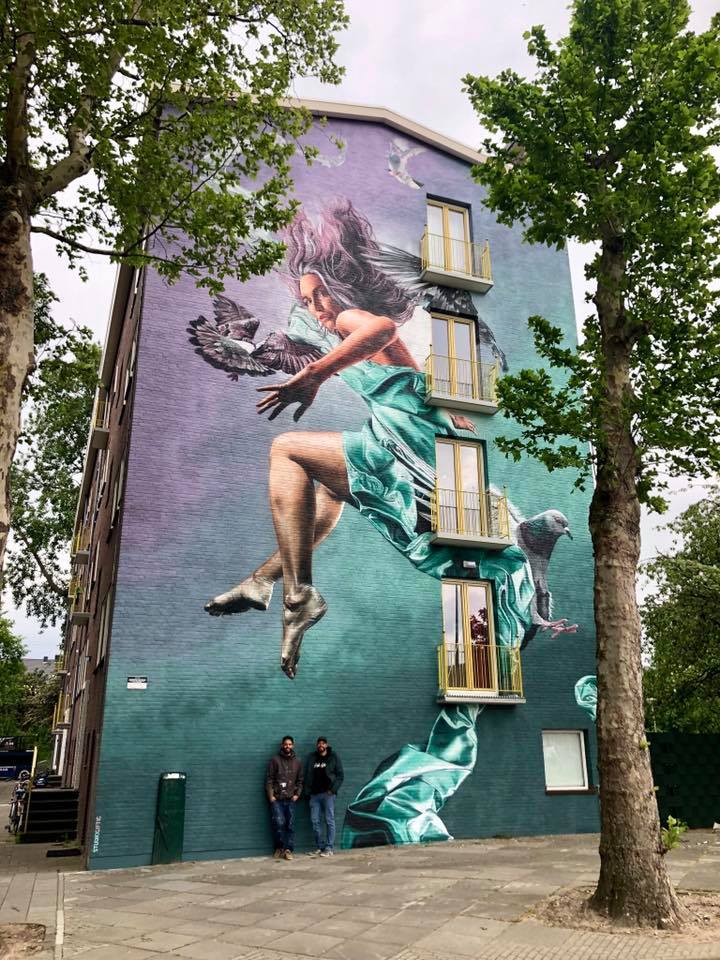
- Look for: A large mural on the corner of Tolstraat and Robijnstraat
The mural NAP, short for Normaal Amsterdams Peil (the Dutch reference level for sea height), is one of the most visually direct public artworks in the city right now. Artist Lars Brehm reimagines the Amsterdam city maiden not as a figure of power, but as a woman standing waist-deep in water — a warning about climate change, sea-level rise, and Amsterdam’s low-lying geography.
The mural was a neighborhood initiative made in cooperation with Street Art Museum Amsterdam, with local residents choosing from three artists. That is a sharp local twist: an old civic symbol turned into a climate warning on a neighborhood wall.
Pair it with: De Pijp, Sarphatipark, Cinetol, or a walk toward the Amstel.
5. De Muur by Alfred Eikelenboom
- Neighborhood: Noord
- Best for: Industrial Amsterdam, ferry-side exploring
- Look for: A 5-meter-high, 15-meter-long wall-like artwork near Meeuwenlaan
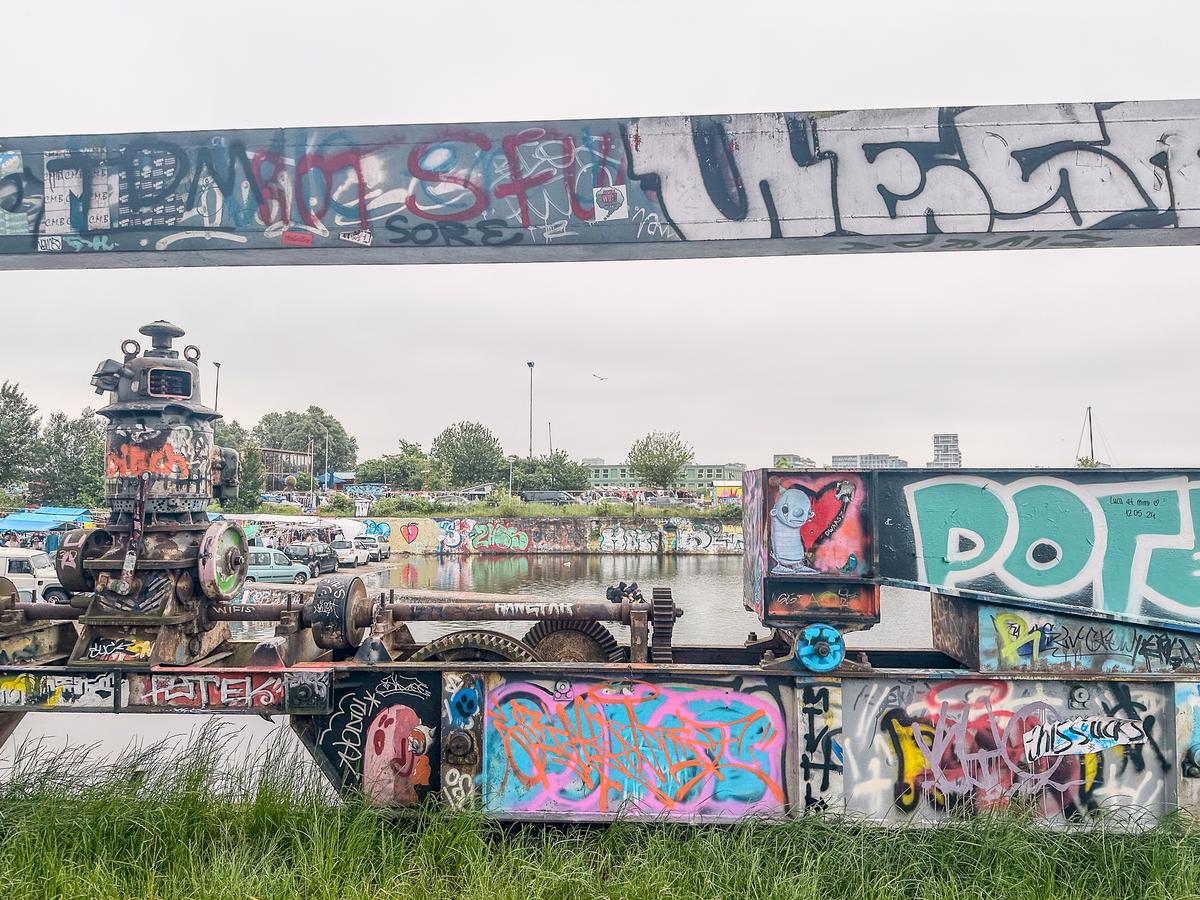
Noord is ideal for outdoor art because the district still has a rougher, more industrial texture than the postcard center. De Muur by Alfred Eikelenboom stands on the former ADM shipyard site along Meeuwenlaan.
It is 5 meters high and 15 meters long, and it may look like the wall of a ship — but it also contains the image of an apartment building like those near IJplein, and the round holes can be read as portholes or windows. That double reading is very Noord: shipyard past, residential present.
Pair it with: The free ferry to Noord, IJplein, Oedipus Brewing, the NDSM wharf, or a longer bike ride through Amsterdam-Noord.
6. Atomos by Jamahl Richters

- Neighborhood: Zuidoost
- Best for: Color, symbolism, local pride
- Look for: A ring-based sculpture in red, green, yellow, and orange
In Brasapark, Atomos by Jamahl Richters brings color and movement into the landscape. Richters was born and raised in Zuidoost, and this is his first work in public space. The piece is built from rings in red, green, yellow, and orange, with the lower part representing the Greek letter omega, a symbol of connection.
This is the kind of Amsterdam stop that separates a generic itinerary from a real one. Zuidoost has its own energy, architecture, food culture, and history.
Do not treat it as “far away.” Treat it as part of the city.
Pair it with: Brasapark, Bijlmer architecture, Amsterdamse Poort, or a food stop in Zuidoost.
7. Graft 1–5 on Cruquiuseiland

- Neighborhood: Oost / Cruquiuseiland
- Best for: New Amsterdam, industrial history, design walks
- Look for: Five tall reed-stem forms across Cruquiuseiland
Cruquiuseiland is one of those Amsterdam areas that still feels like it is becoming itself. The public artwork Graft 1–5 consists of five long reed stems across the island.
The city describes the work as a collection of stories that points to trade, industry, climate change, and the area’s former reed lands. That makes this a great stop for travelers who like urban transformation: old port land, new housing, water, industry, design, and a bit of strangeness.
Pair it with: Entrepotdok, the Eastern Docklands, Flevopark, or a bike ride along the water.
See Related: Volunteering in Amsterdam: Where to Lend a Hand
8. Het Duivenprieel in Weesp
- Neighborhood: Weesp
- Best for: A day-trip feel without leaving the Amsterdam municipality
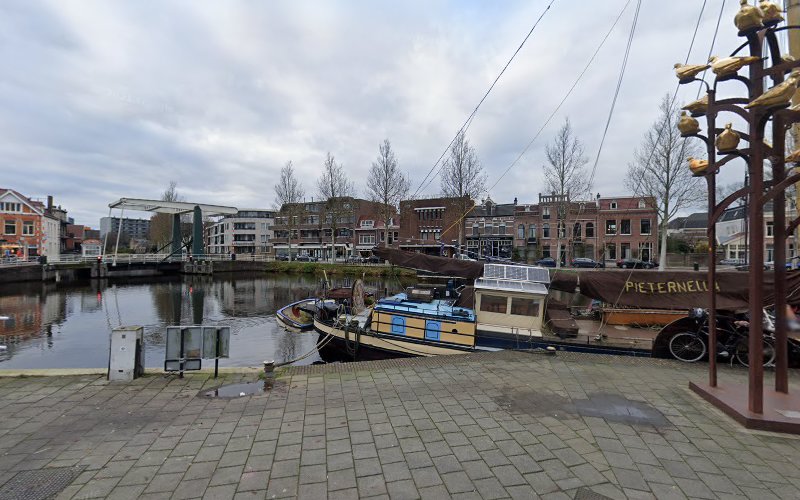
- Look for: A pavilion-like artwork with 17 doves
Weesp is now part of the Amsterdam municipality, but it still feels like a small Dutch town. That makes it perfect when central Amsterdam feels too tight.
Het Duivenprieel by Marte Röling was a gift to the 650-year-old city of Weesp and was unveiled in 2006. Its 17 doves symbolize peace and freedom, and the work stands on Achteromstraat beside the Kom van Weesp.
This is not a “rush in, snap, leave” stop. Go when you want a slower half-day: water, old streets, a less crowded rhythm.
Pair it with: Weesp’s historic center, waterfront terraces, or a quick train ride from Amsterdam Centraal.
9. Witte de Withplein and De Wending 666/999

- Neighborhood: West
- Best for: Public art meeting urban greening
- Look for: A greener square and a metal object with a tree growing through it
Witte de Withplein is not just a square. It is an example of how Amsterdam is trying to make public space cooler, greener, and more useful.
The square was once mostly stone — hot in summer and poor at handling rainwater. It has now been greened with 13 new trees, including Judas trees and Chinese nettle trees, plus larger planting areas.
The square was originally designed in 2013 as an artwork by Hans van Houwelingen, including De Wending 666/999, a metal object through which the Hemelboom (tree of heaven) grows. This is a smart stop because it shows where Amsterdam is heading: art, shade, water management, and livability in the same place.
Pair it with: De Baarsjes, Erasmuspark, Jan Evertsenstraat, or a west-side café crawl.
10. Monumentale Voorouders Boom

- Neighborhood: Zuidoost
- Best for: Memorial landscapes, Dutch slavery history, reflective travel
- Look for: A red weeping beech between Hofgeest and Haag en Veld
The Monumentale Voorouders Boom is one of the most moving stops in this guide. The tree commemorates resistance against slavery and the struggle for freedom. The site has recently been made more visible and accessible with new paths, seating, a memorial sign, and mosaic tiles created by local schoolchildren.
The red weeping beech was planted on July 1, 2000, and is described by the city as the first living monument in the Netherlands for the freedom struggle against slavery. This is not just “something to see.” It is a place to pause.
Pair it with: Brasapark, Atomos, Anton de Komplein, or a wider Zuidoost history walk.
11. Rhododendron Valley in Amstelpark

- Neighborhood: Zuid
- Best for: Garden design, quiet walks, spring color
- Look for: A restored valley in Amstelpark
This one is slightly different. It is not a single sculpture or mural. It is a restored landscape gem.
The Rhododendron Valley in Amstelpark has been renovated to look again like it did when the park opened in 1972. Amstelpark was created as part of the Floriade horticultural exhibition, and the entire park was designated a municipal monument in 2022.
The restored valley has had paths and benches improved, missing paths returned, and vulnerable plants replaced. Rhododendrons typically bloom from April into June, depending on the variety. Come here when you want Amsterdam to feel leafy, quiet, and a little overlooked.
Pair it with: Amstelpark, the RAI, Beatrixpark, or a south-side cycling route.
Bonus: Kadoelerscheg Nature Walk
- Neighborhood: Noord
- Best for: Nature lovers, families, birdwatchers
- Look for: QR-code route signs and wetland wildlife
The Kadoelerscheg route is not a public-art stop in the strict sense, but it belongs in this guide because it gives you that same “Amsterdam is bigger than the center” feeling. The city highlights the new Op weg door de scheg walking route, where you may encounter species such as the common pipistrelle bat and the kingfisher.
QR codes along the route share information about the area’s nature. This is a good reminder: Amsterdam’s best local gems are often where art, ecology, and neighborhood life overlap.
See Related: Secret Spots in Amsterdam for Breathtaking Photography
Best Self-Guided Amsterdam Outdoor Art Routes
The Easy Center Route
Start with Rokin Fontein / Two Immovable Heads, then wander toward Spui, the Amstel, and the old center. This is the best option when you only have 30 to 60 minutes.
The West Mural Route

Build a route around Aan Tafel and Witte de Withplein. Add Westerpark or Erasmuspark to make it a half-day.
The Climate and Garden Route

Visit NAP Stedemaagd near Tolstraat and Robijnstraat, then continue south toward Amstelpark and the restored Rhododendron Valley.
The Noord and Oost Industrial Route

Take the ferry to Noord for De Muur, then make a longer bike route toward Oost and Cruquiuseiland for Graft 1–5.
The Zuidoost Memory Route

Pair Atomos in Brasapark with the Monumentale Voorouders Boom. This is one of the most meaningful routes in the guide.
Local Tips for Finding Outdoor Art in Amsterdam

Use the official map, but do not over-plan. The whole point is to notice what you usually miss. A good rhythm is:
- Pick one district.
- Choose two artworks.
- Add one café, park, or market nearby.
- Walk or bike slowly.
- Read the story after you see the work, not before.
That last part matters. Public art is better when you meet it first and explain it second. Also, do not try to see everything in one day.
Amsterdam’s outdoor art is spread across the city for a reason. Treat it like a series of neighborhood excuses — one day for West, one day for Noord, one day for Zuid, one day for Zuidoost. That is how the city opens up.
Why This Belongs on Your Amsterdam Itinerary

A lot of Amsterdam travel advice sends people into the same tight loop: Centraal Station, Dam Square, Red Light District, canal photo, museum, maybe the Jordaan. There is nothing wrong with the classics. But if you want Amsterdam to feel less staged, go looking for the art that was made for people going to work, walking a dog, biking home, waiting for a tram, or sitting in a square.
That is where the city gets more honest. You will find climate anxiety on a wall in Zuid. Women claiming space at a table in West.
A memorial tree in Zuidoost. Bronze heads on Rokin that look older than they are.
Reed stems on Cruquiuseiland telling stories about trade, industry, and a changing waterfront. Amsterdam is not only a museum city. It is a city that leaves clues outside.
See Related: A Local’s Guide to Amsterdam’s Art Scene: Beyond the Museums
Amsterdam Outdoor Art FAQ
Is Amsterdam outdoor art free?
Yes. Amsterdam’s outdoor artworks sit in public spaces such as streets, parks, squares, and building façades, so they are free to view. The city also provides an official Buitenkunst Amsterdam map and several public-art routes.
What is the best outdoor artwork to see first in Amsterdam?
For most visitors, the easiest first stop is Rokin Fontein / Two Immovable Heads by Mark Manders. It is in the city center near Dam Square and easy to add to almost any Amsterdam walk.
Is there an Amsterdam public art map?
Yes. Buitenkunst Amsterdam has an official map, a search function, public-art listings, and neighborhood routes, and it lets users save favorite artworks for later.
What is the difference between Amsterdam street art and outdoor art?
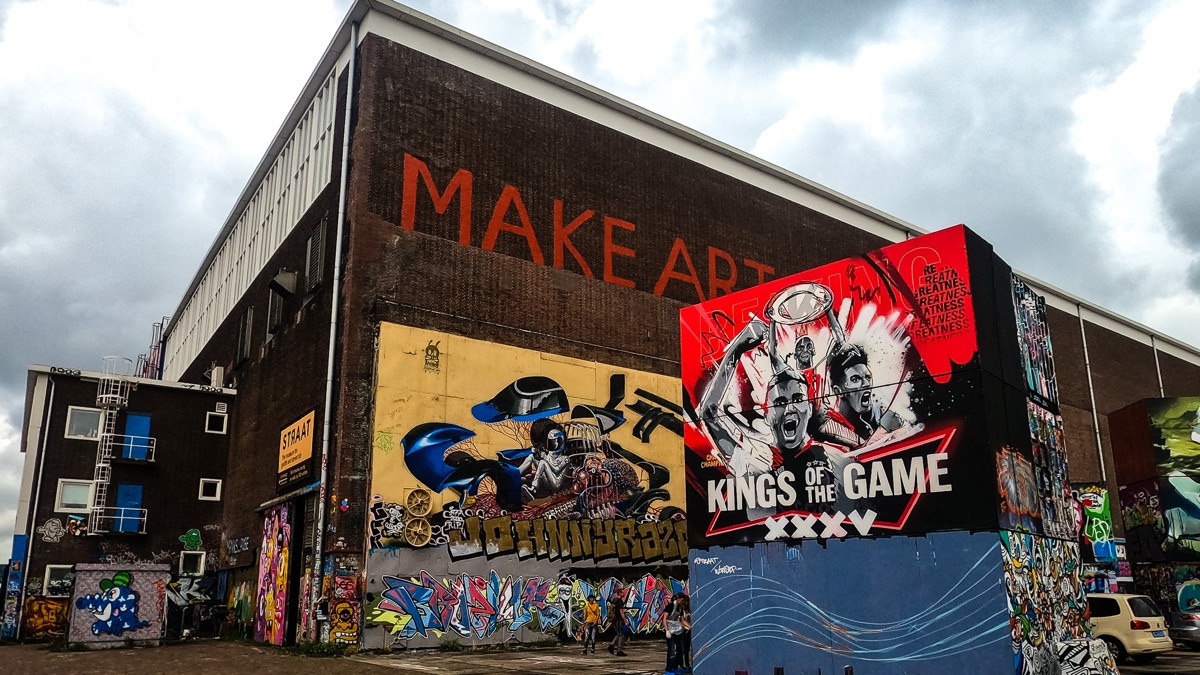
Street art usually refers to murals, graffiti-style works, paste-ups, and wall pieces — the kind of scene you see around the NDSM wharf or inside the STRAAT Museum in Noord. Amsterdam outdoor art is broader. It includes murals, sculptures, fountains, memorials, façade art, monuments, and other works visible from public space, alongside collections held by institutions like the Stedelijk Museum.
What is the best neighborhood for public art in Amsterdam?
There is no single best district. Centrum is easiest for first-timers, West is strong for murals and social themes, Noord and Oost are great for industrial landscapes, Zuid has climate- and garden-focused stops, and Zuidoost has powerful works connected to memory, community, and identity.