Description
The Hollandsche Schouwburg (Dutch Theatre) at Plantage Middenlaan 24 is a free Holocaust memorial in Amsterdam’s Jewish Cultural Quarter. From July 1942 to November 1943, the Nazi occupiers used the former theatre as the place where Jews were assembled and held before deportation. Today it is a memorial to all victims of the Holocaust, open (almost) every day from 10:00 to 17:00, with no ticket required.
I’ve visited several times, and it’s the kind of place that stays with you long after you leave. It is an emotionally hard visit, but the building does something statistics can’t: it puts the deportation of Dutch Jews in one specific room, on one specific street, and lets you hear the voices of the people who passed through it.
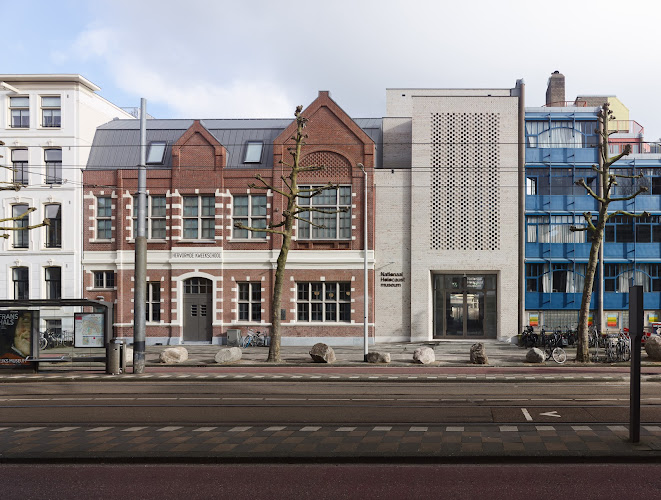
The memorial reopened in March 2024 after a renovation that began in 2021, at the same time as the new National Holocaust Museum directly across the street. If you last came before 2020, expect a very different visit.
Visitor essentials
| Address | Plantage Middenlaan 24, 1018 DE Amsterdam |
|---|---|
| Opening hours | Every day, 10:00-17:00, with closures on some Jewish holidays (including Rosh Hashanah and Yom Kippur) |
| Admission | Free; no ticket or booking needed for individual visitors |
| Groups | Groups of 8 or more are asked to register in advance and pay a €50 group contribution |
| Audio tour | Free, in Dutch, English, German and Hebrew; pick it up at the service desk (no headphones needed) |
| Time needed | About an hour for the memorial; plan extra time if you also visit the National Holocaust Museum |
| Nearest transit | Tram 14 to Artis; metro 51, 53 or 54 to Waterlooplein |
| Official info | Hollandsche Schouwburg on the Jewish Cultural Quarter website |
History of the Dutch Theatre
The theatre opened on 5 May 1892 as the Artis Schouwburg, designed by architect Cornelis Antonius Bombach, and took the name Hollandsche Schouwburg two years later. For decades it was one of the main theatres in the Plantage, known for staging original Dutch-language plays.
In 1941 the German occupiers renamed it the Joodsche Schouwburg (Jewish Theatre). Jewish artists, now barred from other stages, could perform here only for Jewish audiences. In July 1942 the performances stopped and the building became an assembly point for deportation. People who were arrested or ordered to report were registered here and held for hours, days or sometimes weeks in a theatre never built to house them, before being taken to the transit camps at Westerbork or Vught and, from there, to concentration and extermination camps.
From October 1942, children under 12 were separated from their parents and held in the crèche (nursery) across the street. Walter Süskind, who managed the theatre for the Jewish Council, worked with resistance groups and nursery staff to smuggle children out; the European Memories heritage profile puts the number saved at around 600. The last transport left the theatre on 19 November 1943.
How many people passed through? Recent research counts more than 46,000 people held here, for an average of about five and a half days. Older guides often cite 60,000 to 80,000, so you will see both figures. Across the whole of the Netherlands, roughly 104,000 Jews were murdered in the Holocaust.
After the war, a citizens’ committee bought the building to stop it from returning to use as an entertainment venue. The auditorium was taken down to form an open courtyard, and on 4 May 1962 Mayor Gijsbert van Hall dedicated the site as a memorial. It became a national monument (rijksmonument) in 2016.
Key Features
The Hollandsche Schouwburg is a memorial rather than a museum. There are few objects behind glass; the building itself, the courtyard and the recorded voices carry the visit. These are the main things you’ll see since the 2024 reopening.
Introductory film and theatre model
Just inside, a 10-metre-wide film tells the history of the building, and a scale model shows the theatre as it looked before the auditorium was demolished. Watch this first; it makes the empty courtyard much easier to read.
The courtyard and monument
The former auditorium is now a roofless courtyard. A tall pylon rising from a Star of David base stands where the stage used to be, in front of a wall inscribed (in Dutch) “In remembrance of those who were deported from here 1940-1945”. Standing on the spot where the seats once were, looking toward the old stage, is the moment most visitors remember.
Lightboxes with voices and portraits
Along the courtyard walls, forty teardrop-shaped lightboxes show portrait photos and play recorded testimonies of victims and memories of survivors. Take the free audio tour: it links these voices to the building’s history before, during and after the war.
Reflection garden
Behind the building, the reflection garden includes Stamboom (Family Tree), an artwork by Gabriel Lester created as part of the renovation. It is a quieter space to sit for a few minutes before heading back to the street.
The restored facade
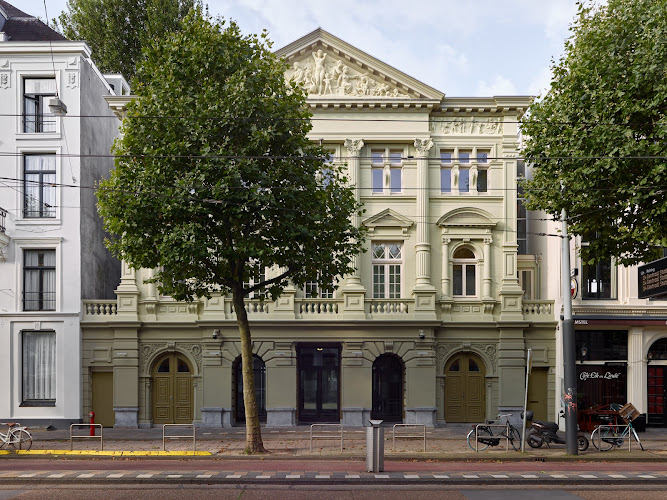
The front of the theatre survived and was restored during the renovation: 29 old layers of paint were stripped and the facade was repainted in the colours chosen in the 1960s, when the building became a memorial. It still looks like a theatre from the street, which makes what happened inside harder to take in.
What about the wall of names?
Many older guides, including an earlier version of this page, describe a wall in the entrance hall listing about 6,700 family names that together represented the 104,000 Dutch Jewish victims. That wall was installed in 1993. Amsterdam op de Kaart, a local architecture-history source, reports it was removed in the 2021-2024 renovation, and the official description of the renovated memorial no longer mentions it, so don’t count on seeing it. To see individual names, walk about 10 minutes to the National Holocaust Names Monument on Weesperstraat, which lists 102,000 Jewish victims and 220 Roma and Sinti victims from the Netherlands.
The staff are knowledgeable and happy to answer questions or add context, which helps when you’re taking in such heavy material. Guided tours of the memorial also run regularly; check the Jewish Cultural Quarter agenda for times.
Best Time to Visit
There isn’t a best time in the usual sense. You’re not chasing good weather or photos. What matters is how much quiet you want and whether your date falls on a closure or a commemoration.
- Weekdays are usually calmer, which gives you more space in the courtyard and at the lightboxes.
- The memorial opens at 10:00. Arriving at opening time can give you a quiet first half hour before walking tours and school groups arrive; the upper floors house education studios used by school classes.
- The memorial holds annual commemorations on 4 May (National Remembrance Day in the Netherlands) and Yom HaShoah, as well as a children’s remembrance day, and hosts educational events around International Holocaust Remembrance Day on 27 January. These days are moving but busier, and hours may change.
- It closes on some Jewish holidays, including Rosh Hashanah and Yom Kippur. Check the Jewish Cultural Quarter’s opening hours page before you go.
I prefer going in the late afternoon, around 15:00, a couple of hours before the 17:00 closing. The light seems to add to the stillness of the courtyard, and you have a little time afterwards to process what you’ve seen before the day ends.
Allow about an hour for the memorial itself, including the film and the audio tour. Don’t rush it. If you’re crossing the street to the National Holocaust Museum as well, set aside a half day for both.
How to Get There
The memorial is at Plantage Middenlaan 24, on the edge of the Plantage neighbourhood and a short walk from the old Jewish Quarter around Waterlooplein. The National Holocaust Museum is directly opposite at number 27.
- By tram: take tram 14 from Amsterdam Centraal to the Artis stop, which is right by the memorial. Tram 7 also stops nearby.
- By metro: take metro 51, 53 or 54 to Waterlooplein, then walk about 10 minutes east along Plantage Middenlaan.
- By bike: it’s roughly a 10-15 minute ride from Dam Square. Bike racks around the Plantage fill up, so allow time to find a spot.
- On foot: if you’re already at the Jewish Museum or the Portuguese Synagogue, walking is the easiest option.
- By car: there is no dedicated car park. The Jewish Cultural Quarter points drivers to the Markenhoven, ParkKing Waterlooplein and Stadhuis/Muziektheater garages; public transport is simpler.
Combine With Nearby Sites
The Hollandsche Schouwburg is one of four locations in the Jewish Cultural Quarter, all within about one square kilometre. I often suggest pairing it with at least one of the sites below. You could easily spend a full day in the area.
- National Holocaust Museum, directly across the street in the former teacher-training college next to the crèche, tells the full story of the persecution of Jews in the Netherlands. It is ticketed and recommended for visitors aged 10 and up.
- Jewish Museum and the Portuguese Synagogue near Waterlooplein cover Jewish life in Amsterdam before the war, which gives the memorial its context.
- National Holocaust Names Monument on Weesperstraat is free and open-air, with the name of each victim on its own brick.
- Wertheimpark, a few minutes’ walk away, holds the Nooit Meer (Never Again) Auschwitz monument by Jan Wolkers.
- Verzetsmuseum (Dutch Resistance Museum) on Plantage Kerklaan covers the choices ordinary people faced under occupation.
The memorial is free, so you only need a ticket for the other sites. The Jewish Cultural Quarter combiticket covers all four locations, costs up to €30 for adults and is valid for a week. Museumkaart and I amsterdam City Card holders get free entry. Our Amsterdam city card calculator shows whether a pass is worth it for your plans.
Afterwards, give yourself time in the surrounding Plantage. Its tree-lined streets, green spaces and cafés such as Café Smit & Voogt are a good place to sit and absorb what you’ve seen.
A visit here isn’t easy, and it isn’t meant to be. It does give you the chance to honour the people who were held in this building and to think about what standing up to discrimination looks like today. Take a breath, pick up the audio guide and step inside.
Frequently asked questions
Is the Hollandsche Schouwburg free to visit?
Yes. Entry is free and individual visitors do not need a ticket or booking. Groups of 8 or more are asked to register and pay a €50 group contribution.
What is the difference between the Hollandsche Schouwburg and the National Holocaust Museum?
The Hollandsche Schouwburg is the memorial in the former theatre where Jews were held before deportation. The National Holocaust Museum, directly across the street at Plantage Middenlaan 27, is a ticketed museum that tells the full history of the persecution of Jews in the Netherlands. Both opened in their current form in March 2024.
Is the wall of 6,700 family names still at the Hollandsche Schouwburg?
Probably not. The family-names wall installed in 1993 is reported to have been removed during the 2021-2024 renovation. Individual names of the 102,000 Jewish victims from the Netherlands are on the National Holocaust Names Monument on Weesperstraat, about a 10-minute walk away.
How long do you need at the Hollandsche Schouwburg?
About an hour covers the introductory film, the courtyard and the free audio tour. Plan a half day if you also visit the National Holocaust Museum across the street.
When is the Hollandsche Schouwburg closed?
It is open every day from 10:00 to 17:00 but closes on some Jewish holidays, including Rosh Hashanah and Yom Kippur. Check the Jewish Cultural Quarter website for the current list of closures and adjusted hours.