A former jenever distillery turned beloved neighborhood pub, this 18th-century gem offers an authentic taste of Amsterdam drinking culture on one of the city’s prettiest canals.
From distillery tasting room to beloved brown café
The narrow wooden interior of Café ‘t Smalle has witnessed over two centuries of Amsterdam’s history. Around 1780, a German immigrant named Pieter Hoppe arrived in Amsterdam with his family, seeking better fortunes in the prosperous Dutch Republic. He purchased a wine shop at Egelantiersgracht 12 and soon transformed the premises into something far more ambitious: a liqueur distillery and jenever production facility.
The space that now houses Café ‘t Smalle served as Hoppe’s original tasting room, where Amsterdam’s residents sampled his spirits before purchase. Hoppe’s distilling innovations proved remarkably successful. His business grew to outpace established competitors like Wynand Fockink and Bols, eventually requiring expansion to Schiedam in 1858 to meet demand. The Hoppe jenever brand, born in this very building, remains one of the Netherlands’ most recognized spirit labels.
After the last member of the Hoppe family retired in 1954, the Amsterdam premises changed hands several times and sat vacant for extended periods. In 1973, the City of Amsterdam, which had acquired ownership of the building, sought a new tenant. Heineken stepped forward with plans to restore the historic structure. On November 30, 1978, Café ‘t Smalle officially reopened its doors, with particular care taken to preserve the original 18th-century elements—the stained glass windows, wooden barrels, and distinctive dark wood paneling that define its character today.
What makes ‘t Smalle a true brown café
The Dutch term “bruin café” or brown café describes traditional neighborhood pubs characterized by their warm, dark interiors. These spaces earned their name from centuries of tobacco smoke staining the wooden ceilings and walls, creating an amber patina that no modern decorator could replicate. Café ‘t Smalle exemplifies this aesthetic perfectly.
Step through the entrance and the 21st century falls away. Antique lamps cast soft light across worn wooden tables. A mezzanine level provides additional seating for those willing to navigate the building’s characteristically steep Dutch stairs. Ceramic beer pumps line the bar, and original liqueur barrels from the distillery era remain on display—silent witnesses to the space’s alcoholic heritage.
The café’s name, “‘t Smalle,” translates to “the narrow one,” an apt description of the building’s compact footprint. This intimacy creates the atmosphere the Dutch call gezelligheid—a concept encompassing coziness, conviviality, and the particular warmth of shared good company.
The Egelantiersgracht setting
Café ‘t Smalle occupies a privileged position on the Egelantiersgracht, one of five original Jordaan canals that still maintain open water connections between the Prinsengracht and Lijnbaansgracht. Named for the eglantine rose (wild sweet briar), this waterway was constructed in the early 17th century as part of Amsterdam’s massive urban expansion during the Dutch Golden Age.
Unlike the grand Grachtengordel canals built for wealthy merchants, the Jordaan’s narrower waterways served the working class—artisans, tradespeople, and waves of religious refugees from across Europe. The Egelantiersgracht’s houses were built for skilled craftsmen, and their more modest proportions contribute to the street’s intimate charm.
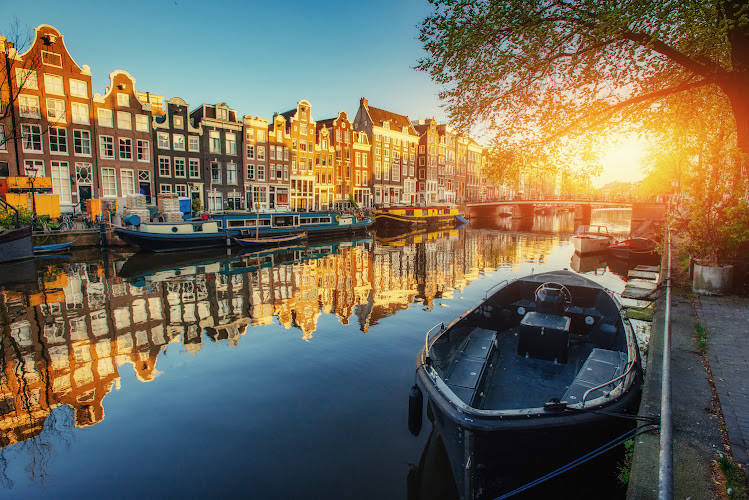
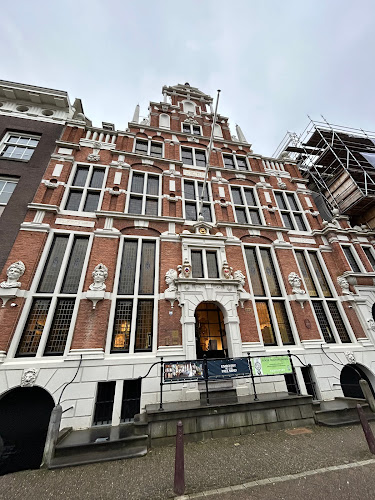
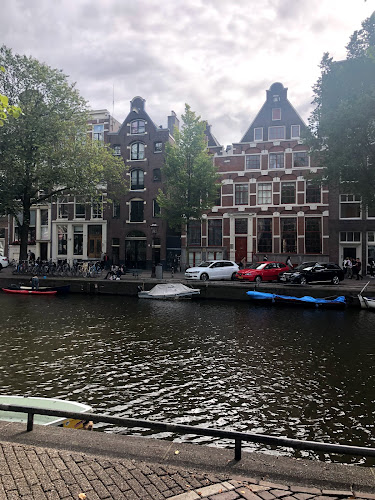
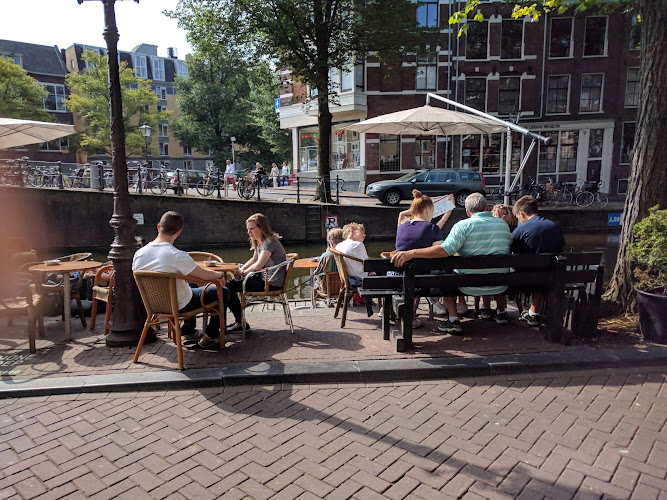
The canal retains its quiet residential character. Small private boats glide past the café’s canalside tables. Cyclists cross the small bridges connecting the neighborhood. Historic gabled houses—some dating to the 1640s—line both banks. The St. Andrieshofje, Amsterdam’s oldest surviving almshouse courtyard, stands just steps away at Egelantiersgracht 107-114.
Menu highlights and drinking traditions
While Café ‘t Smalle does not serve full dinners, its snack menu represents the best of traditional Dutch bar food. The bitterballen draw particular praise—these crispy, deep-fried spheres of beef ragout arrive hot enough to require caution with that first bite. Kaastengels (cheese sticks), ossenworst (raw beef sausage), and toasted sandwiches round out the savory offerings. The apple pie has earned a devoted following, with some visitors declaring it the best in Amsterdam.
The drinks menu honors the building’s distillery heritage. Jenever, the juniper-flavored spirit that predates British gin by centuries, takes pride of place. Staff can guide newcomers through the distinction between jonge (young) jenever’s neutral smoothness and oude (old) jenever’s barrel-aged complexity. Ordering a kopstoot—literally “a blow to the head”—pairs a small tulip glass of jenever with a draft beer, the traditional Amsterdam combination.
Dutch and Belgian beers flow from the ceramic taps: Amstel, Heineken, and regional specialties. The wine selection suits those seeking something different, and coffee provides an alternative for afternoon visitors.
Practical information for visitors
Address: Egelantiersgracht 12, 1015 RL Amsterdam
Opening hours:
Monday–Thursday: 14:00–00:00
Friday: 14:00–01:00
Saturday: 13:00–01:00
Sunday: 13:00–23:00
Payment: Cards accepted, though carrying some cash simplifies smaller purchases and tipping.
Reservations: Not typically necessary for drinks and snacks; the upstairs room accommodates private groups of up to 30 guests by arrangement.
Contact: +31 20 623 9617
Getting to Café ‘t Smalle
From Amsterdam Centraal, the most scenic approach combines public transport with a short walk. Take tram 13 or 17 to the Westermarkt stop—a journey of roughly 10 minutes. From there, head north along the Prinsengracht, then turn right onto the Egelantiersgracht. The café sits approximately 200 meters along the canal’s southern bank.
Walking from Centraal takes approximately 20 minutes and passes through Amsterdam’s most photogenic streets. Follow the Damrak to Dam Square, continue west along Raadhuisstraat, and enter the Jordaan neighborhood. The Anne Frank House and Westerkerk serve as useful landmarks—’t Smalle lies just a few minutes’ walk to the north.
Cyclists will find bike parking available nearby, though the narrow Jordaan streets require attentive navigation around pedestrians and the occasional delivery vehicle.
Nearby attractions worth combining
- Anne Frank House – The preserved secret annex where Anne Frank and her family hid during World War II stands five minutes’ walk south on the Prinsengracht. Café ‘t Smalle offers a reflective space to decompress after this emotionally significant visit.
- Westerkerk – Amsterdam’s tallest church tower rises 85 meters above the Prinsengracht. The 1620s building designed by Hendrick de Keyser contains Rembrandt’s unmarked grave and offers tower climbs with panoramic city views.
- St. Andrieshofje – Just steps from the café at Egelantiersgracht 107-114, this 1617 almshouse courtyard features a splendid blue-and-white tiled entrance passage and peaceful inner garden.
- Cheese Museum – A brief walk brings visitors to this interactive introduction to Dutch cheese culture, complete with generous free samples.
- Noordermarkt – The Monday flea market and Saturday farmers’ market transform this northern Jordaan square into a hub of local activity.
Tips for the best experience
Arrive in the mid-afternoon on weekdays for the most relaxed atmosphere and better chances of securing canalside seating. The area along the water fills quickly during warm weather and weekend evenings.
Engage with the bartenders when selecting jenever—their recommendations help navigate an unfamiliar category of spirits. Asking for the kopstoot combination demonstrates appreciation for Dutch drinking traditions.
The upstairs mezzanine offers a more secluded experience, though those steep stairs may challenge visitors with mobility concerns.
Dutch café culture embraces lingering. Ordering at the bar is perfectly acceptable, and attracting a server’s attention with a subtle nod beats hand-waving. The unhurried pace of service reflects the establishment’s philosophy: this is a place for savoring, not rushing.
Dress comfortably. ‘t Smalle attracts everyone from cycling commuters grabbing a post-work beer to tourists fresh from museum visits. Pretension has no place in a proper brown café.
A living piece of Amsterdam history
The Jordaan has transformed dramatically since Pieter Hoppe first fired up his stills in this building. What was once a working-class district of craftsmen and immigrants has become one of Amsterdam’s most desirable neighborhoods, home to galleries, boutiques, and young professionals in lovingly restored canal houses.
Yet Café ‘t Smalle persists as something increasingly rare: an unself-conscious link to the city’s past. The same dark wood, the same canal views, the same tradition of neighbors gathering over drinks that characterized the Jordaan centuries ago continues within these walls. When the afternoon light catches the stained glass windows and the gentle splash of a passing boat drifts through the door, the distance between 1780 and today feels remarkably small.
Frequently asked questions
What is Café ‘t Smalle known for?
Café ‘t Smalle is renowned as one of Amsterdam’s most atmospheric brown cafés, occupying an 18th-century building that originally served as Pieter Hoppe’s jenever distillery tasting room. The café is celebrated for its preserved historic interior, extensive jenever selection, excellent bitterballen, and scenic canalside location on the Egelantiersgracht.
Is Café ‘t Smalle a popular café?
The café attracts both locals and visitors, though it maintains an authentic neighborhood atmosphere rather than operating as a tourist-focused establishment. Weekday afternoons tend to be quieter, while evenings and weekends draw larger crowds, particularly when weather permits outdoor seating.
What is the smallest café in Amsterdam?
While Café ‘t Smalle’s name translates to “the narrow one,” referring to its compact interior rather than claiming the title of Amsterdam’s smallest establishment, its intimate dimensions contribute to the cozy atmosphere typical of traditional brown cafés.
Does Café ‘t Smalle serve food?
The café offers a snack menu rather than full meals. Traditional Dutch bar food includes bitterballen, kaastengels, ossenworst, toasted sandwiches, and highly praised apple pie. The selection complements afternoon drinks or provides a light bite alongside evening beverages.
Can you sit outside at Café ‘t Smalle?
The café provides canalside seating along the Egelantiersgracht. These waterside tables offer views of passing boats and the historic houses lining the canal, making them highly sought after during pleasant weather.