Description
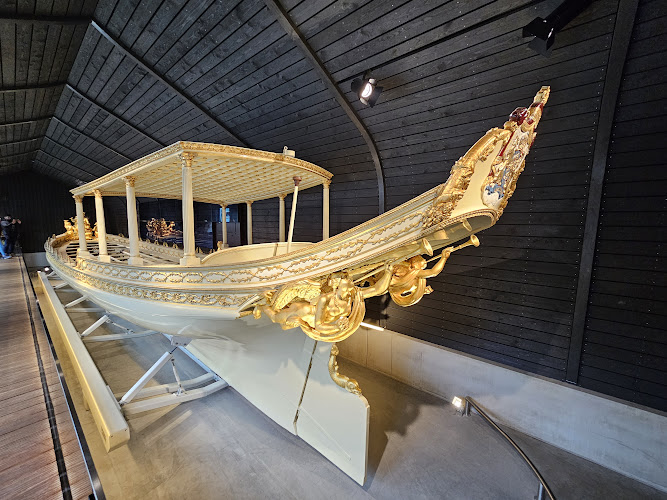
Ah, the Royal Barge. Now there’s a sight to behold: a golden vessel gliding through Amsterdam’s canals, carrying royalty and dignitaries in all their pomp and splendour. It’s the aquatic equivalent of the golden coach, built specifically for the Dutch royal family.
I remember the first time I saw this magnificent craft. I was strolling along the quay by the National Maritime Museum, minding my own business, when there it was, in all its gilded glory. It stopped me dead in my tracks.
Built between 1816 and 1818 for King William I, this 17-metre-long masterpiece is a work of art. Funny enough, old William never actually used it himself. His son, William II, first took it for a spin during his inauguration in 1841. Talk about hand-me-downs.
Since then, people have used this floating palace around 30 times for state visits and other grand occasions. Its last outing was in 1962, when Queen Juliana and Prince Bernhard celebrated their silver wedding anniversary. You do wonder when it’ll make another royal voyage.
Key Features
So, what makes this barge so special? For starters, it’s not just long, it’s incredibly slender. I mean, it looks as if it could slip through the eye of a needle. But the real showstopper is the gold leaf, with ornaments wherever you look.
At the bow, you’ll find Neptune himself, accompanied by three seahorses. They’re not just there for show: Neptune symbolises the greatness of the head of state and guards the vessel’s journey. Sensible, really. Who wouldn’t want the god of the sea on their side while cruising the canals?
The barge also carries plenty of smaller ornaments: crabs, water plants and more. Each has its own story, so it’s a bit like a floating history book.
Here’s a fun fact: becoming a rower on this boat wasn’t a walk in the park. The Navy handpicked midshipmen and put them through their paces. They had to learn to move the barge as majestically as possible, with no splashing about like kids in a paddling pool.
And they weren’t allowed to look at the King, Queen or any of the guests. They had to keep their eyes on their oars the whole time. I don’t know about you, but I’d be dying to sneak a peek at the royals.
Best Time to Visit
Wondering when you can see this golden beauty? The Royal Barge is available to view all year round. It sits in its boathouse on the quay at the Maritime Museum, ready for visitors to admire.
If you ask me, spring and summer are especially lovely. Sunlight catches the gold-leaf ornaments beautifully, and Amsterdam’s a pleasure to explore when the weather’s good. Make a day of it: see the barge, stroll along the canals, or hop on a boat tour and pretend you’re royalty.
Winter has its charms too. There’s something rather lovely about seeing this piece of Dutch royal history while wrapped up against the cold. And with fewer tourists around, you’ll have more room to take in the details.
The museum’s hours can vary a little by season, so check its website before you go. You don’t want to arrive five minutes after closing. I’ve done that, and it’s no fun.
How to Get There
Getting to the Royal Barge is straightforward. It’s housed at the National Maritime Museum, in the eastern part of central Amsterdam, in a striking building right on the waterfront.
If you’d rather take public transport (and honestly, driving in Amsterdam can be a bit of a nightmare), take tram 26 from Central Station and get off at Kadijksplein. From there, it’s a short walk to the museum.
If you’re cycling, as many of us do in Amsterdam, there’s plenty of bike parking at the museum. Just lock your bike properly; theft is no joke here.
You can also walk from Central Station if you’re feeling adventurous, or have had one too many stroopwafels and want to stretch your legs. It takes about 20 minutes, and you’ll see a bit of the city along the way. Follow the signs to the Maritime Museum, or use your phone. Just try not to get distracted by the canals and lose your way.
Tips for Visiting
A few tips to make your visit to the Royal Barge go smoothly. First, buy your tickets online if you can. It’ll save you time and possibly a headache. There’s nothing worse than queuing up only to find the museum’s sold out for the day.
The museum can get busy, especially during peak tourist season. To avoid the crowds, try visiting early in the morning or later in the afternoon. Midday is usually the busiest time.
Don’t forget your camera. The Royal Barge is a real looker, and you’ll want to capture all those golden details. Just remember: no flash photography inside the boathouse. We wouldn’t want to blind Neptune.
If you’re a history buff or simply love boats, consider joining a guided tour. The guides know their stuff and share plenty of interesting details about the barge and its past. For instance, the rowers had to count their strokes to reach their destination smoothly. I only learned that from a guide.
The museum also has a lovely café with a view of the harbour. Once you’ve had a good look at the Royal Barge, treat yourself to a coffee and a slice of Dutch apple pie. You’ve earned it.
And don’t rush. Take your time with all the intricate details. Who knows, perhaps one day you’ll see the barge in action. Wouldn’t that be something?