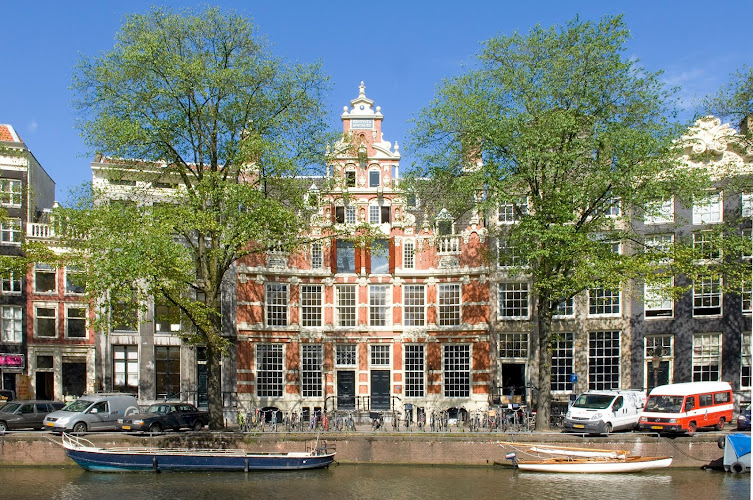
Museumhuis Bartolotti (Huis Bartolotti) is a 1620 merchant’s mansion at Herengracht 170 where you’re allowed to touch things: you can sit on the chairs, open the drawers and set the table in the kitchen. It’s open Wednesday to Sunday, 10:00–17:00. Adult tickets cost €11, and you must book a time slot in advance, even if you have a Museumkaart.
Museumhuis Bartolotti at a glance
- Address: Herengracht 170, 1016 BP Amsterdam (the double house spans numbers 170–172)
- Standard hours: Wednesday to Sunday, 10:00–17:00. Closed Monday and Tuesday.
- Tickets: €11 for adults, €6 for students, free for under-18s and Museumkaart holders
- Booking: you need a timed ticket, including with a Museumkaart
- Run by: Hendrick de Keyser Monumenten, the heritage association that owns the house
- Accessibility: no lift and several staircases, so it isn’t accessible by wheelchair
- Phone during opening hours: +31 6 8206 7691
Hours and prices were checked against Hendrick de Keyser Monumenten’s visitor page in September 2026. The house is sometimes hired out for private events, so check the two-week schedule on that page before you go.
Why this canal house is worth a visit
Huis Bartolotti was built around 1618–1620 for Willem Bartolotti van den Heuvel (1560–1634), a merchant and banker. He was born Willem van den Heuvel in Hamburg. An aunt’s childless husband, the Bolognese merchant Giovanni Battista Bartolotti, left him a fortune on the condition that he take the Bartolotti name. By 1631, tax assessors put his wealth at 400,000 guilders, making him the second-richest person in Amsterdam.
The design is attributed to Hendrick de Keyser (1565–1621), the city’s master stonemason. Locals once called the building Het Bonte Huis, meaning the colourful house. Three generations of Bartolottis lived here until 1689. The house was later split into two dwellings and passed through the hands of a series of wealthy owners. Hendrick de Keyser Monumenten bought number 170 in 1924 and number 172 in 1971.
Most canal-house museums keep you behind ropes. This one doesn’t. An audio tour covers the architecture and the people who lived here, and you’re invited to sit down, open cabinets, fold napkins the 18th-century way and walk through the deep garden at the back. Since 1 January 2026, Huis Bartolotti has been officially recognised as a museum and accepts the Museumkaart.
What to see inside
The facade in the canal bend
The house stands in the small bend of the Herengracht. Because of this bend, the two plots were only 28.5 feet wide at the front but widened towards the back. The red-brick and natural-stone facade follows the curve of the canal, so you can see it from both sides of the water and from Driekoningenstraat. Look for the ornamental vases, balusters, medallions and carved figures. The facade was restored in 1967–1971, using a drawing in the Grachtenboek (around 1768) and paintings by Jan van der Heyden as a guide.
The front house
The front of the house mixes periods. The entrance hall has Louis XIV-style stucco from about the 1730s. The front room has a marble relief above the fireplace, painted wall hangings with landscapes, and genuine witjes: grisaille paintings made to look like carved stone, by Jacob de Wit. Two portraits of the last generation of Bartolottis hang in the inner room. None of the family’s original 17th-century furniture has survived.
The rococo hall
Jan van Tarelink, a whaling merchant who later became mayor, bought the house in 1752 for 80,000 guilders. He added a large four-storey rear house and put a reception hall on its first floor. This hall is the highlight of any visit. It has mahogany carving, finely modelled rococo stucco and a ceiling painting by the Cologne-born artist Jurriaan Buttner. The paintings are dated 1756, which probably marks the year the work was finished. The blue wall fabric was added during the 2013–2014 restoration. A short film and music let you try a period dance here.
The garden room fountain
The garden room has a marble fountain with carved animals around its edge. It probably dates from the 17th century and was reused in the 18th-century rear house. Behind the small door on its left is a hidden pump handle. It raised cool water from the cellars, which was used to chill wine and rinse glasses. The water wasn’t safe to drink.
The kitchen, box bed and garden
Downstairs, the kitchen table is laid for a large meal, and visitors can help set it. Upstairs, compare the plain box-bed room with the rich rooms below. Finish in the long garden, which gives the best view of the rear facade. Children can do a house trail using a special colouring sheet.
Tickets, hours and booking
| Ticket type | Price |
|---|---|
| Adult | €11 |
| Student | €6 |
| Under 18 | Free |
| Museumkaart holders | Free (time slot still required) |
| Stadspas (Amsterdam), green dot and blue diamond | Free |
| VriendenLoterij VIP-KAART holders | Free |
| Hendrick de Keyser members | Free |
| Combi ticket with Museum Het Schip (without Museumkaart) | €25 |
Prices from Hendrick de Keyser Monumenten, checked September 2026.
Because the house is fragile, each time slot takes only a limited number of visitors. If you turn up without a booking, the house may be full. You can buy tickets on the official English page. The combi ticket covers two very different ways of living in Amsterdam: canal-ring grandeur here and early 20th-century workers’ housing at Museum Het Schip. You can visit the two museums on different days.
Best time to visit
Visitor numbers are capped with time slots, so the house doesn’t get packed the way bigger museums do. That means timing is mostly about getting the slot you want. For the quietest rooms, book the 10:00 slot on a Wednesday or Thursday. Weekend slots go faster, and in the spring and summer peak you should book several days ahead.
Go between late spring and early autumn if the garden matters to you, because that’s when it looks its best. Any time of year works for the rococo hall and the front rooms. Before you choose a date, remember that the house is closed on Easter Sunday and Monday, King’s Day, Liberation Day, Whit Monday, 24–26 December, 31 December and 1 January. It also closes on some days for private events.
How to get there
Walking is easiest. From Dam Square, go west along Raadhuisstraat past the back of the Royal Palace and cross the Singel. At the Herengracht, turn right and follow the west bank of the canal to the bend near Driekoningenstraat. The walk takes under 10 minutes. From Amsterdam Centraal, allow about 15–20 minutes on foot through the canal ring.
Many guides send you to the Westermarkt tram stop, but no trams will stop there until at least 28 February 2027. GVB has suspended trams 13 and 17 on Raadhuisstraat and Rozengracht during the Oranje Loper works. For now, take a tram to Dam and walk the rest of the way, or take metro 52 to Rokin and walk about 10–15 minutes. Routes change often during the works, so check the GVB journey planner just before you set off.
From Schiphol, take a direct train to Amsterdam Centraal and walk from there. Don’t drive: central canal-ring parking is expensive and very limited. Cycling works well, but watch the tram rails and park your bike only in marked spots.
Nearby places to pair with it
Huis Bartolotti sits in the western canal ring, a short walk from the Westerkerk and the Anne Frank House. It fits easily into a half-day canal walk. If you’re interested in small, unusual museums, Electric Ladyland in the Jordaan is about 10 minutes away on foot. For more on the canal belt, see our guide to Amsterdam’s canals.
Frequently asked questions
Are Huis Bartolotti and Museumhuis Bartolotti the same place?
Yes. Huis Bartolotti, Museumhuis Bartolotti and Bartolotti House all refer to the double canal house at Herengracht 170–172, run by Hendrick de Keyser Monumenten.
Can I visit Huis Bartolotti with a group?
Not at the moment. Hendrick de Keyser Monumenten says it cannot take group visits because of demand, so each person needs to book an individual time slot.
Is Huis Bartolotti good for children?
Yes. Visitors under 18 get in free, children can do a house trail with a colouring sheet, and everyone is allowed to open drawers and sit on the furniture.
Is Huis Bartolotti open on public holidays?
It is closed on Easter Sunday and Monday, King’s Day, Liberation Day, Whit Monday, 24–26 December, 31 December and 1 January.