History and Background
Museum Het Schip is a testament to early 20th-century Dutch social housing and architectural innovation. This iconic structure emerged during a pivotal time in Amsterdam’s urban development, uniquely blending form and function.
Founding and Development
Het Schip took shape in 1919 as part of a larger social housing project in Amsterdam. After World War I, the Netherlands faced a pressing need for worker housing. In response, the government and housing associations created affordable homes. Het Schip was built for the Eigen Haard Housing Association to provide dignified living spaces for working-class families.
The complex originally housed 102 apartments, a post office, and a school. It was designed to foster a sense of community among residents. The builders used high-quality materials and paid attention to details, setting a new standard for social housing projects of the time.
Michel De Klerk’s Influence
Architect Michel De Klerk played a key role in bringing Het Schip to life. As a leading figure in the Amsterdam School movement, De Klerk pushed the boundaries of design. He saw architecture as an art form that could uplift people’s lives.
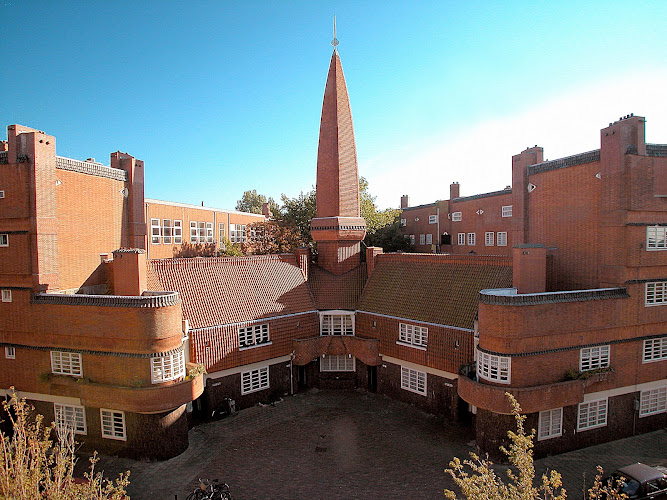
De Klerk’s vision for Het Schip went beyond basic shelter. He added decorative elements like sculptures and intricate brickwork. The building’s unique shape, reminiscent of a ship’s hull, earned it the nickname “The Ship.” De Klerk’s design blended practical needs with artistic expression, creating a landmark that still inspires today.
Architectural Significance
Het Schip stands as a prime example of early 20th-century Dutch architecture. Its unique design and innovative features have made it an iconic landmark in Amsterdam.
Expressionist Architecture
Het Schip showcases the bold, imaginative style of Expressionist architecture. The building’s striking facade uses red brick in unconventional ways, creating a dynamic, wave-like effect. This design mirrors the shape of a ship, giving the complex its name.
Unusual elements like rounded corners, decorative towers, and sculptural details add to its expressive character. The architect, Michel de Klerk, used these features to break away from traditional building forms. His goal was to create a visually exciting and emotionally engaging structure.
Style of the Amsterdam School
Het Schip is a key work of the Amsterdam School movement. This style aimed to blend art and function in public housing. Architects of this school used organic shapes and rich ornamentation in their designs.
The building’s intricate brickwork patterns are a hallmark of the Amsterdam School. De Klerk paid special attention to craftsmanship, as seen in the detailed tile work and custom-made windows. These elements elevated social housing to an art form.
Het Schip’s design also focused on improving workers’ living conditions. It included spacious apartments, a post office, and a school, showing how architecture could serve social needs.
The Complex and Its Components
Het Schip is a remarkable housing complex that blends art and functionality. It features unique architectural elements, living spaces, and public areas that make it a standout example of Amsterdam School design.
Post Office
The post office in Het Schip is a gem of early 20th-century design. Built in 1919, it served as a vital communication hub for residents. The space boasts colorful tilework and intricate brickwork patterns. Curved lines and geometric shapes adorn the walls and counters.
The post office’s layout reflects the Amsterdam School’s focus on beauty in everyday spaces. It includes a small meeting hall showcasing the complex’s community-oriented design. Today, the former post office is part of the museum, allowing visitors to step back in time and experience its artistic charm.
Apartment Buildings
Het Schip’s apartment buildings are the heart of the complex. Originally containing 102 homes, they now house 82 units. These buildings were designed to provide quality housing for working-class families.
The structures feature distinctive shapes and forms. Brick facades with varied patterns create visual interest. Large windows let in plenty of natural light. Some apartments have unique corner designs or projecting balconies.
Inside, the homes were modern for their time. They included amenities that were rare in working-class housing of the era. The complex also has a museum apartment. This space is furnished in 1920s style, giving visitors a glimpse of daily life in Het Schip’s early years.
Gardens and Public Spaces
Het Schip’s outdoor areas are as thoughtfully designed as its buildings. The complex includes gardens that provide green spaces for residents. These areas feature plants and flowers popular in the 1920s.
Public spaces around the buildings encourage community interaction. Walkways connect different parts of the complex. Some areas have benches where people can sit and chat. The layout of these spaces reflects the Amsterdam School’s focus on creating livable urban environments.
The exterior design of Het Schip also includes decorative elements. Sculptural forms and intricate brickwork patterns adorn the facades. These features turn the whole complex into a work of art, blending form and function in unique ways.
Tours and Visitor Information
Museum Het Schip offers guided tours and various ticketing options for visitors. The museum is open Tuesday through Sunday and provides accessibility for different needs.
Guided Tours Offered
Museum Het Schip runs daily tours that are included in the entrance fee. Tours start at 11:10 AM, with additional times at noon, 1 PM, 2 PM, 3 PM, and 4 PM. The 3 PM tour is always in English, perfect for international visitors. These tours cover the former post office designed by Michel de Klerk, a rebuilt 19th-century slum dwelling, and the museum apartment.
There’s a special tour of The Dageraad for those interested in social housing architecture. This tour explores a beautiful housing block that Michel de Klerk and Piet Kramer designed. Groups of 10 or more should contact the museum to arrange their visit.
Planning Your Visit
Museum Het Schip is open from Tuesday to Sunday, 11 AM to 5 PM. Ticket prices are €7.50 for adults and €5 for students. Holders of the Museum Card or I Amsterdam Card get free entry. The museum is located at Oostzaanstraat 45, 1013 WG Amsterdam.
Visitors can easily reach the museum by bus. Take the bus to the last stop, Zaanstraat, about a 10-minute ride. For those with questions or special needs, the museum staff is available by phone at +31 20 68 68 595.
Exhibitions and Collections
Museum Het Schip offers a range of exciting exhibitions and collections for visitors to explore. The museum’s permanent collection showcases the stunning architecture of the buildings that house it.
The expressionist housing complex, designed by Michel de Klerk, is a highlight. Known as “The Ship” due to its unique shape, this 1919 structure is a prime example of Amsterdam School architecture.
Temporary exhibitions frequently grace the museum’s halls. A recent showcase, running from November 2021 to October 2022, featured the work of Dutch artist and graphic designer Fré Cohen.
Visitors can expect to see:
- Original architectural elements
- Period furniture and decor
- Photographs and blueprints
- Interactive displays about social housing
The former post office, another De Klerk creation, is a must-see attraction within the museum. It offers a glimpse into early 20th-century Dutch design and functionality.
Art enthusiasts will appreciate the museum’s focus on the Amsterdam School of Expressionist architecture. This movement’s influence is evident throughout the exhibits, from building models to decorative arts.
Remember to check the museum’s website for current and upcoming exhibitions. Each visit promises new insights into Dutch design history and social progress.
Cultural Impact and Legacy
Museum Het Schip stands as a symbol of social progress and architectural innovation in Amsterdam. Its unique design and rich history have left a lasting mark on Dutch culture and urban development.
Influence On The Dutch Architectural Landscape
Het Schip’s striking appearance helped define the Amsterdam School style. This bold approach to architecture spread across the Netherlands in the early 20th century, and many buildings in Amsterdam and other Dutch cities show its influence.
The complex blended art and social housing in a new way. It proved that affordable homes could also be beautiful. This idea changed how people thought about public housing.
Het Schip’s success inspired other projects. Architects started to focus more on the needs of working-class families, creating spaces that were both functional and visually appealing.
Museum De Dageraad
Museum De Dageraad showcases another famous example of Amsterdam School architecture. Like Het Schip, Michel de Klerk designed it. The museum is in the De Pijp neighborhood.
De Dageraad tells the story of social housing in Amsterdam. It shows how architects tried to improve workers’ lives through design. Visitors can see original interiors and learn about the area’s history.
The museum helps keep the legacy of the Amsterdam School alive. It offers tours and programs that connect people to this important period in Dutch architecture. By preserving these buildings, Amsterdam ensures that future generations can appreciate this unique cultural heritage.