Amsterdam’s Museum of the Canals, also known as Grachtenmuseum Amsterdam, explains how the city’s 17th-century canal ring was planned, financed and built. The main experience is an audio-led multimedia presentation through five rooms, followed by historic period rooms and a temporary exhibition. Allow 60 to 90 minutes for the complete visit.
This compact museum is best for visitors who want context before walking or cruising the canal belt. The permanent presentation lasts about 40–45 minutes, starts every 10 minutes and follows a fixed audio sequence rather than a fully self-paced format.
Quick verdict: Visit for a clear, visually engaging introduction to Amsterdam’s canal system and a chance to explore a 1665 Herengracht house. Choose another museum if you mainly want a large art collection or prefer to move through every room at your own pace.
Museum of the Canals at a glance
| Detail | Current visitor information |
|---|---|
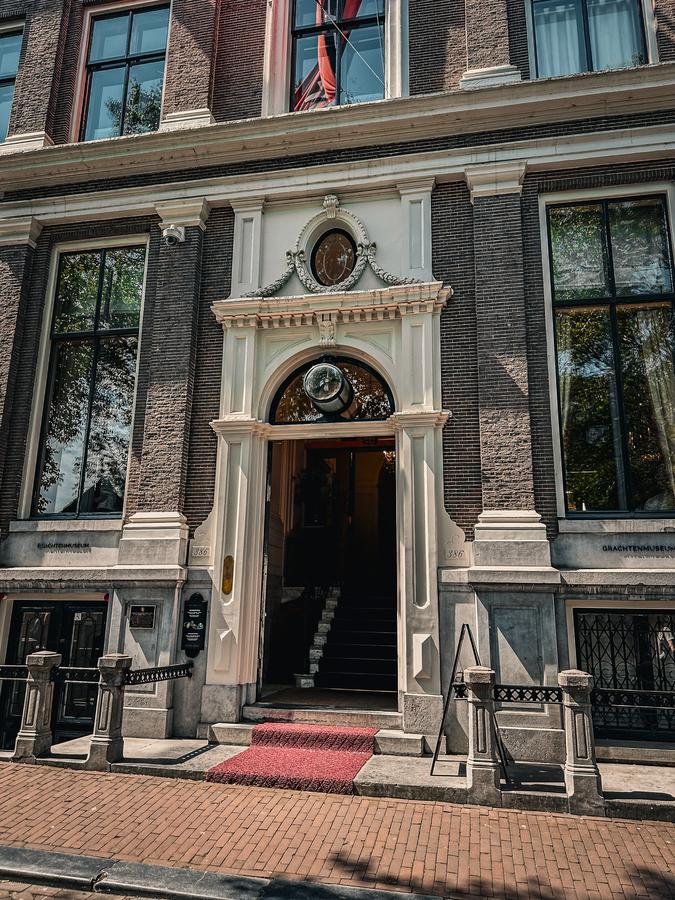
| Address | Herengracht 386, 1016 CJ Amsterdam |
| Opening hours | Monday 12:00–17:00; Tuesday–Sunday 10:00–17:00 |
| Last entry | 16:30 |
| Adult ticket | €18.50 |
| Children | Ages 6–17: €9.50; ages 0–5: free |
| Typical visit | 60–90 minutes, including the 40–45 minute permanent presentation |
| Booking | Advance booking is optional; online tickets do not provide priority entry |
| Included cards | Museumkaart, I amsterdam City Card, Stadspas and ICOM |
| Audio guide | Included in nine languages |
| Accessibility | Wheelchair-accessible entrance, lifts and accessible restroom |
Is the Museum of the Canals worth visiting?
The Museum of the Canals is worth visiting if you want to understand why Amsterdam looks the way it does. Models, projections, animation and audio explain the engineering, investment and city planning behind the concentric canal belt. That context makes the surrounding streets, canal houses and bridges easier to read afterward.
The museum offers the strongest value for first-time visitors, architecture and urban-planning enthusiasts, families with school-age children, and Museumkaart or I amsterdam City Card holders. At the standard adult price, it is a more specialized choice than Amsterdam’s large collection museums.
This museum is a good fit for
- Travelers who want a concise introduction to Amsterdam’s canal history.
- Visitors interested in canal-house architecture, urban planning or hydraulic engineering.
- Families with children aged 6–14 who can use the free treasure hunts and coloring sheets.
- People looking for an indoor activity that takes roughly one to one-and-a-half hours.
- Visitors using a Museumkaart, I amsterdam City Card, Stadspas or ICOM card.
Consider another museum if
- You want a broad art collection or several hours of galleries.
- You dislike audio-led presentations that move through rooms in a set sequence.
- You need captions, a hearing loop, sign-language interpretation or audio description; these services are not currently listed by I amsterdam, so contact the museum before visiting.
What you’ll see inside
The five-room multimedia exhibition
The permanent exhibition follows 400 years of Amsterdam canal history. A handheld audio guide leads each small group through five rooms, with models, projections, special effects and animation showing how the city expanded across wet ground. One of the most memorable displays is a canal-house model that uses the Pepper’s ghost illusion to reveal life behind the façades.
A new round starts every 10 minutes and accommodates up to 12 people. The museum describes the presentation as approximately 40–45 minutes. You cannot visit this part without the audio guide, and the museum does not offer live guided tours for regular visitors. See the official permanent exhibition overview for the current format.
The 1665 canal house and period rooms
The building is part of the visit, not just its setting. Merchant Karel Gerards commissioned architect Philips Vingboons to design the house in 1663, and it was completed in 1665. Later residents included banker Jan Willink, who helped finance loans to John Adams during the American Revolutionary War.
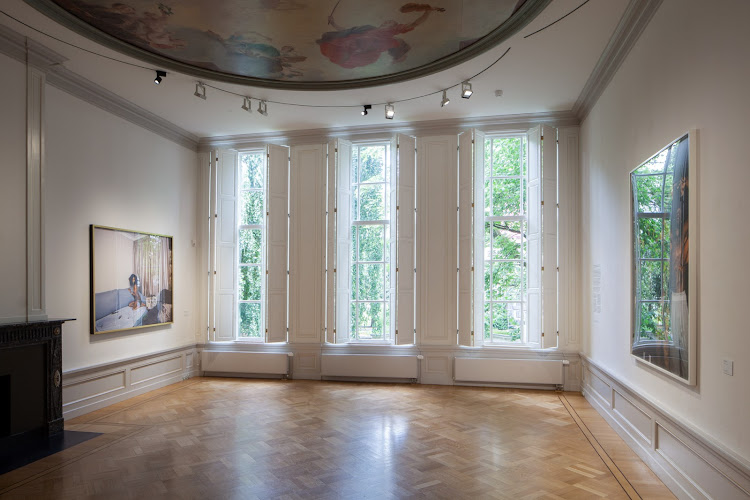
The Andriessen Room contains landscape wall paintings created by Jurriaan Andriessen in 1776. Above them is a ceiling painting completed by French artist Pascal Amblard in 2022. The adjoining period rooms combine surviving 17th-century elements with a restoration based on their 19th-century Empire-style interiors. The museum’s building history explains these layers in more detail.
Current temporary exhibition
Love on the Canals – 30 Years of Canal Parade runs through 27 September 2026. Photography, personal accounts and artworks examine the Canal Parade as celebration, protest and cultural heritage. The exhibition is part of Amsterdam’s WorldPride 2026 programme.
Temporary exhibitions change, so check the official programme after 27 September 2026 rather than relying on an older listing.
Tickets, opening hours and booking
The museum opens at noon on Monday and at 10:00 from Tuesday through Sunday. Last entry is at 16:30. It is closed on 1 January, 27 April and 25 December; holiday hours can change, so verify them before a special-date visit.
| Ticket type | Price |
|---|---|
| Adult | €18.50 |
| Student or CJP | €12.50 |
| Child aged 6–17 | €9.50 |
| Child aged 0–5 | Free |
| Museumkaart, Stadspas, I amsterdam City Card or ICOM | Free |
| Carer accompanying a visitor with a disability | Free |
| Uitpas holder | €11.10 |
You can buy admission at the desk or online. Reservations and time slots are not mandatory, and an e-ticket does not provide fast-track entry. The museum warns that Saturday and Sunday afternoons can be busy.
Payment is cashless. Debit and credit cards are accepted except American Express. Bring the relevant card or ID when using a student, CJP or free admission ticket.
How long to spend and when to go
Budget 60 to 90 minutes. The permanent presentation accounts for about 40–45 minutes; the remaining time covers the period rooms, temporary exhibition and museum shop.
For the lowest chance of a queue, arrive near opening on a weekday. Weekend afternoons are the museum’s stated busy period. Arriving by about 15:30 is a sensible target if you want time for the complete route rather than reaching the final 16:30 admission.
The location works well before a walk through the Nine Streets or after a canal cruise. The museum explains the planning behind the canal ring; seeing the actual streets and façades afterward reinforces what the multimedia presentation covers.
Visiting with children
The visual models, projections and compact length make the museum most suitable for school-age children who can follow an audio story. Free coloring sheets and treasure hunts are available for ages 6–14. Children aged five and under enter free, although the timed audio sequence may feel restrictive for very young children who need frequent breaks.
Families should allow a little waiting time because each multimedia round starts at a set interval and is limited to 12 people.
Accessibility and facilities
The museum states that the full museum route is wheelchair accessible. A platform lift provides an accessible entrance, lifts connect the exhibition floors, passageways are sufficiently wide, and an accessible restroom is available. Guide and assistance dogs are permitted.
A wheelchair can be borrowed from the museum and reserved in advance by phone or email. Carers accompanying a visitor with a disability receive free admission. Some details of the dollhouse display may be difficult to see from a seated position.
I amsterdam’s accessibility listing does not currently show a hearing loop, captions, sign-language interpretation, audio description, Braille material or low-stimulus hours. Contact the museum directly to confirm any accommodation needed for your visit.
- Café: There is no museum café.
- Shop: A small shop at the ticket desk sells books, jewelry and gifts.
- Garden: The canal garden is not part of normal admission. The museum says it can be visited during Amsterdam Open Garden Days on the third weekend of June.
- Pets: Pets are not admitted, except guide and assistance dogs.
How to get to the Museum of the Canals
The museum is at Herengracht 386, 1016 CJ Amsterdam, near the Nine Streets shopping district.
- By tram: Take tram 2 or 12 to Koningsplein, then walk along Herengracht.
- By metro: Take metro line 52 to Rokin and continue on foot.
- On foot: The museum is within the central canal belt and can be combined with nearby sights, shops and canal walks.
Check the museum’s official address and directions page for current transport guidance and accessibility at the entrance.
Why the canal ring matters
Amsterdam’s canal ring was not a decorative afterthought. It was a long-term urban expansion that used concentric canals to drain wet ground, create transport routes and organize new residential and commercial districts. UNESCO inscribed the 17th-century canal ring inside the Singelgracht as a World Heritage Site in 2010, recognizing it as an influential example of hydraulic engineering and large-scale town planning.
The museum turns that large urban story into a sequence of models and rooms. It is especially useful early in a trip because the information changes how you interpret canal-house widths, gables, inner gardens and the pattern of the streets outside. UNESCO’s Amsterdam canal ring listing provides the broader heritage context.
Practical tips before you visit
- Do not assume an online ticket skips the queue; it still needs to be scanned at the desk.
- Bring a debit or accepted credit card. Cash and American Express are not accepted.
- Allow at least an hour and arrive earlier than the final admission if you want to see the temporary exhibition.
- Check the current exhibition before visiting after 27 September 2026.
- Plan coffee or lunch elsewhere because the museum has no café.
- Contact the museum ahead of time for specific sensory, hearing or mobility requirements.
Frequently asked questions
How long does the Museum of the Canals take?
The permanent multimedia presentation lasts about 40–45 minutes. Allow 60–90 minutes for the presentation, period rooms and temporary exhibition.
Do you need to book the Museum of the Canals in advance?
No. Advance booking is optional, and the museum does not use mandatory time slots. An online ticket does not provide priority entry.
Is the Museum of the Canals free with the I amsterdam City Card or Museumkaart?
Yes. Admission is free with a valid I amsterdam City Card, Museumkaart, Stadspas or ICOM card. Bring the valid card for scanning at the desk.
Is the Museum of the Canals wheelchair accessible?
Yes. The museum has a wheelchair-accessible entrance, lifts between floors and an accessible restroom. A wheelchair can also be reserved in advance.
Is the Museum of the Canals good for children?
It is best suited to school-age children who can follow an audio-led story. Free treasure hunts and coloring sheets are available for children aged 6–14.
Can you visit the Museum of the Canals garden?
Not during normal admission. The museum says the garden opens to visitors during Amsterdam Open Garden Days on the third weekend of June.
Which audio-guide languages are available?
The included audio guide is available in Dutch, English, French, German, Spanish, Italian, Japanese, Mandarin Chinese and Russian.
The bottom line
The Museum of the Canals is a focused introduction to Amsterdam’s most defining piece of urban design. Its strongest features are the five-room multimedia sequence, the 1665 canal house and the 1776 Andriessen wall paintings. The visit is most worthwhile for travelers who want historical context before exploring the canal belt, particularly when admission is included with a museum or city card.
For more ideas beyond the canal district, compare more places to visit in Amsterdam.