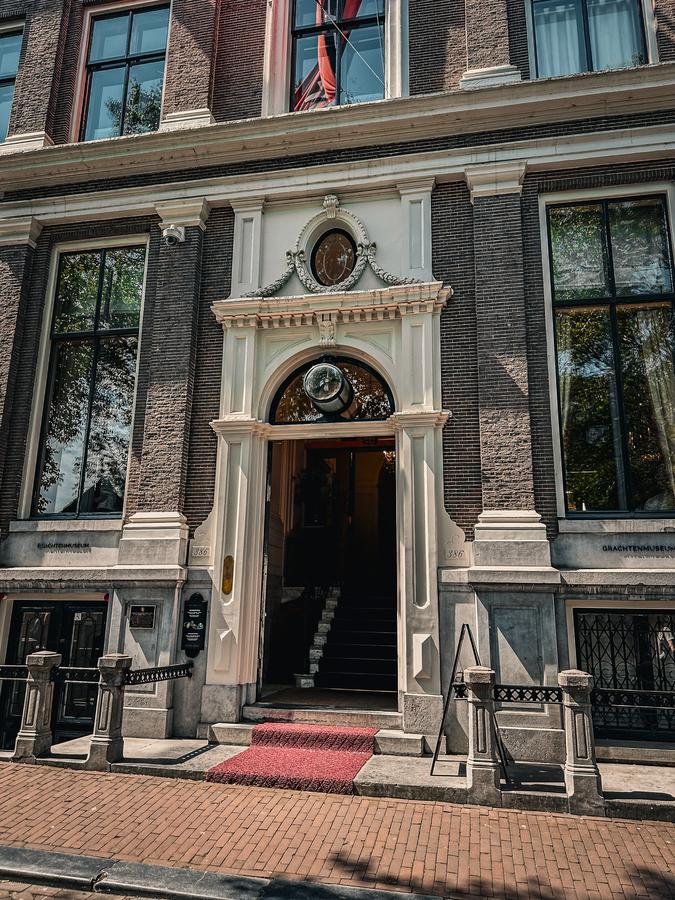
Huis Marseille is Amsterdam’s first museum dedicated to art photography, housed in two 17th-century canal houses at Keizersgracht 401. It opened in September 1999 and rotates its exhibition programme roughly three times a year. Standard admission is €12.50, with free entry for under-18s and Museumkaart holders, and the museum is open daily from 10 am to 6 pm, until 9 pm on Thursdays.
Visitor essentials at a glance
| Address | Keizersgracht 401, 1016 EK Amsterdam |
| Opening hours | Daily 10 am–6 pm; Thursday 10 am–9 pm |
| Closed | 27 April (King’s Day), 25 December, 1 January, and during exhibition installation in the days before an opening |
| Adult ticket | €12.50 |
| Students, 65+, CJP | €6.50 |
| Groups of 8 or more | €10.00 per person |
| Free entry | Under 18s, Museumkaart, I amsterdam City Card, Stadspas, ICOM |
| Phone | +31 (0)20 531 89 89 |
| Typical visit length | 60–90 minutes |
Prices and hours are checked against the museum’s own visitor information page. Third-party listing sites frequently republish outdated figures such as €8 or €9 admission and Tuesday-to-Sunday hours, so treat the museum website as the authoritative source before you travel.
What Huis Marseille is
Huis Marseille was the first museum in the Netherlands devoted entirely to photography as an art form. It occupies two adjoining canal houses on the Keizersgracht, one of the three main waterways of Amsterdam’s UNESCO-listed canal ring, and it deliberately rejects the neutral white-cube model that most contemporary photography institutions adopt.
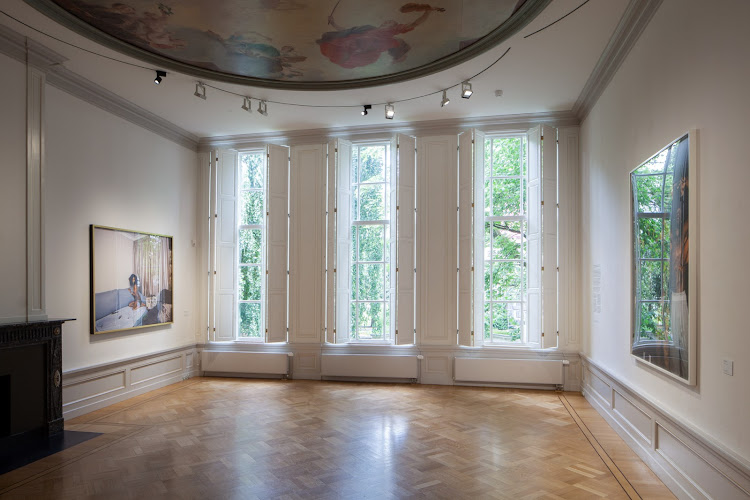
That decision is the museum’s defining characteristic. Rather than stripping the interiors back, the museum kept ceiling paintings, stucco work, marble detailing and one of the best-preserved period rooms on the Amsterdam canals — a red salon in Louis XIV style. Contemporary prints hang in rooms that predate photography by two centuries, which produces a running visual argument between the image on the wall and the room around it.
Beyond the galleries, the building holds a photography library, a garden behind the canal house, and a bookshop and webshop selling exhibition catalogues and monographs. The scale is domestic rather than institutional, which is precisely why it works as a counterweight to the Rijksmuseum or Stedelijk on a packed Amsterdam itinerary.
Exhibitions and how the programme works
The programme changes on average three times per year, and each slot usually runs two or three concurrent shows rather than a single blockbuster. Recent and upcoming programming gives a fair sense of the curatorial range:
- Michella Bredahl, Rooms We Made Safe — 18 October 2025 to 8 February 2026, the Danish photographer’s first museum exhibition.
- Yumna Al-Arashi, Body as Resistance — 14 February to 21 June 2026, the Yemeni-Egyptian-American artist’s first major institutional survey in Europe.
- Martine Gutierrez, Wunderkind — 27 June to 18 October 2026.
- Adolphe de Meyer, The Substance of a Venetian Dream — 24 October 2026 to 7 February 2027, the first European museum show devoted to de Meyer, built around a rediscovered group of 75 photographs of his Venetian years.
- Andrzej Steinbach, Hier and Maya Inès Touam, Belongings — both 24 October 2026 to 7 February 2027.
The pattern is consistent: solo presentations that often mark an artist’s first museum or first European showing, frequently paired with a historical or archival counterpoint. If you follow a specific photographer, check the exhibition calendar before booking, because a changeover week can mean closed doors.
Best time to visit
There is no bad season, but the timing decisions that actually change your experience are the time of day and the position within the exhibition cycle, not the month.
- Thursday evening is the strongest slot. The museum stays open until 9 pm, and late hours in small Amsterdam museums generally draw a more local, less rushed audience than midday.
- Weekday mornings at opening suit anyone who wants the period rooms without other visitors in the frame.
- May through September is the window for the garden, when sitting outside between galleries is realistic rather than aspirational.
- Rainy days are genuinely well suited to this museum — it is entirely indoors apart from the garden, compact, and reachable on foot from the centre.
- Avoid the days immediately before an opening, when the museum closes for installation. This is the single most common reason visitors arrive to a locked door.
- Shoulder season — April to mid-June, or September to November — balances usable weather against the July and August crowd peak across the city.
How to get there
The museum sits on the Keizersgracht near the Leidsestraat crossing, in the middle of the canal ring. It recommends arriving by bicycle or public transport, which is sound advice in a district where car access is slow and parking is expensive.
- Tram from Centraal Station: take tram 2 or 12 to the Keizersgracht stop, then walk about four minutes. The museum’s visitor information page also lists trams 17 and 24 as options from Centraal, so check the GVB journey planner for current routing.
- Metro: take metro 52 (North–South line) and get off at Rokin, roughly an eight-minute walk.
- On foot from Centraal: about 20 minutes south through Damrak, Dam Square and the Rokin, then west along the canal — the most scenic approach.
- By bike: straightforward on dedicated lanes; use the canal-side racks and lock to a fixed object, as unsecured bikes disappear quickly here.
- From Schiphol Airport: direct train to Centraal Station in roughly 15–20 minutes, then tram, metro or walk.
- By car: the museum has no parking. It suggests Q-Park Europarking on Marnixstraat or the Kalverstraat garage on Singel.
Practical tips for your visit
- If you hold a Museumkaart or I amsterdam City Card, entry is included — worth confirming your card covers the date before travelling.
- Budget 60–90 minutes for the galleries, plus extra time if you intend to use the library or linger in the garden.
- The building is a protected 17th-century structure with staircases between floors; contact the museum directly about step-free access and lift availability if mobility is a consideration.
- Photography policies vary by exhibition because of artist copyright, so check signage at the entrance rather than assuming.
- Combine the visit with the Nine Streets shopping district or the Anne Frank House, both within a short walk along the canal ring.
Frequently asked questions
How much does Huis Marseille cost?
Standard adult admission is €12.50. Students, visitors aged 65 and over, and CJP or Rembrandtpas holders pay €6.50, and groups of more than eight pay €10.00 per person. Entry is free for under-18s and for Museumkaart, I amsterdam City Card, Stadspas and ICOM holders.
What are the opening hours?
The museum is open daily from 10 am to 6 pm, and until 9 pm on Thursdays. On 31 December it closes at 5 pm.
When is Huis Marseille closed?
It closes on 27 April (King’s Day), 25 December and 1 January, and during the installation of a new exhibition in the days before an opening. It is open on all other public holidays, including Easter Monday and Whit Monday.
How long should I spend at Huis Marseille?
Most visitors need 60 to 90 minutes for the exhibitions and period rooms. Allow extra time if you plan to use the photography library, the garden or the bookshop.
How often do the exhibitions change?
The exhibition programme changes on average three times a year, usually with two or three shows running at once. Check the museum’s calendar before visiting, as it closes for a few days between programmes.
Is Huis Marseille worth visiting?
It suits anyone interested in contemporary photography or Dutch canal-house interiors. The draw is the combination of serious international photography with preserved 17th-century ceiling paintings, stucco and a Louis XIV period room, in a museum small enough to see properly in about an hour.