Within the serene Begijnhof courtyard and just steps from the bustling Kalverstraat shopping street, stands one of Amsterdam’s most remarkable architectural survivors. The Houten Huis (Het Houten Huys), or “Wooden House,” at Begijnhof 34 represents an extraordinary link to medieval Amsterdam. Dating to around 1528—as confirmed by dendrochronological research conducted by Amsterdam’s Bureau Monumenten & Archeologie in 2010—this timber-fronted structure is the oldest preserved wooden house in the Netherlands and one of only two remaining wooden-facade buildings in central Amsterdam.
A survivor of fire and time
Amsterdam’s medieval streetscape once consisted almost entirely of wooden buildings with thatched roofs. Two devastating fires—in 1421 and 1452—changed this forever. The 1452 conflagration destroyed approximately three-quarters of the city, prompting authorities to mandate brick construction. By 1521, wooden facades were largely prohibited, and timber construction was banned outright by 1669.
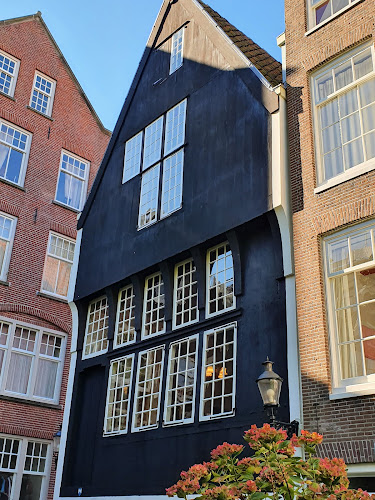
The Houten Huis stands as a rare testament to pre-ban construction methods. Its dark wooden facade, small windows, and Gothic timber frame transport visitors back nearly 500 years. While the current facade represents a careful early 20th-century restoration, the building’s structural elements—including its wooden skeleton—date to the 16th century. The restoration used historical evidence to recreate an authentic representation of medieval Amsterdam architecture.
Dendroprovenance research (tree-ring dating) revealed that the Houten Huis was built in or shortly after 1528, correcting earlier assumptions that dated it to around 1420 or immediately after the 1452 fire. This scientific analysis examined the growth patterns of the wood used in construction, providing precise dating that revised centuries of historical understanding.
Architectural features worth noting
The Houten Huis displays several characteristic features of late medieval Dutch construction. The jettied upper floor projects outward over the ground floor, a design that maximized interior living space while protecting the lower level from rain. This technique was common throughout Northern Europe during the medieval period.
The small windows reflect the era’s economic realities—glass was expensive, and smaller openings conserved heat during Amsterdam’s cold winters. The visible lean of the building, typical of many historic Amsterdam structures, results from centuries of settling into the city’s soft, water-saturated soil. The triangular wooden gable crowning the roofline follows traditional Dutch design, channeling rainwater and snow away from the structure.
Eighteen houses within the Begijnhof still possess their Gothic wooden frameworks, though most received brick facades during renovations in the 17th and 18th centuries. The Houten Huis remains exceptional in retaining its wooden facade, making it immediately recognizable against its brick-faced neighbors.
The Begijnhof: sanctuary since the 14th century
The Houten Huis gains additional significance from its setting. The Begijnhof ranks among Amsterdam’s oldest inner courtyards, with documented existence dating to 1389. This medieval community provided homes for the Beguines (begijnen in Dutch)—lay Catholic women who lived communally under vows of chastity without taking formal monastic vows. Unlike nuns, Beguines could leave the community at any time, including to marry.
The courtyard sits at medieval street level, approximately one meter below the surrounding city center. During the Middle Ages, canals completely encircled the Begijnhof, with access limited to a single bridge entrance. This isolation created a peaceful enclave that persists today despite the courtyard’s central location.
Following the Protestant Reformation and Amsterdam’s shift to Calvinist rule in 1578, the Begijnhof became the only Roman Catholic institution permitted to continue operating in the city. The Beguines retained their community because they owned their houses privately. Their chapel, however, was confiscated and eventually granted to English Presbyterian worshippers in 1607—today’s English Reformed Church, which still holds services in the courtyard.
Sister Antonia (born Agatha Kaptein in 1887) was the last Beguine of Amsterdam. She died on 23 May 1971 at age 84, ending over 600 years of continuous Beguine presence in the courtyard. Today, single women continue to reside in the Begijnhof, maintaining the tradition of a female community even as its religious character has faded.
What makes the Houten Huis special
Standing before the Houten Huis offers a rare opportunity to visualize Amsterdam’s medieval streetscape. While the building is a private residence and cannot be entered, its exterior tells a rich story. The contrast between the dark wooden facade and the surrounding 17th and 18th-century brick buildings illustrates the architectural transformation that followed Amsterdam’s great fires.
The building shares its distinction as a surviving wooden structure with only one other central Amsterdam location: In ‘t Aepjen at Zeedijk 1. That building, constructed between 1546 and 1550, now operates as a historic brown café where VOC sailors once paid drinking debts with monkeys brought from the East Indies—giving rise to the Dutch expression “in de aap gelogeerd” (lodged with the monkey), meaning to find oneself in trouble.
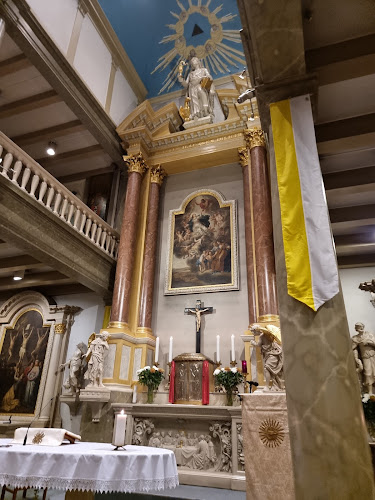
Visiting the Houten Huis also provides access to the Begijnhof’s broader treasures. The courtyard features numerous gable stones with Roman Catholic imagery, two well-maintained greens, and the hidden Begijnhofkapel—a clandestine Catholic church built in 1671 when public Catholic worship remained forbidden. The chapel contains panels depicting the 1345 Miracle of Amsterdam, a Eucharistic miracle that significantly elevated the city’s religious status.
Planning your visit
The Begijnhof welcomes visitors daily from 10:00 to 18:00. Entry is free, though the courtyard closes on King’s Day (27 April). The main entrance is located at Gedempte Begijnensloot, accessible via Begijnensteeg from Kalverstraat. A secondary entrance exists on the north side of Spui square—look for an unassuming wooden door in the building facade.
Early morning visits, particularly on weekdays, offer the quietest experience. Weekend afternoons draw larger crowds, and hosts may supervise visitors to protect residents’ privacy. The Begijnhof prohibits bicycles, dogs, trolley cases, and eating or drinking within the courtyard.
The Houten Huis sits near the southern entrance, across from the English Reformed Church. Its position allows for photography of the facade while respecting the privacy of current residents. Several pulpit panels inside the English Reformed Church were designed by Piet Mondrian during his early career—a surprising connection between medieval architecture and modern art.
Getting there
The Begijnhof occupies a central location between Dam Square and the Spui, making it accessible from multiple directions.
- By tram: Lines 1, 2, 4, 5, 11, 12, 13, 14, 17, and 26 stop at Spui or nearby Dam Square. From Spui, the entrance is approximately 50 meters north.
- By metro: Exit at Rokin station (lines 52 and 54) and walk five minutes northwest through the Kalverstraat pedestrian zone.
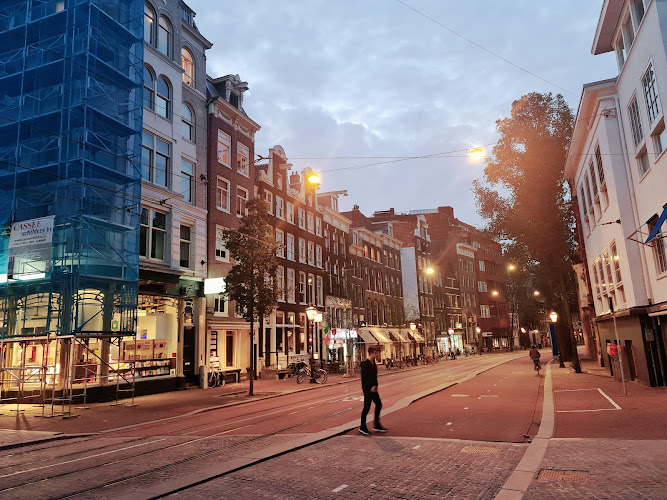
- On foot: From Dam Square, walk south through Kalverstraat for approximately 400 meters. Turn right into Begijnensteeg (look for the narrow alley between shops) and continue to Gedempte Begijnensloot.
Cycling to the immediate area is possible, though bicycle parking near the entrances is limited. The nearby Kalverstraat is pedestrianized, requiring dismounting. Driving is impractical in central Amsterdam; the closest parking garage is Q-Park Bijenkorf at Dam Square.
Nearby attractions
The Begijnhof’s central location places it within easy walking distance of numerous Amsterdam highlights. The Amsterdam Museum, accessible via the Schuttersgalerij (Civic Guard Gallery) directly from the Begijnhof, houses portraits of Amsterdam citizens spanning centuries. The gallery passage itself—lined with 17th-century group portraits—offers free access.
The Spui hosts a weekly book market on Fridays, attracting bibliophiles to tables stacked with secondhand and antiquarian volumes. Cafés surrounding the square, including the legendary Café Hoppe, provide excellent spots for post-visit refreshments.
The Houten Huis reminds us that Amsterdam’s elegant canal houses and orderly brick facades emerged from necessity rather than choice. A city built of wood burned repeatedly until its citizens adapted. That this single wooden survivor remains—quietly marking its corner of a medieval courtyard—offers an authentic glimpse into the Amsterdam that preceded the Golden Age.
Frequently asked questions
Is the Houten Huis the oldest house in Amsterdam? The Houten Huis is the oldest preserved wooden house in Amsterdam and the Netherlands. However, the overall oldest house in Amsterdam is located at Warmoesstraat 90, dating to approximately 1485. That building has a 19th-century facade that conceals its medieval structure.
Can you go inside the Houten Huis? No. The Houten Huis is a private residence and is not open to the public. Visitors can admire the exterior and take photographs from the Begijnhof courtyard.
Why are there only two wooden houses left in Amsterdam? Following catastrophic fires in 1421 and 1452, Amsterdam authorities progressively banned wooden construction. By 1521, wooden facades were largely prohibited, and timber construction was banned outright in 1669. Most wooden buildings were either destroyed by fire or replaced with brick structures.
When was the Houten Huis built? Dendrochronological research conducted in 2010 determined that the Houten Huis was built in or shortly after 1528. This corrected earlier estimates that dated it to around 1420.
What is the Begijnhof? The Begijnhof is a medieval courtyard in central Amsterdam that served as a community for Beguines—lay Catholic women who lived together under vows of chastity without taking formal monastic vows. Founded in the 14th century, the courtyard remains one of Amsterdam’s most peaceful historic sites.
Is the Begijnhof free to visit? Yes. The Begijnhof is free to visit during opening hours (daily 10:00-18:00). The site closes on King’s Day (27 April).
Who lives in the Begijnhof today? Single women continue to reside in the Begijnhof, maintaining a centuries-old tradition. The courtyard is private property, and visitors are asked to respect residents’ privacy by keeping noise levels low and staying on designated paths.