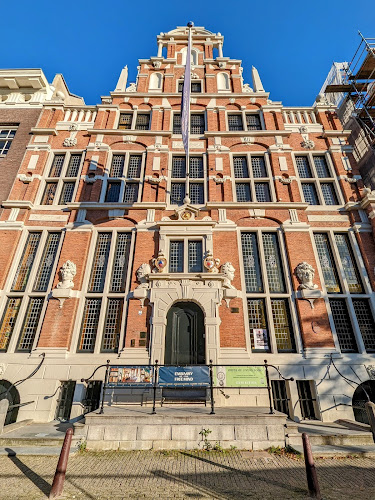
Behind an ornate 17th-century façade on the Keizersgracht canal, six stone heads gaze down at passersby—silent guardians of one of Amsterdam’s most extraordinary cultural treasures. The Embassy of the Free Mind occupies the historic House with the Heads, transforming a 400-year-old merchant’s mansion into a living sanctuary for free thought, housing nearly 28,000 rare books and manuscripts that trace humanity’s spiritual and philosophical journey across two millennia.
This isn’t a typical museum experience. The Embassy invites you into intimate encounters with forbidden texts, banned manuscripts, and revolutionary ideas that once risked their authors’ lives. From Renaissance alchemical treatises to mystical Kabbalistic works, the collection preserved here shaped Western thought in ways mainstream history often overlooks.
A building steeped in Amsterdam’s Golden Age
The House with the Heads stands as one of Amsterdam’s finest examples of Dutch Renaissance architecture. Designed by the renowned city architect Hendrick de Keyser and completed by his son Pieter in 1622, the building ranks among the Top 100 Dutch Heritage Sites recognized by the Rijksdienst voor het Cultureel Erfgoed.
The building takes its name from the six striking busts adorning its façade, each representing a Roman deity. Apollo (the arts) and Diana (the hunt) flank the outer edges, while Ceres (agriculture) and Bacchus (wine) occupy the middle positions. Mercury (commerce) and Minerva (wisdom) frame the central entrance—their placement a deliberate message. In the 17th century, positioning these particular gods beside the main door signaled that a Mercator Sapiens, a “wise merchant,” dwelt within.
Local legend tells a darker tale: that the heads commemorate six thieves beheaded by a quick-thinking maid who caught them breaking in. The story, while colorful, emerged long after the sculptures were installed by the building’s second owner, Louis de Geer.
The original owner, Nicolaas Sohier, was a wealthy stocking merchant and devoted art collector who commissioned the building in 1621. Sohier moved in circles that included the poet P.C. Hooft and owned paintings by Peter Paul Rubens. His love of Venetian music made the house a cultural gathering place during his 12-year residence.
The De Geer legacy and Amsterdam’s tradition of free thought
In 1634, the Swedish-Dutch entrepreneur Louis de Geer purchased the property, beginning his family’s 150-year stewardship of the house. The De Geer family did more than simply reside here—they made it a refuge for intellectual freedom.
Louis de Geer and his son Laurens became patrons of free thinkers, dissident philosophers, and controversial writers fleeing persecution elsewhere in Europe. They financed the printing of works that other publishers deemed too dangerous to touch. The philosopher Baruch Spinoza himself visited this house to discuss ideas that would later revolutionize Western philosophy.
The De Geer family library grew to approximately 6,000 volumes—a collection that shares remarkable thematic similarities with the books now housed in the museum. This parallel is no coincidence. When Amsterdam businessman Joost Ritman sought a permanent home for his own collection of esoteric texts, the House with the Heads offered both practical space and profound symbolic resonance.
The Bibliotheca Philosophica Hermetica: a UNESCO-recognized treasure
The heart of the Embassy is the Bibliotheca Philosophica Hermetica, also known as the Ritman Library. Joost Ritman, born in 1941, began collecting rare books at age sixteen after experiencing what he described as a sudden realization that “everything is one.” This teenage insight sparked a lifelong quest to preserve the written record of humanity’s spiritual searching.
Ritman’s collection now encompasses approximately 28,000 books and manuscripts. Among its treasures are 7,500 books printed before 1800, 70 incunabula (books printed before 1501), and more than 700 post-1550 manuscripts. Twenty-five manuscripts date from before 1550.
The collection holds several items of exceptional rarity. A 1471 edition of the Corpus Hermeticum—the foundational texts of Hermetic philosophy—sits alongside the first illustrated edition of Dante’s La Divina Commedia from 1481. A copy of Cicero’s De Officiis printed in 1465 represents one of the earliest printed philosophical works in existence.
In November 2022, UNESCO recognized the Bibliotheca Philosophica Hermetica by adding it to the Netherlands Memory of the World Register. The committee specifically acknowledged that many authors represented in the collection “took positions that, while controversial for their time, were progressive steps on the path to modern human rights.”
Dan Brown and the digital future
The library gained international attention when author Dan Brown, best known for The Da Vinci Code, conducted research here for his novels. Brown drew inspiration from the collection’s esoteric manuscripts, and in 2016 he donated €300,000 to help digitize the library’s core collection of approximately 4,600 ancient books.
On October 21, 2017, Brown returned to Amsterdam to officially open the Embassy of the Free Mind, transforming what had been primarily a scholarly research library into a museum accessible to the general public.
Today, more than 2,000 books from the collection are available online, with digitization efforts continuing. Director Esther Ritman, daughter of the founder, has championed making these once-forbidden texts “hermetically open” to everyone—a play on the Hermetic tradition’s name and a commitment to universal access.
What you’ll experience inside
The museum unfolds across several beautifully restored rooms, each serving a distinct purpose:
The Grote Sael (Great Hall) functions as the main exhibition space, where symbolic images from the rare book collection line the walls. iPads throughout the room provide deeper context for each image, connecting visitors to the manuscripts that inspired them. Monthly lunch concerts featuring conservatory musicians transform this space into a venue for cultural events.
The Kleine Sael houses rotating exhibitions of original manuscripts and rare books from the collection. Seeing these centuries-old texts in person—their hand-colored illustrations, their marginalia left by long-dead readers—creates a connection that no digital reproduction can match.
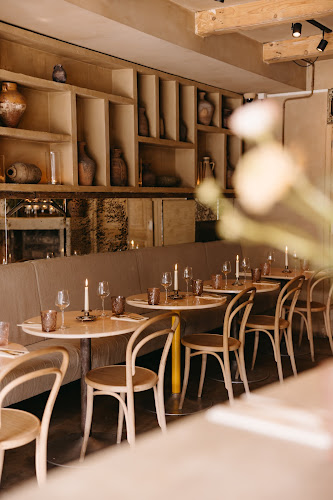
The Reading Room contains approximately 2,000 modern books on subjects related to the collection’s themes. Visitors can settle into this space to study, contemplate, or simply absorb the atmosphere of a working library. Older books from the Rare Book Room can be consulted upon request for serious researchers.
The Phoenix Room continues the exhibition with additional manuscripts and artworks, including pieces by Rachel Ritman.
The museum offers a free audio tour in Dutch and English, available through your own device or museum tablets. For deeper engagement, guided tours explore themes ranging from the history of the House with the Heads to the symbolism of alchemical imagery.
The keurtuin: a regulated garden for contemplation
Behind the main building lies one of Amsterdam’s hidden green spaces—a traditional keurtuin or regulated garden. During the 17th century, city authorities imposed strict regulations on garden layouts in this area, requiring symmetrical arrangements with formal alleys, ornamental beds, and clipped boxwood trees.
The Embassy’s garden maintains this historic character while welcoming visitors seeking a moment of quiet reflection. Volunteers tend the space, planting 2,500 tulips each year to ensure spectacular spring displays. On warm days, the museum café extends into this courtyard garden.
Planning your visit
The Embassy of the Free Mind operates on an exclusive guided tour model, offering a more intimate and informative experience than self-guided wandering allows.
Opening hours
- Wednesday through Friday: 10:00 – 17:00
- Saturday: 10:00 – 17:00
- Sunday: 11:00 – 18:00
- Closed Monday and Tuesday
- Closed on major Dutch holidays including King’s Day (April 27), Christmas Day, Boxing Day, and New Year’s Day
Location and access
- Address: Keizersgracht 123, 1015 CJ Amsterdam
- Phone: +31 20 625 8079
- Website: embassyofthefreemind.com
Getting there by public transport From Amsterdam Centraal Station, take Tram 17 and exit at the Westermarkt stop. The journey takes approximately 13 minutes. From there, walk south along the Keizersgracht canal to number 123—about a three-minute stroll.
Admission Entry is free with a Museumkaart, I Amsterdam City Card, ICOM card, Stadspas, or Adamnet card. Online reservations are appreciated even for cardholders. Standard tickets are available for purchase on the museum website.
Guided tours Several tour options enhance the basic admission:
- General introduction tours provide an overview of the collection and building
- Themed tours explore specific aspects such as the Grail artwork by Rachel Ritman or the architectural history presented by Jozef Ritman
- The Old Book Guided Tour offers hands-on encounters with centuries-old texts without display cases between you and history
Making the most of your visit
Allocate at least two hours to absorb the Embassy’s offerings properly. The dense symbolism and layered history reward patience and contemplation rather than hurried surveying.
If philosophy, mysticism, or the history of ideas interests you, bring a notebook. The concepts encountered here—Hermetic wisdom, alchemical symbolism, Rosicrucian philosophy—can be intellectually overwhelming. Writing helps process new information and creates a personal record for later reflection.
Timing your visit to coincide with one of the museum’s regular events adds another dimension to the experience. Lunch concerts in the Grote Sael, themed lectures, and special exhibitions appear regularly on the calendar.
Researchers and scholars can request access to the Rare Book Rooms by appointment. The museum encourages serious academic engagement with the collection and maintains partnerships with institutions including the University of Amsterdam’s Chair of Hermetic Philosophy and Related Currents.
A window into Amsterdam’s soul
Amsterdam earned its reputation as a haven for free thought during the 17th century, when refugees fleeing religious persecution found safety here. The city’s printing presses published works banned elsewhere in Europe. Philosophers like Spinoza and Descartes lived and worked under the protection of Amsterdam’s unusual tolerance.
The Embassy of the Free Mind preserves this heritage in physical form. The books in its collection often survived because Amsterdam’s printers dared publish them and Amsterdam’s merchants dared shelter them. Walking through the House with the Heads connects you to a tradition of intellectual courage that shaped Western civilization.
The museum’s mission statement declares that “freedom does not exist without wisdom.” This insight—that genuine liberty requires understanding, that tolerance depends on knowledge—animates everything the Embassy does. The collection demonstrates that humans across cultures and centuries have grappled with the same fundamental questions: Who are we? Where do we come from? What is our place in the cosmos?
In a city famous for its canals, coffee shops, and the Anne Frank House, the Embassy of the Free Mind offers something different: a quiet space for encountering ideas that changed history. The six heads on the façade have witnessed four centuries of Amsterdam life. Step inside, and their ancient wisdom becomes yours to explore.
Practical information at a glance
| Detail | Information |
|---|---|
| Address | Keizersgracht 123, 1015 CJ Amsterdam |
| Opening hours | Wed-Sat 10:00-17:00, Sun 11:00-18:00 |
| Closed | Monday, Tuesday, major holidays |
| Public transport | Tram 17 to Westermarkt |
| Walking time from Centraal | ~15 minutes |
| Phone | +31 20 625 8079 |
| Website | embassyofthefreemind.com |
| Accessibility | Partial accessibility; contact museum for specific needs |
Frequently asked questions
What is the Embassy of the Free Mind? The Embassy of the Free Mind is a museum and library housed in a 17th-century canal mansion on Amsterdam’s Keizersgracht. It holds the Bibliotheca Philosophica Hermetica, a UNESCO-recognized collection of approximately 28,000 books and manuscripts covering Hermetic philosophy, alchemy, mysticism, and Western esoteric traditions spanning 2,000 years.
Who founded the collection? Amsterdam businessman Joost Ritman began collecting rare books on spiritual and philosophical themes at age sixteen in 1957. He opened the library to the public in 1984 and moved the collection to the House with the Heads in 2017. His daughter Esther Ritman now directs the institution.
Why is it called the House with the Heads? The building’s façade features six decorative busts representing Roman deities: Apollo, Ceres, Mercury, Minerva, Bacchus, and Diana. These were likely added by the second owner, Louis de Geer, in the 1630s. The positioning of Mercury and Minerva beside the entrance signaled that a “wise merchant” lived within.
Can anyone visit, or is it only for researchers? Everyone is welcome. The museum offers guided tours, a free audio guide, and exhibition spaces open to all visitors. Serious researchers can request access to the Rare Book Rooms by appointment to examine specific items from the collection.
Is the Embassy of the Free Mind free with a Museumkaart? Yes. Admission is included with a Museumkaart, I Amsterdam City Card, ICOM card, Stadspas, and Adamnet card. Online reservations are appreciated but not always required.
What connection does Dan Brown have to this museum? Author Dan Brown researched his novels using the Bibliotheca Philosophica Hermetica’s collection. In 2016, he donated €300,000 to help digitize the library’s rarest books. He officially opened the Embassy of the Free Mind in October 2017.
How long should I plan for a visit? Two to three hours allows time to explore the exhibitions, listen to the audio tour, and perhaps sit in the reading room or garden. Visitors taking guided tours should add the tour duration to their planning.
Is the museum suitable for children? The Embassy offers programming specifically designed for young visitors. Children’s workshops aim to spark imagination and curiosity about history, books, and philosophical ideas. Contact the museum for current offerings.