Tucked away on Weteringschans, just minutes from the Rijksmuseum and Van Gogh Museum, Café Brecht transports visitors from Amsterdam’s Golden Age canals to the intellectual bohemia of 1920s Berlin. Named after Bertolt Brecht—the revolutionary German playwright whose Threepenny Opera electrified the Weimar Republic in 1928—this intimate Wohnzimmerbar (living room bar) pays homage to an era when poets, playwrights, and provocateurs gathered in dimly lit cafés to reshape the cultural landscape of Europe.
A namesake worth knowing
Bertolt Brecht (1898–1956) stands among the most influential dramatists of the twentieth century. Born in Augsburg, Bavaria, Brecht moved to Berlin in 1924, where he developed his groundbreaking “epic theatre” and collaborated with composer Kurt Weill on works that challenged audiences to think critically rather than simply feel. His signature round spectacles—you’ll spot playful references to them throughout the café’s décor—became as iconic as his anti-bourgeois verses and political conviction.
Brecht’s philosophy of questioning everything, of creating space for genuine human connection amid social commentary, finds its echo in this Amsterdam establishment. The café doesn’t simply borrow a famous name; it channels the spirit of a Weimar-era salon where ideas flowed as freely as the German beer.
A living room away from home
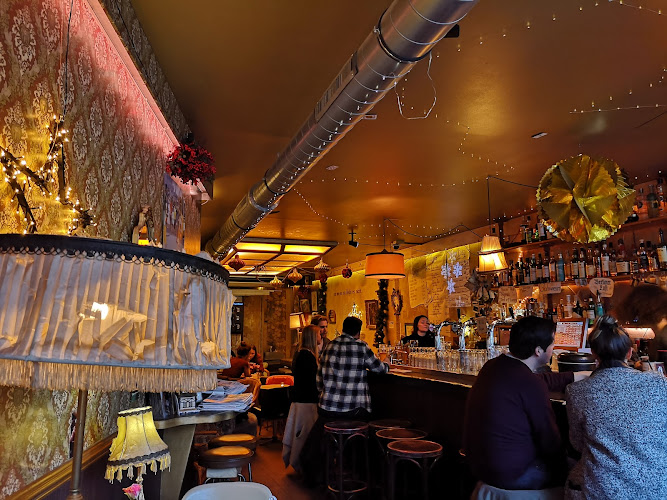
Step through the door and you’ll understand why Amsterdammers call this place their Wohnzimmer. Mismatched vintage armchairs cluster around worn wooden tables. Grandmother’s tea service shares shelf space with stacks of well-thumbed books, many in German. Pendant lamps cast pools of warm light across wallpaper that looks lifted from a 1930s apartment. Nothing matches, yet everything belongs.
The interior feels curated by happenstance rather than design—the kind of comfortable clutter that accumulates when somewhere is genuinely loved rather than styled for Instagram. Guests sink into upholstered chairs, unfold newspapers, or lose themselves in quiet conversation while the world outside rushes past toward the nearby museum district.
German beers and Berlin-style hospitality
Café Brecht maintains an unwavering commitment to German brewing tradition. Behind the bar, you’ll find a rotating selection that reads like a map of Germany’s finest brewing regions. Augustiner Helles from Munich arrives for those craving Bavaria’s most beloved pilsner. Rothaus Tannenzäpfle offers the crisp bite of Black Forest brewing. Schlenkerla Rauchbier brings the distinctive smokiness of Franconian tradition, while Köstritzer provides dark, velvety depth.
The bar pours Budweiser Budvar on tap—the original Czech Budweiser that predates its American namesake by decades—alongside seasonal German specialties. During Advent and winter months, steaming cups of Glühwein and warm apple cider draw crowds escaping the damp Dutch chill.
Beyond beer, the menu extends to Italian coffee (surprisingly excellent), homemade lemonades, and cocktails mixed with genuine care. Pair your drink with traditional Brezeln (pretzels), Weißwurst (Bavarian white sausage), a thoughtfully assembled cheese board featuring local Dutch varieties, or a freshly made piadina.
The Offline Club: unplugging in the digital age
In February 2024, Café Brecht became the birthplace of a movement. The Offline Club, founded by Ilya Kneppelhout, Valentijn Klok, and Jordy van Bennekom, launched its first “digital detox hangout” within these walls. The concept proved irresistible: guests lock their phones away at the door and spend hours immersed in reading, board games, sketching, journaling, or simple face-to-face conversation.
The initiative struck such a chord that it gained 125,000 Instagram followers within its first month—a delicious irony that speaks to the collective longing for genuine connection. The Offline Club now hosts regular Sunday sessions at Café Brecht, where visitors swap screens for Scrabble boards, and the gentle clink of coffee cups replaces notification sounds.
This modern digital sabbath fits naturally within walls that already encouraged guests to slow down. Board games have always lined the shelves here. Books have always waited to be picked up. The Offline Club simply named what Café Brecht had practiced all along.
Poetry, piano, and cultural programming
True to its theatrical namesake, Café Brecht regularly transforms into a stage for live music, poetry readings, and intimate performances. A piano sits ready for the occasional musician who tickles the keys while guests nurse their beers. The café’s events calendar—check their Facebook page or Instagram @cafebrecht—announces upcoming evenings of acoustic sets, spoken word, and the occasional stand-up comedy night.
These gatherings echo the Kabarett culture of Weimar Berlin, where entertainment and intellectual engagement intertwined. The small scale means you’re never far from the performer, and the atmosphere remains conversational rather than concert-hall formal.
When to visit
Café Brecht shifts character with the hours. Weekday afternoons offer the quietest experience—a handful of regulars tap at laptops, students burrow into textbooks, and the armchairs by the window become prized real estate for solo readers. This is the time for focused work or peaceful contemplation.
Evenings and weekends bring a livelier crowd. By Friday and Saturday nights, particularly after 9 PM, the compact space fills with friends sharing bottles and catching up across the mismatched tables. The buzz becomes part of the charm, though securing a seat may require patience or timing.
Sunday afternoons carry their own magic. Whether you’ve joined an Offline Club session or simply wandered in seeking refuge from weekend bustle, the lazy atmosphere suits lingering. This is when Brecht feels most like a genuine Wohnzimmer—a place for unhurried hours and comfortable silences.
Winter transforms the café into a haven. Rain lashes Amsterdam’s canals outside while inside, the warmth of Glühwein and cushioned seats offers perfect shelter. Summer draws guests to the small terrace for people-watching along Weteringschans, though those coveted outdoor seats fill fast on sunny days.
Essential visitor information
Address: Weteringschans 157, 1017 SE Amsterdam
Opening hours:
- Monday through Thursday: 4:00 PM – 1:00 AM
- Friday and Saturday: 1:00 PM – 2:00 AM
- Sunday: 1:00 PM – 1:00 AM
Telephone: +31 20 627 2211
Reservations: The café does not accept reservations. Arrive early during peak hours—especially Friday and Saturday evenings—or embrace the wait as part of the experience.
Payments: Credit cards accepted alongside cash. Prices remain reasonable for central Amsterdam, with beers and coffee falling in the moderate range.
Getting there
Café Brecht occupies a convenient position between Amsterdam’s museum district and the city center.
By metro: Exit at Vijzelgracht station, then walk approximately three minutes south along Weteringschans.
By tram: Tram lines 1, 7, and 19 stop at Vijzelgracht. From the Rijksmuseum tram stop, it’s a five-minute stroll.
On foot: From Dam Square, walk south along Rokin, continuing to Vijzelstraat and then Weteringschans—roughly 20 minutes of pleasant canal-side strolling. From the Rijksmuseum, the café lies just 10 minutes north, making it an ideal refueling stop between museum visits.
By bicycle: Ample bike racks line Weteringschans. Lock securely—Amsterdam’s bike theft rates remain stubbornly high.
What makes Brecht special
Amsterdam overflows with brown cafés, craft beer bars, and cozy coffee spots. Café Brecht earns its devoted following through something harder to manufacture: genuine character. The combination of theatrical heritage, German brewing tradition, vintage décor, and programming that encourages actual human presence rather than performative posting creates an atmosphere that rewards those who settle in.
The staff here know their beer list and happily guide first-timers toward the right glass. They’ll also leave you alone if that’s what you need—reading the room is part of the hospitality. Reviews consistently mention this balance: attentive without hovering, friendly without forcing conversation.
For visitors caught between the Rijksmuseum’s Rembrandts and the Van Gogh Museum’s sunflowers, Café Brecht offers cultural refreshment of a different kind. For residents seeking their own Stammlokal—a regular haunt in the German tradition—this compact bar on Weteringschans has earned that loyalty from many.
Pull up a mismatched chair. Order a German beer you’ve never tried. Leave your phone in your pocket a little longer than usual. In the spirit of Bertolt Brecht himself, who believed theatre should provoke thought rather than passive consumption, this café invites you to engage: with your companions, with your surroundings, with the simple pleasure of being somewhere that values presence over productivity.
Frequently asked questions
Is Café Brecht a coffee shop?
No. Café Brecht is a bar and café serving alcohol, coffee, and food. It has no connection to Amsterdam’s cannabis “coffee shops.”
Can I bring children?
The café welcomes families during daytime hours. Board games and the relaxed atmosphere suit older children, though evenings trend toward an adult crowd.
Do they serve food?
Yes, though Brecht is primarily a drinking establishment. Expect quality bar snacks rather than full meals: pretzels, cheese boards, sausages, piadinas, and homemade cakes.
Is the café wheelchair accessible?
The ground floor is accessible, though the compact interior and vintage furniture can make navigation challenging during busy periods.
What’s the Offline Club?
A digital detox initiative that hosts regular phone-free sessions at Café Brecht, typically on Sunday mornings. Participants lock their devices away and spend two hours reading, playing games, or simply disconnecting. Check The Offline Club’s website for upcoming dates.
Do I need to speak German?
Not at all. Staff and signage operate comfortably in Dutch and English. The German theme extends to beer selection and atmosphere rather than language requirements.
Why is it named after Bertolt Brecht?
The café honors the German playwright (1898–1956) whose experimental theatre and distinctive round spectacles became cultural icons of 1920s Berlin. The vintage décor and intellectual ambiance channel that Weimar-era café culture.