Standing sentinel at Oudezijds Achterburgwal 185, the Spinhuis represents one of Amsterdam’s most compelling architectural survivors—a building that has witnessed four centuries of social reform, punishment, protest, and scholarship. Its ornate Dutch Baroque facade conceals a history that illuminates evolving attitudes toward gender, crime, and rehabilitation in the Dutch Republic.
From convent to correctional institution
The Spinhuis (“Spinning House”) emerged from the repurposed walls of the Sint-Ursulaklooster, a St. Ursula Convent that had occupied this site since at least 1419. When Dutch authorities established the institution in 1597, they created what would become the first women’s correctional facility in the Dutch Republic—a sister institution to the Rasphuis, which housed male offenders.
The philosophy driving the Spinhuis reflected Calvinist ideals of redemption through labor. Women convicted of theft, prostitution, adultery, or simply deemed “idle” found themselves confined to large halls where they learned spinning, sewing, and other textile work. The original inscription above the entrance articulated this mission clearly: “Om schamele meyskens, maegden en vrouwen t bedelen, leechgaen en doolwech te schuwen, is dit spinhuis hier gesticht”—roughly translated as “To prevent poor girls, maidens, and women from begging, idleness, and straying from the right path, this spinning house was founded.”
This approach to penology was revolutionary for its era. Rather than pure punishment, the Spinhuis emphasized “heropvoeding” (re-education), combining labor with religious instruction to guide women back to what authorities considered acceptable social roles. The inmates’ work contributed directly to Amsterdam’s booming textile industry, as hemp and wool fibers were transformed into materials for clothing, ropes, and sails during the Dutch Golden Age.
The curious spectacle of correction
Perhaps most striking to modern sensibilities was the Spinhuis’s role as public entertainment. During the 17th and 18th centuries, curious visitors paid admission to watch inmates at work—correction as spectacle. This practice reflected the era’s belief that public examples served as moral instruction for society at large, blurring the line between punishment and performance.
The regents who administered the Spinhuis were affluent citizens, their civic duty immortalized in a 1669 group portrait by Karel Dujardin now housed in the Rijksmuseum. The painting captures five well-dressed administrators around a table, a servant interrupting with a letter—men of standing maintaining what they considered civic peace through structured oversight of female correction.
Fire, reconstruction, and an enduring relief
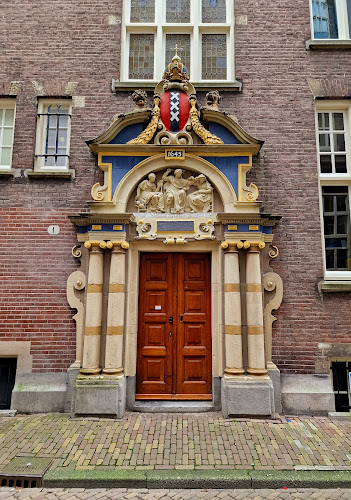
Disaster struck in 1643 when fire consumed the original structure—reportedly caused by inmates’ carelessness. The rebuilding completed in 1645 produced a more architecturally elaborate building, whose facade remains intact today.
The most striking artistic element survives in the Spinhuissteeg (Spinhuis Alley): a relief attributed to Hendrick de Keyser depicting the whipping of two women. De Keyser, Amsterdam’s municipal architect responsible for iconic structures including the Westerkerk, Zuiderkerk, and Munttoren, died in 1621, suggesting this work may derive from his designs or workshop rather than his direct hand. Beneath the relief, two verses by Pieter Corneliszoon Hooft deliver a message both chilling and characteristic of the era:
“Schrik niet ik wreek geen quaat maar dwing tot goet
Straf is myn hant maar lieflyk myn gemoet”
(Fear not, I do not avenge evil but compel to good
Punishment is my hand but loving is my mind)
The portal underwent restoration in 2010, with the lions and shield replaced by copies and a reconstruction of the crown added to preserve this unique artifact of Dutch penal philosophy.
A building’s many lives
The Spinhuis’s correctional function continued until 1782, when operations transferred to the Nieuwe Werkhuis on Roetersstraat—taking De Keyser’s relief along. The Oudezijds Achterburgwal building then served variously as a tax office during French occupation and, from 1833, as Amsterdam’s police headquarters, a function it maintained until 1941.
This connection to law enforcement proved transformative for the surrounding streetscape. By 1909, the police headquarters had outgrown its space, leading to debates about expansion. Fortunately, though adjacent buildings were demolished for new construction, the historic Spinhuis facade was preserved—a rare victory for architectural conservation in an era less attentive to such matters.
The late 20th century brought another chapter when squatters occupied parts of the building, transforming it into an autonomous social center hosting film screenings, workshops, and community programs. This occupation continued Amsterdam’s tradition of “vrijplaatsen” (free spaces) until eviction in 2017, a controversial event that sparked broader debates about gentrification and the right to urban space.
Current academic function
Since October 2016, the Spinhuis has housed research institutes of the Royal Netherlands Academy of Arts and Sciences (KNAW). The Meertens Institute, focusing on Dutch language and culture, and the Huygens Institute for Dutch History and Culture now occupy spaces where inmates once labored at spinning wheels.
These institutions form part of the KNAW Humanities Cluster, sharing operational resources while pursuing research into everything from Dutch dialects to historical digital archives. The adjacent Oost-Indisch Huis at Korte Spinhuissteeg 3 houses additional academic facilities, including the Netherlands Institute for Advanced Study (NIAS).
The building is not generally open to public tours, though the institutes occasionally host public lectures and cultural programs. Viewing the exterior facade and the remarkable portal in the Spinhuissteeg requires no appointment and costs nothing—simply walk the narrow cobblestone alley and stand where visitors have marveled for nearly four centuries.
Why the Spinhuis matters
The Spinhuis offers more than architectural beauty. It stands as physical evidence of how societies construct and reconstruct their approaches to gender, deviance, and rehabilitation. The same walls that once held women deemed wayward now shelter scholars advancing human knowledge—a transformation that speaks to Amsterdam’s capacity for reinvention.
The building also connects to the broader Dutch story of punishment and reform. The inscription above the entrance, the relief depicting correction, and the poetry of Hooft all capture assumptions about crime and redemption that feel alien yet instructive. Studying these artifacts illuminates how far society has traveled and prompts reflection on which current assumptions future generations might find equally troubling.
Finding the Spinhuis
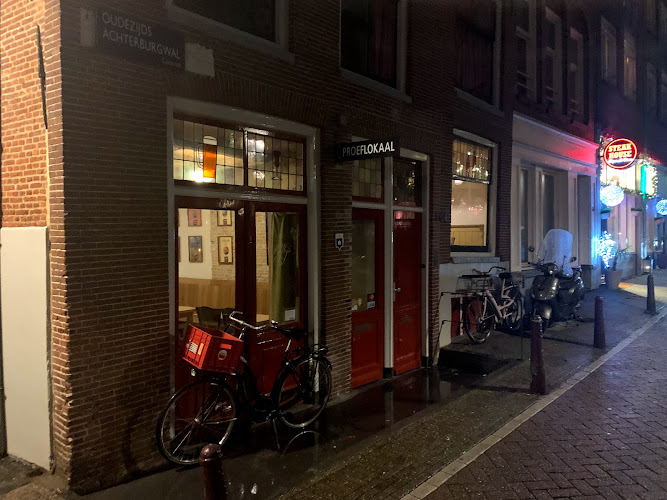
The Spinhuis stands at Oudezijds Achterburgwal 185, 1012 DK Amsterdam, positioned in the heart of the historic center near the edge of the Red Light District.
- Walking from Amsterdam Centraal Station: The 10-15 minute walk heads east along Damrak, turning right onto Oudebrugsteeg toward Oudezijds Voorburgwal, then left and first right onto Molensteeg to reach Oudezijds Achterburgwal. The Spinhuis appears on the right.
- By Metro: Nieuwmarkt station, served by lines 51, 53, and 54, lies approximately five minutes’ walk from the Spinhuis.
- By Tram: Lines 4 and 14 stop at Dam, roughly five minutes’ walk away. Line 2 also serves Dam and offers an excellent sightseeing route through central Amsterdam.
- Viewing the relief: The portal with De Keyser’s relief faces the Spinhuissteeg—a narrow alley easily missed if not specifically sought. Turn into the alley from Oudezijds Achterburgwal to find this remarkable 17th-century survival.
Extending your visit
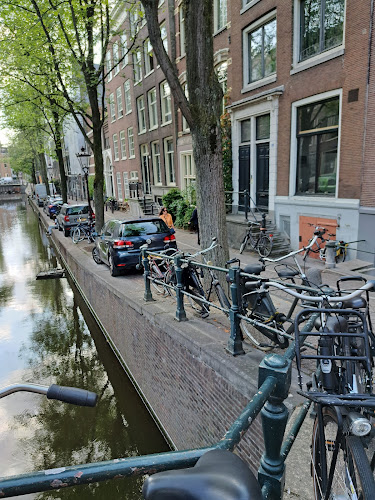
The Spinhuis sits within walking distance of several complementary attractions. The Oude Kerk, Amsterdam’s oldest surviving building, stands moments away. The canals surrounding Oudezijds Achterburgwal offer some of the city’s most photogenic views, particularly in morning light when tourist traffic remains manageable.
History enthusiasts might combine a Spinhuis visit with the Rijksmuseum, where Karel Dujardin’s painting of the Spinhuis regents hangs, creating a connection between the building’s physical presence and its artistic documentation. The Museum of Amsterdam provides broader context for understanding how the city’s approach to social welfare evolved across centuries.
For those intrigued by Amsterdam’s lesser-known corners, the surrounding streets reward exploration. The area blends centuries of architectural styles, quiet cafes, and unexpected courtyards—the essence of what makes wandering Amsterdam’s historic center endlessly rewarding.
Frequently asked questions
Can I visit the inside of the Spinhuis?
The interior serves as working academic space for KNAW research institutes and is not regularly open to the public. Occasional public lectures and open days provide rare access—check the Meertens Institute and Huygens Institute websites for announcements.
When is the best time to photograph the facade?
Morning light works best for the main facade on Oudezijds Achterburgwal, while the relief in Spinhuissteeg benefits from afternoon sun. The narrow alley can feel crowded during peak tourist hours; visiting before 10 AM or after 6 PM offers more peaceful conditions.
Is the Spinhuis included in walking tours?
Several Amsterdam walking tours—including historical, ghost, and architectural themes—include the Spinhuis as a stop. Tour prices typically range from €15-€25, with booking in advance recommended during summer months.
How does the Spinhuis relate to the Rasphuis?
The Rasphuis, established earlier for male offenders, served as the model for the Spinhuis. While the Rasphuis had inmates rasping Brazilian wood to produce red dye, the Spinhuis focused on textile production considered appropriate for women. Both reflected Dutch Calvinist ideals about reformation through labor.
What happened to the original relief by Hendrick de Keyser?
The relief remains in place at the Spinhuissteeg portal, though the lions and shield visible today are 2010 copies replacing worn originals. The reconstruction added a crown element to approximate the portal’s historical appearance more closely.