ARTIS-Micropia is the world’s first and only museum devoted entirely to microbes, and it sits on the Artisplein at Plantage Kerklaan in Amsterdam-Oost. It opens daily from 10:00 to 17:00. Tickets are from €17.00 online and €18.00 at the desk for anyone 13 or over; children up to and including 12 go free, as do Museumkaart and ICOM holders. Most visitors get round it in an hour to ninety minutes. You do not need a zoo ticket to get in, and you do not walk through the zoo to reach it.
Field note: We visited Micropia in person in September 2026 to test the visitor flow, verify on-site admission rules, photograph the current exhibits, and inspect the working laboratory. All photos, timestamps, and advice in this guide reflect our first-hand walkthrough.
Micropia at a glance
| Detail | Verified for 2026 |
|---|---|
| What it is | The first and only museum in the world dedicated to micro-organisms |
| Where | Artisplein, Plantage Kerklaan, 1018 CZ Amsterdam (Plantage, Amsterdam-Oost) |
| Opening hours | Every day, 10:00 to 17:00 |
| Adult ticket (13+) | From €17.00 online, €18.00 at the ticket desk |
| Children 0 to 12 | Free |
| Students | €10.50 (CJP €9.00) |
| Free entry with | Museumkaart, ICOM card, VriendenLoterij VIP-KAART, I amsterdam City Card |
| Combi with ARTIS-Park | From €35.50 online, €38.50 at the desk (13+) |
| Typical visit | About 60 to 90 minutes |
| Opened | 30 September 2014, by Queen Máxima |
Prices move by date. ARTIS publishes a price calendar, and the online rate is always the lower one, so the €17.00 figure is a floor rather than a flat fare.
Where exactly is Micropia, and do you go through the zoo?
No. Micropia has its own entrance on the Artisplein, a square that is open to the public and free to walk into. You buy a Micropia ticket, walk in off the square, and never pass a zoo turnstile. This is the single most common misunderstanding about the place, and it matters: plenty of people skip Micropia because they assume it costs a zoo admission on top.
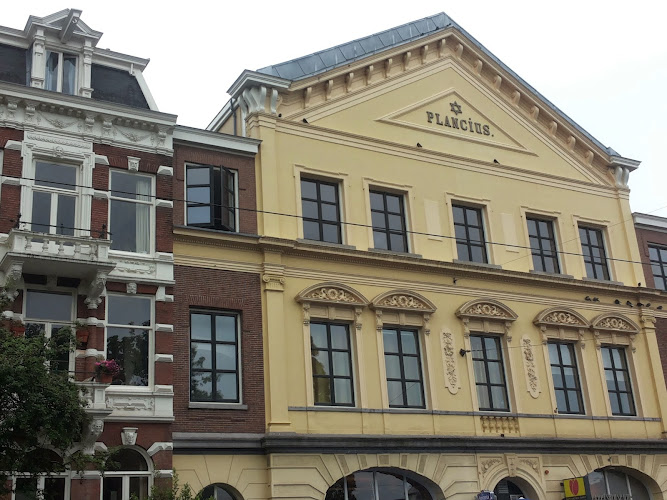
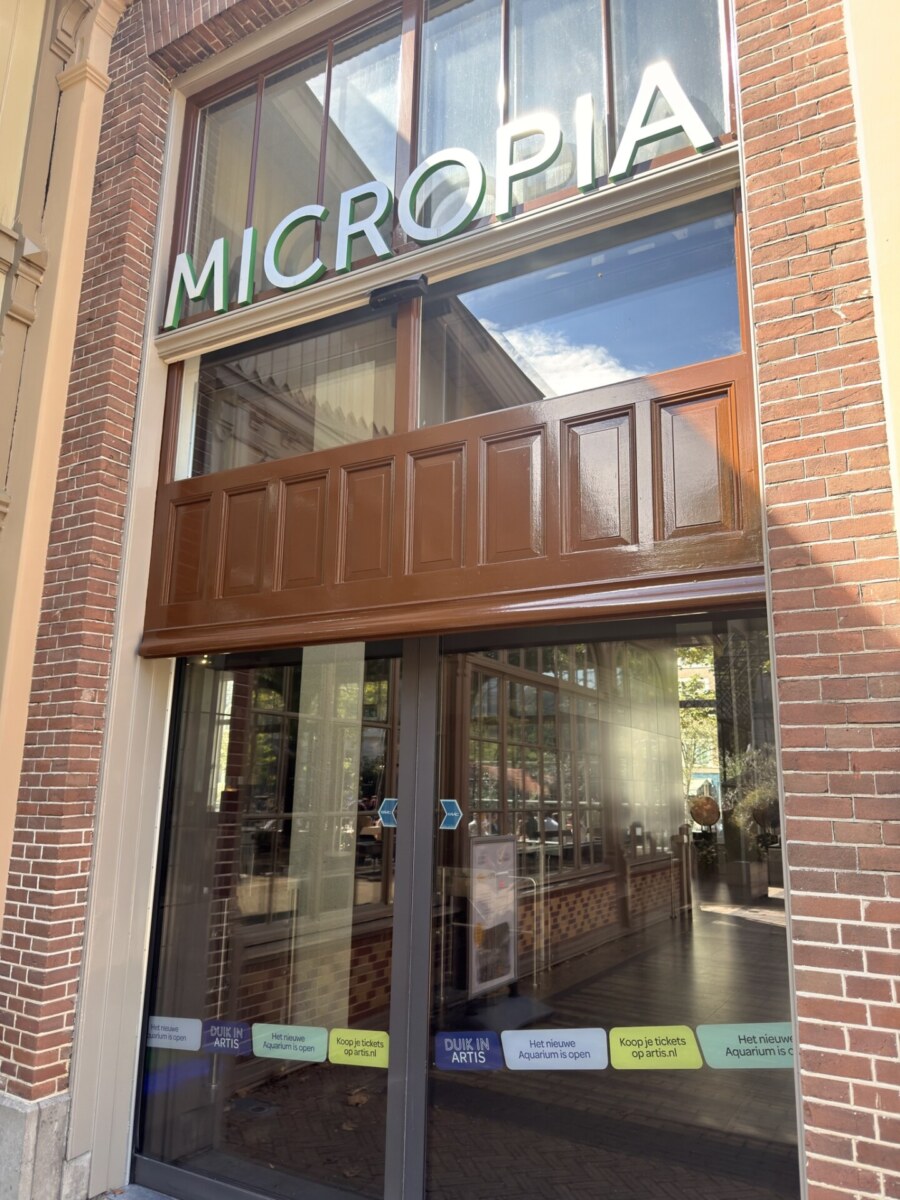
When we walked up from Plantage Kerklaan during our September 2026 visit, the Artisplein gates were open to anyone. You simply cross the open paved square straight to the glass entrance doors set into the historic brick facade, beneath the green-and-white “MICROPIA” signage. The ticket desk and barcode scanners are just inside the lobby—completely independent of the ARTIS-Park zoo gates further down the street.
The address is worth a sentence of its own, because published sources disagree. ARTIS’s own accessibility and directions page gives the museums, Micropia and the ARTIS-Groote Museum, as Plantage Kerklaan 36, and reserves Plantage Kerklaan 38-40 for the ARTIS-Park visitor entrance. I amsterdam and most listing sites publish 38-40 for Micropia as well. Both will get you there, because the buildings sit within a minute of each other on the same block. If you are navigating on foot, aim for the Artisplein rather than a house number.
The museum is in the Plantage, the leafy nineteenth-century quarter east of the centre, next door to ARTIS Royal Zoo and a few minutes from the Hortus Botanicus.
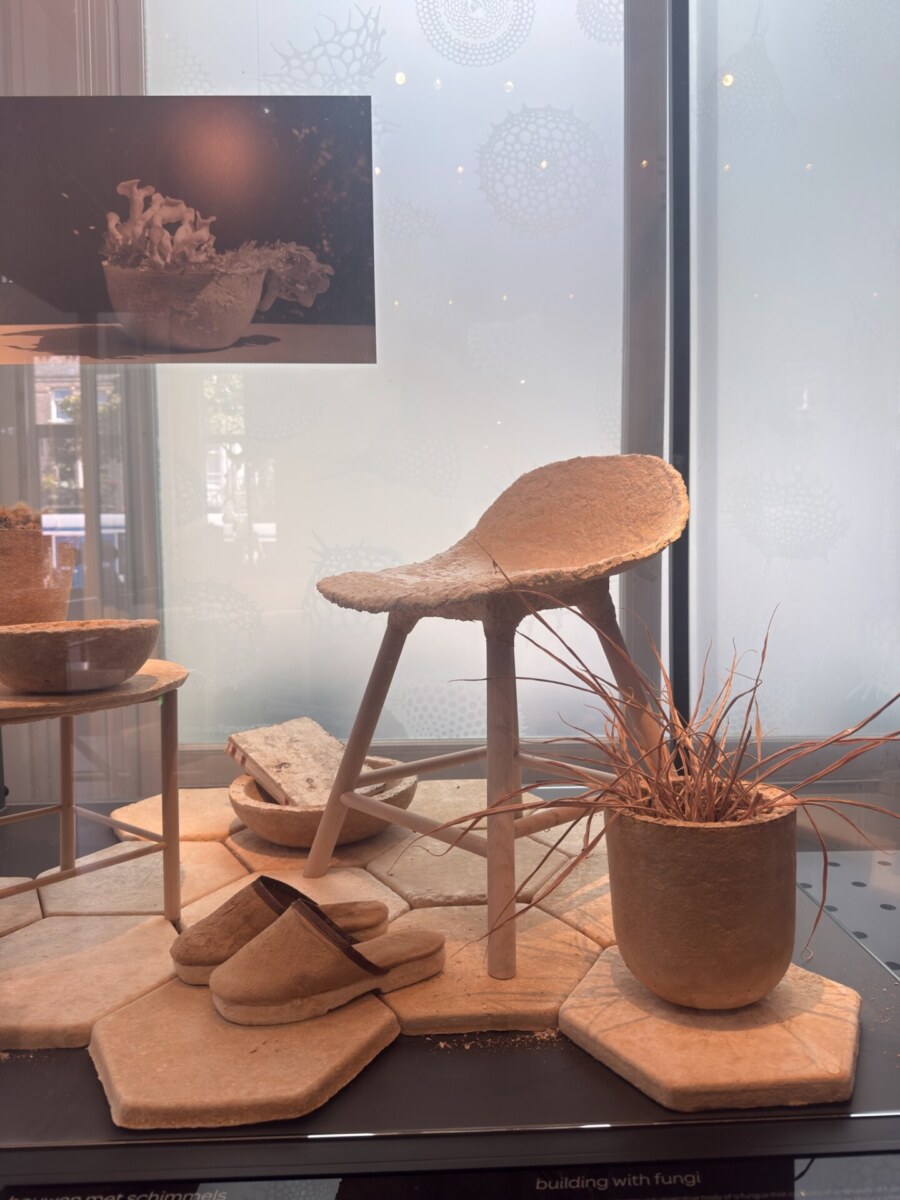
Toward the end of the exhibition, a forward-looking display titled Bouwen met schimmels (“Building with fungi”) demonstrates modern biomaterials. On our walkthrough we inspected everyday household items—a chair, slippers, a planter pot, and interlocking hexagonal tiles—all grown from living mycelium composites, highlighting how fungi can replace petroleum-based plastics and synthetic building materials.
How much does Micropia cost in 2026?
An adult ticket starts at €17.00 booked online and costs €18.00 if you buy it at the door. Children pay nothing at all until they turn 13. The full 2026 tariff, taken from ARTIS’s own ticket page:
| Ticket | Online | At the desk |
|---|---|---|
| 13 and over | From €17.00 | €18.00 |
| 0 to 12 years | Free | Free |
| Students | €10.50 | €10.50 |
| CJP | €9.00 | €9.00 |
| Museumkaart | Free | Free |
| ICOM | Free | Free |
| VriendenLoterij VIP-KAART | Free | Free |
| Micropia + ARTIS-Park combi (13+) | From €35.50 | €38.50 |
| Micropia + ARTIS-Park combi (3 to 12) | From €26.50 | €27.50 |
| Combi, students | €22.25 | €22.25 |
Two things follow from that table. A family with young children pays for the adults only, which makes Micropia one of the cheapest indoor mornings in central Amsterdam. And if you were going to the zoo anyway, adding Micropia to a park ticket costs roughly €6 more than the park alone, against €17.00 to visit it on its own.
Affiliate disclosure: some links in this article are affiliate links. If you book through them we may earn a small commission at no extra cost to you.
Micropia is also included in the I amsterdam City Card, and you do not need to reserve a slot to use it. Turn up and have the card scanned at the entrance. The same card covers ARTIS-Park and the ARTIS-Groote Museum, so the three together make a strong case for it.
What are the opening hours?
Micropia is open every day of the week from 10:00 to 17:00, including Mondays. That is worth flagging, because ARTIS-Park next door runs 09:00 to 18:00, and a lot of pages online quote the park’s hours for the museum. The museums open an hour later and close an hour earlier than the zoo.
| Day | Micropia | ARTIS-Park |
|---|---|---|
| Monday to Sunday | 10:00 – 17:00 | 09:00 – 18:00 |
| Christmas Eve | 10:00 – 17:00 | 09:00 – 17:00 |
| Christmas Day and Boxing Day | 10:00 – 17:00 | 09:00 – 17:00 |
| New Year’s Eve | 10:00 – 16:00 | 09:00 – 16:00 |
| New Year’s Day | 10:00 – 17:00 | 10:00 – 17:00 |
On public holidays the museums keep the park’s closing time but still open at 10:00.
What do you actually see inside?
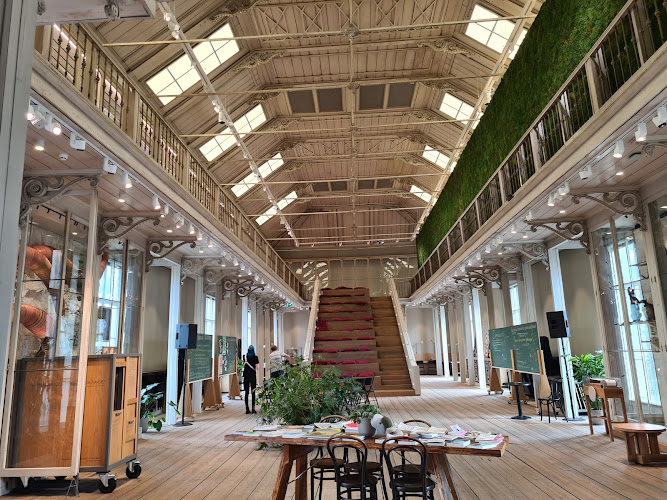
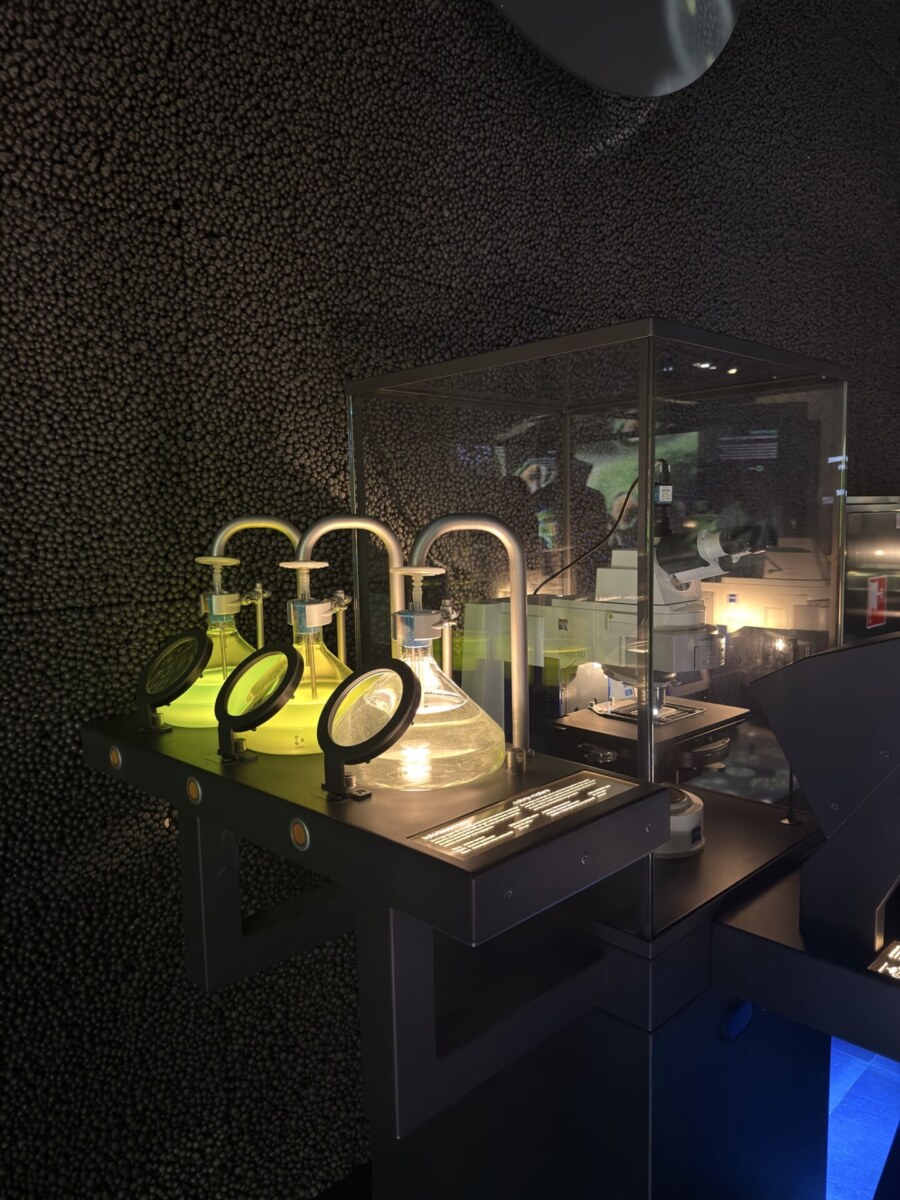
Living microbes under working microscopes, roughly thirty species of them, alongside interactive displays and a glass-walled laboratory where technicians work in front of you. It is a small museum by Amsterdam standards, laid out over two floors, and it is dense rather than sprawling. Everything on show is too small to register with the naked eye, and the argument the building makes is that these organisms are essential to life on Earth rather than a byword for disease: they keep you healthy, they make cheese and bread and beer, and some are now studied for their appetite for plastic.
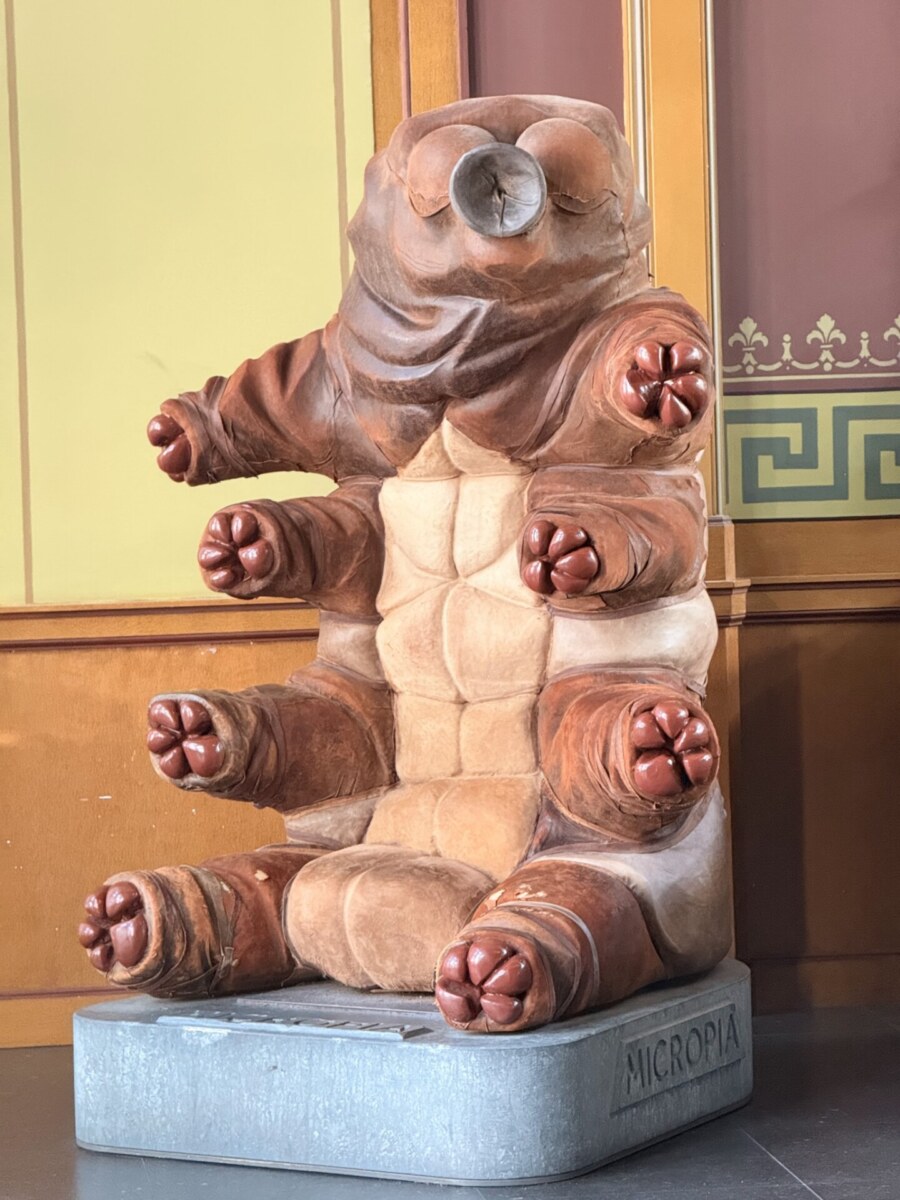
Stepping inside during our September 2026 visit, the experience begins with a life-sized sculpted tardigrade (water bear) seated on an exhibition plinth, illustrating the microscopic creature famous for surviving freezing, radiation, and the vacuum of space. From there, you enter a darkened, atmospheric gallery where exhibits glow in backlit showcases, spotlighted glass vitrines, and interactive microscopes.
The two exhibits everyone remembers are the Kiss-o-Meter, which counts the microbes two people trade during a kiss, and the body scanner, which maps what is living on and in you while you stand on it. Both are genuinely good, and both are usually where the queue is.
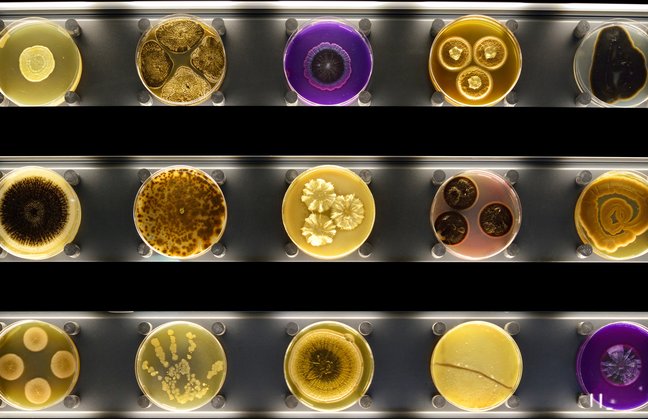
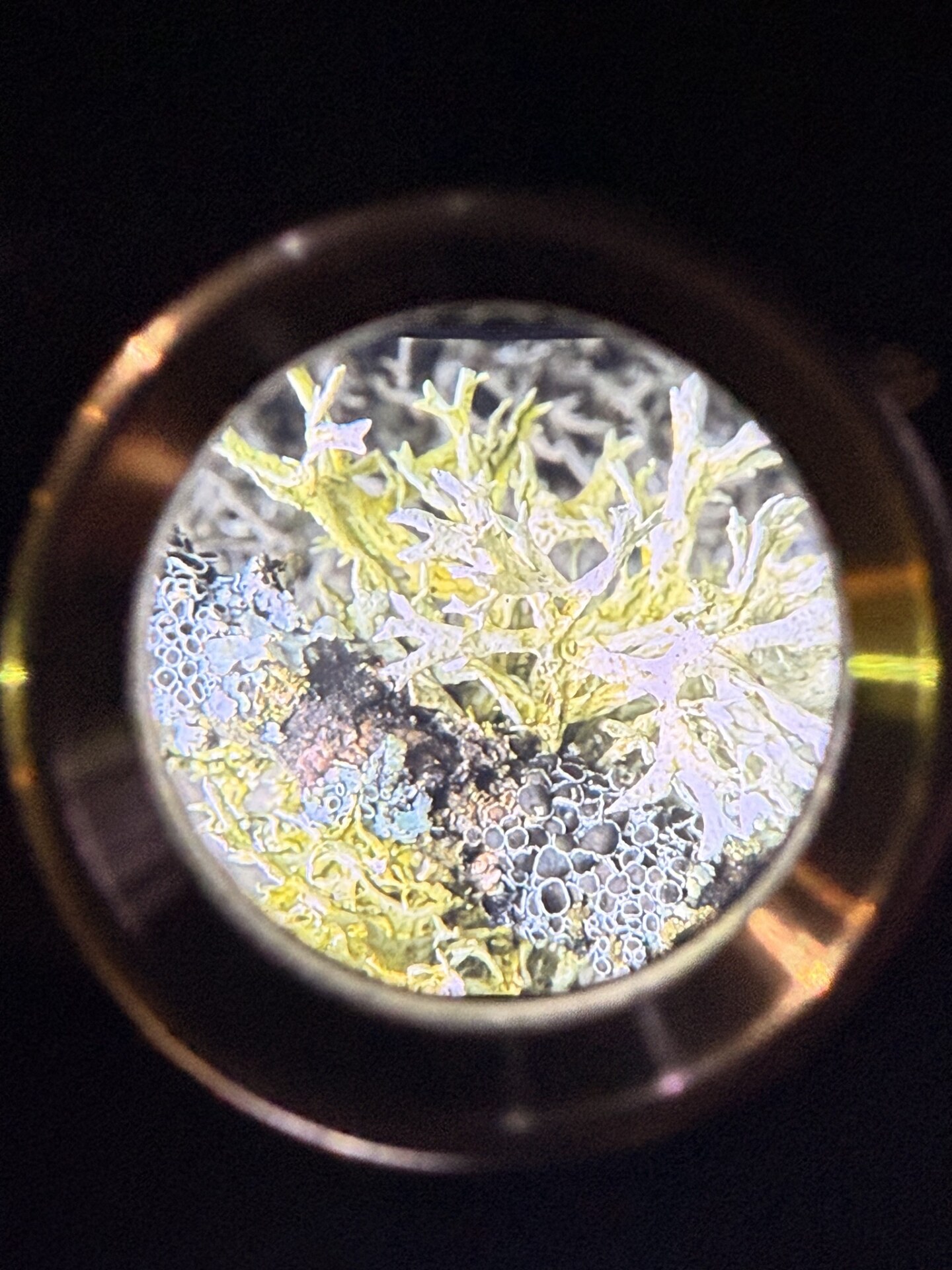
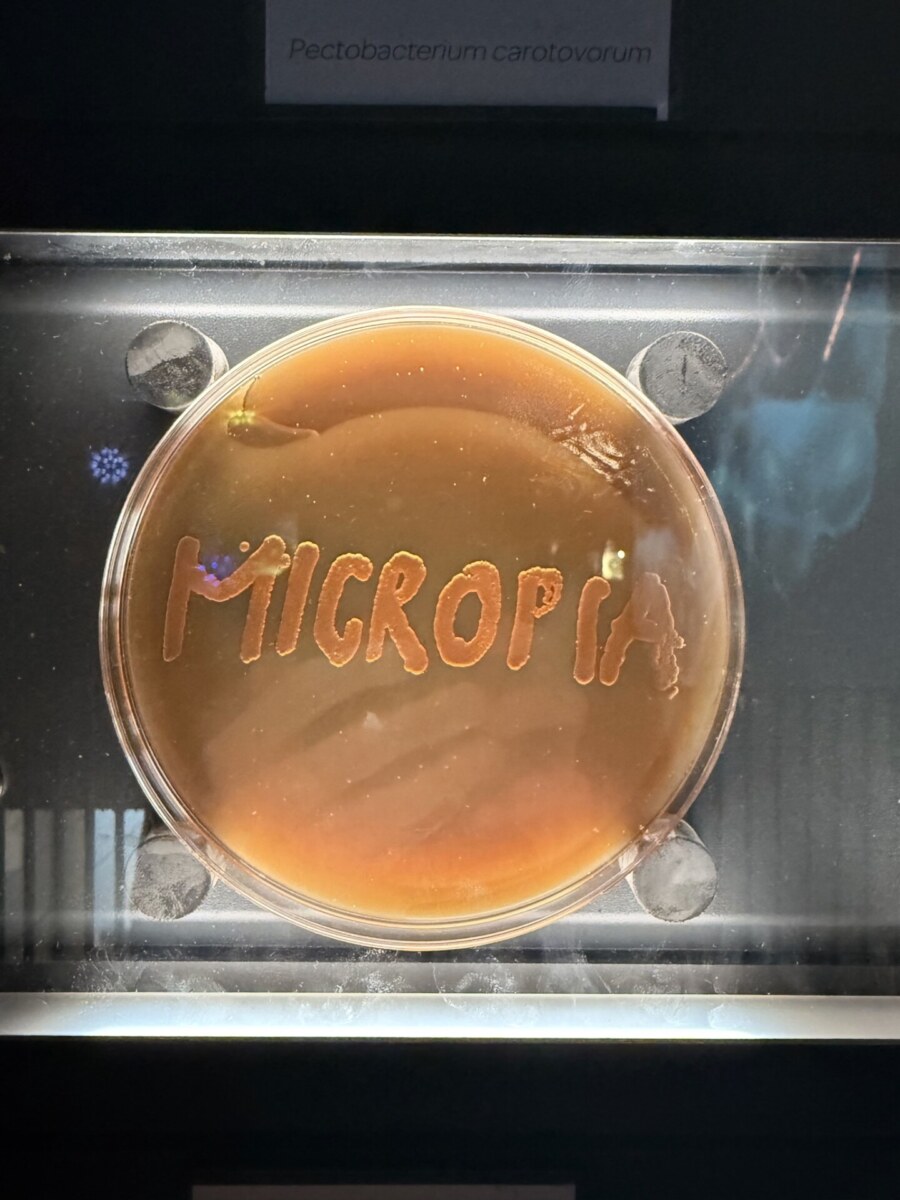
Beyond the headline interactives, our September visit confirmed that the quietest, most fascinating corners are the live ocular stations. Looking directly through the high-powered microscope eyepieces reveals thriving colonies of living lichen and fungal apothecia in startling detail. Nearby vitrines house agar petri dishes where live bacterial cultures—such as Pectobacterium carotovorum—have been deliberately grown to spell out the museum’s name.
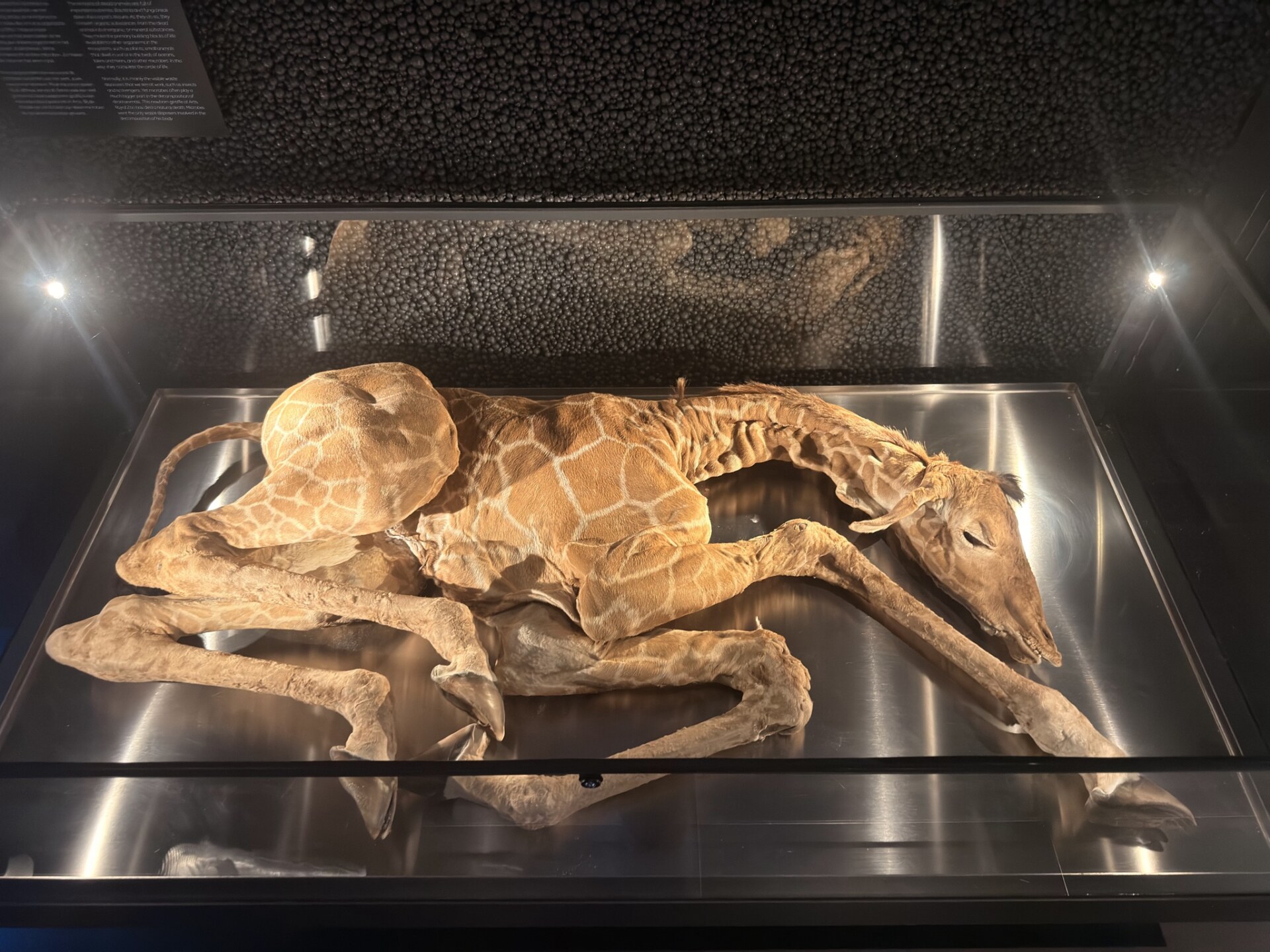
One of the most arresting installations in the main hall is a preserved deceased baby giraffe displayed in a sealed stainless steel vitrine. It confronts visitors directly with the biological reality of decomposition: without billions of bacteria and fungi breaking down organic matter, nutrient cycling on Earth would halt entirely.
The collection itself is the part most write-ups skip. ARTIS publishes the species list, and it includes the koji mould that makes miso and soy sauce (Aspergillus oryzae), the Penicillium moulds behind camembert and penicillin, which is as close as a museum case gets to the origin of modern medical antibiotics, the Lactobacillus that turns milk into yoghurt, the fungus leafcutter ants farm underground (Leucocoprinus gongylophorus), a nematode-trapping fungus (Drechslerella doedycoides), bioluminescent Photobacterium phosphoreum, sea sparkle, slime mould, lichens, Volvox, spirulina, and tardigrades, the water bears that survive vacuum and radiation.
What is on each day?
| Programme | When | What it is |
|---|---|---|
| The lab technician talks | Daily at 11:30, 13:30 and 15:30 | A short live talk from the working laboratory. Time your arrival for one of these; it is the best thing in the building and it is included |
| Microbe of the month | Changes monthly | One species pulled out and given its own display |
| Microbe stamp collecting | Whenever you visit | Pick up a stamp card at the ticket desk and collect stamps as you go. Aimed at children and quietly popular with adults |
Is Micropia worth it, and is it good for children?
It is worth it if you like being shown something you cannot see anywhere else, and it is poor value if you are hoping for a large museum to fill an afternoon. Micropia is compact. Most visitors report spending sixty to ninety minutes inside, and the price per hour is high compared with the Rijksmuseum unless you go slowly and use the microscopes properly.
For children, ARTIS gives a recommended age of about eight and up. Younger children get in free and will enjoy the stamp card and the scanner, but most of the interpretation is reading-heavy. Under-fives will run out of interest before you do.
The strongest version of a visit is the combi ticket: Micropia in the morning when it opens at 10:00, then out into ARTIS-Park for the afternoon, which stays open until 18:00. That order works better than the reverse, because the museum is the one that closes early.
When is the quietest time to go?
Straight after opening, on a weekday—or right at 10:00 AM on a weekend. On our Sunday morning visit in September 2026, arriving at 10:00 gave us an uninterrupted hour with almost no queues at the Kiss-o-Meter, body scanner, or microscope oculars. By 11:15 AM, tour groups and families began streaming in, and lines formed at the interactive stations.
Google’s aggregated visit data confirms this curve: Micropia starts filling from around 11:00, peaks between 12:00 and 15:00, and empties out again after 16:00. Saturdays and Sundays run notably busier than Monday to Friday through the middle of the day.
Because closing is 17:00 and the last stretch is the quietest, arriving at 15:30 gives you a calm ninety minutes if a morning start is not possible. ARTIS publishes a busy-day calendar for the whole site, which is worth a glance during Dutch school holidays.
How do you get to Micropia?
| Route | Detail |
|---|---|
| Tram 14 | Runs to the stop ARTIS/Holocaustmuseum, directly in front of the ARTIS main entrance. Trams 7 and 19 also stop nearby |
| Metro 51, 53, 54 | Waterlooplein is the nearest station, then about 10 to 15 minutes on foot |
| Bus 42 | From Amsterdam Centraal to Kadijksplein, then a ten-minute walk |
| Bike | Racks on the Plantage Kerklaan directly outside. An OV-fiets from Centraal or Amstel station is about ten minutes’ ride |
| Car | ARTIS has its own car park with twelve EV charging points: €17.50 a day for visitors, €15 for members, €6.98 an hour otherwise |
Arriving from Schiphol, take the train to Amsterdam Centraal, which runs several times an hour and takes about 15 to 20 minutes, then tram 14 from outside the station. There is no direct service from the airport.
The tram stop was renamed ARTIS/Holocaustmuseum after the Nationaal Holocaustmuseum opened across the road, so older directions naming an “Artis” stop are pointing at the same place under an old name. Pay for trams and metro by tapping a contactless bank card; see our OVpay guide for how that works and what it costs.
If the ARTIS car park is full you will be sent on to Q-Park Oostpoort, which offers ARTIS visitors €21.50 when booked in advance and sits twenty minutes’ walk away, or Markenhoven at €22.50 if you get your entry ticket stamped at the ARTIS desk, ten minutes’ walk. Given those numbers and central Amsterdam traffic, the tram is the sane option.
Is Micropia accessible?
Largely, yes. The entrance is wheelchair accessible, there is a lift between floors, an accessible toilet, handrails on the stairs, and assistance dogs are welcome. The Hidden Disabilities Sunflower lanyard is recognised. There are accessible parking bays on the ARTIS car park and two free ones on the Plantage Kerklaan.
What is not provided, per I amsterdam’s accessibility record: no hearing loop, no audio description, no braille or large-print material, no guide lines for blind visitors, no sign-language interpretation and no designated low-stimulus hours. Micropia is a dark, screen-lit building with a lot of small text, which is worth knowing in advance.
A short history of the museum
Micropia opened on 30 September 2014, unveiled by Queen Máxima, after a development period ARTIS puts at around twelve years. The exhibition design is by the Amsterdam studio Kossmann.dejong, working with Berlin’s ART+COM Studios on the media exhibits. It was conceived as a zoo for organisms too small to see, a piece of public microbiology rather than a lecture, run by the same institution that has kept larger animals on the same block since 1838, and it remains the only museum of its kind anywhere in the Netherlands or the wider world.
Frequently asked questions
Do I need to book Micropia in advance?
Booking ahead is recommended and it is cheaper: the online price is always below the desk price. I amsterdam City Card holders do not need to reserve and can have the card scanned at the entrance.
Is Micropia free with the Museumkaart?
Yes. Museumkaart, ICOM and VriendenLoterij VIP-KAART holders all enter free, as do children up to and including 12.
How long do you need at Micropia?
An hour to ninety minutes for most people. Allow two hours if you intend to use every microscope and read every panel, and try to land on one of the 11:30, 13:30 or 15:30 lab talks.
Is Micropia the same as ARTIS Zoo?
They are run by the same institution and stand on the same block, but they are separate visits with separate tickets and different hours. Micropia has its own entrance on the Artisplein and does not require a zoo ticket.
Is Micropia open on Mondays?
Yes, every day of the week, 10:00 to 17:00.
Can you see live microbes at Micropia?
Yes. The collection is living, kept and cultured on site, and shown through working microscopes. ARTIS publishes the current species list, which runs to roughly thirty organisms and changes as cultures are rotated.
Verified in person: September 2026, and what we checked
This guide was thoroughly audited and verified during an in-person visit on 6 September 2026. We walked the entire museum floor, tested the ticketing and entry procedures on the Artisplein, photographed the live exhibits, and re-verified all operational details against ARTIS’s current 2026 systems.
- In-person visit (September 2026): Verified the separate Artisplein public entrance, confirmed zero queue at 10:00 AM, and tested the working ocular microscopes, Kiss-o-Meter, and body scanner.
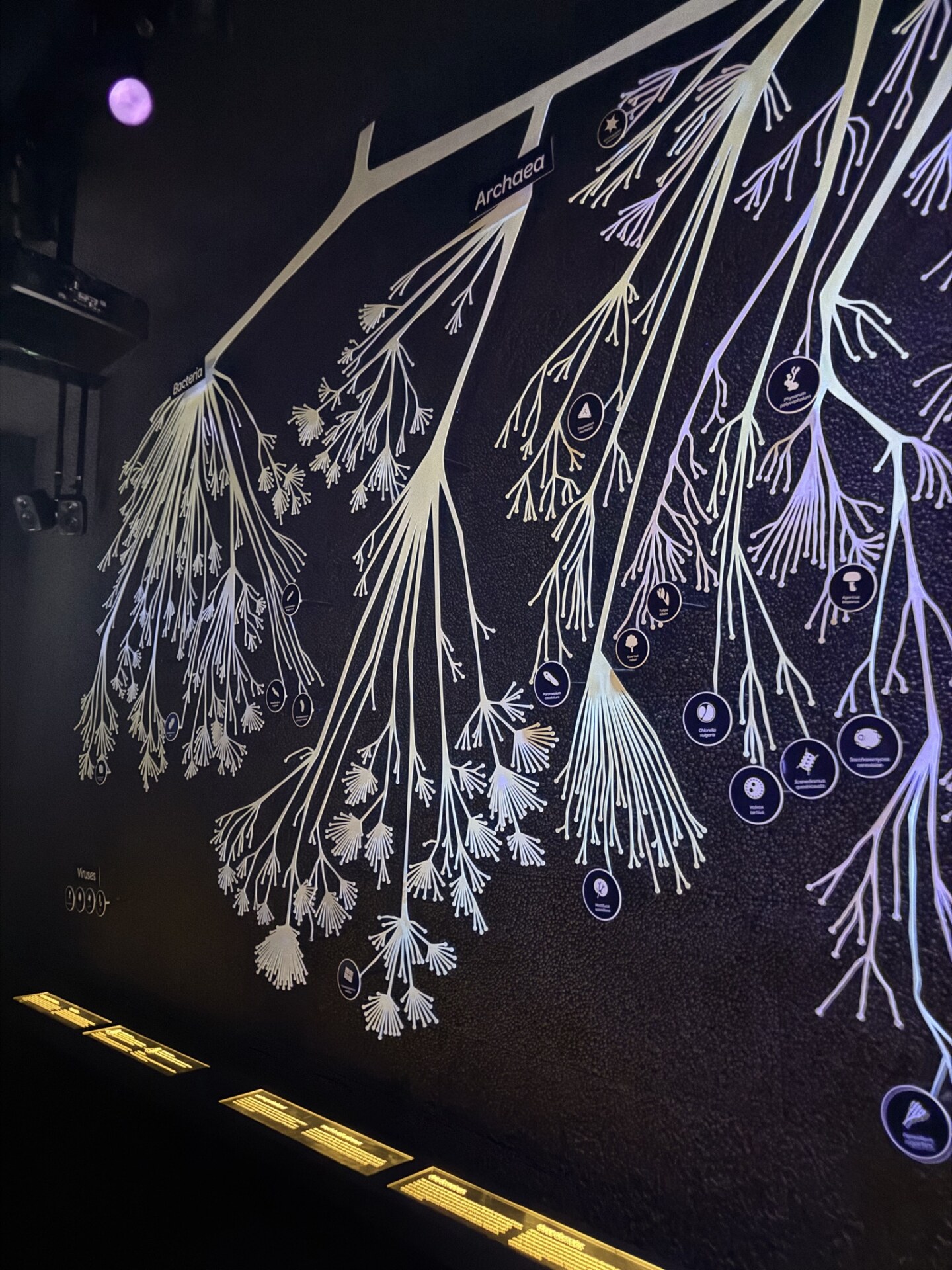
- Original photography added: Uploaded 8 authentic high-resolution images of the entrance, tardigrade sculpture, live agar cultures, laboratory station, phylogenetic tree, decomposition display, and mycelium biomaterials.
- Confirmed ticketing: Verified online admission from €17.00 vs. €18.00 at the desk; confirmed free entry for children under 13 and Museumkaart holders.
- Transit verified on the ground: Confirmed Tram 14 stops directly in front of the gate at ARTIS/Holocaustmuseum, and contactless OVpay operates at every transit point.
- Exhibits audited: Inspected the living culture collection, including Pectobacterium carotovorum, lichen ocular stations, and the Bouwen met schimmels biomaterials showcase. Dropped obsolete references to unverified displays.
- Address verified: The public entrance is reached via the open Artisplein off Plantage Kerklaan; no zoo turnstiles or zoo admission required.
Sources: ARTIS opening hours, ticket prices, accessibility and directions pages (artis.nl); the ARTIS-Micropia collection list; the I amsterdam ARTIS-Micropia listing. Prices vary by date, so treat the online figures as a floor and check the price calendar before you book.
Nearby and worth pairing with a visit: the Hortus Botanicus a few minutes’ walk away, the wider Amsterdam-Oost district, our guide to wildlife you can find in Amsterdam without a ticket, and the city’s best picnic spots for lunch afterwards.