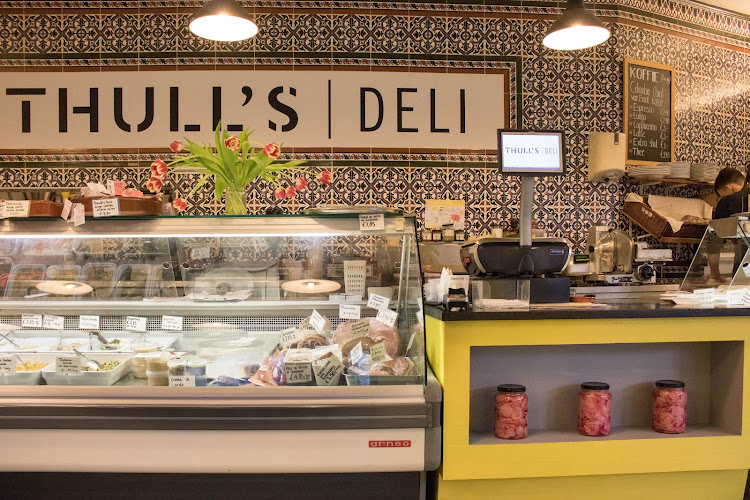
Thull’s Deli sits on a quiet corner of Amsterdam’s Oostelijk Havengebied and does something few delis attempt: it builds almost everything on the counter around fermentation. It works as a traiteur, a lunch counter, a delicatessen and a wine shop at once, and the jars lining the shelves are made by the same team that hands you a sandwich.
The short version: Thull’s Deli is at C. van Eesterenlaan 21–23 in Amsterdam-Oost, open Monday to Saturday from 10:00 to 20:00 and Sunday from 11:00 to 20:00. Come for house-fermented pickles, sauerkraut, kimchi, water kefir and kombucha, plus sourdough sandwiches and ready-made traiteur dishes.
How a home experiment became an Amsterdam institution
Simone van Thull spent roughly 25 years in hospitality in Utrecht and Amsterdam before she ever sold a jar of pickles. She started working in restaurants at 15, managed a large Utrecht brasserie by 23, and later moved to Amsterdam to run West Pacific at the Westergasterrein before helping launch several other well-known venues.
Fermentation arrived through her own kitchen. While catering private parties, she began experimenting at home with fermented vegetables and with kombucha, the drink brewed using a scoby culture. Her reasoning was practical rather than trend-driven: fermentation is a route to self-sufficiency, and almost any firm vegetable or fruit can be turned into something new. When the flat filled up with jars and bottles, a shop became the obvious next step.
That first shop opened on the Pretoriusstraat in 2015, run single-handedly, serving lunch and selling products. Because a specialist fermentation shop was genuinely novel in the Netherlands at the time, restaurants and culinary journalists took notice quickly. After five years she went looking for a partner to scale up and found Elja Keizer, who already ran an established delicatessen on the Van Eesterenlaan. The two businesses merged at the start of 2020 as Thull’s Deli, weeks before the pandemic closed the hospitality trade.
The timing turned out to work in their favour. With restaurants shut, people cooked more ambitiously at home and came looking for both the ferments and good wine. Today the business employs around 17 people, her son Max Blokland manages the shop floor, and most of the wholesale production happens in a workshop on the nearby Veemarktterrein.
What Thull’s actually makes in-house
The house range is broader than “pickles.” Expect sauerkraut in several styles, fermented gherkins, kimchi, beet pickles, mustard, chilli jam, piccalilli, preserved lemons and seasonal experiments that change with what the vegetable suppliers have.
The drinks cabinet follows the same logic. Water kefir is a Thull’s signature, classically built from organic lemons and dried figs and finished with a two-day second fermentation that gives it its fizz. Kombucha sits alongside it, and both are sold to drink in or take away.
Fermented or pickled? The distinction matters
Not every jar on the shelf is a live ferment, and that is deliberate. Fermented items such as sauerkraut and salt-brined gherkins rely on lactic acid bacteria converting sugars into acid, which produces the sour, layered, slightly funky flavour. Vinegar-pickled items, including many mixed pickles and piccalilli, get their acidity added rather than grown. Both belong in a Dutch pantry, but they taste different and behave differently in a dish, so it is worth asking the counter staff which is which.
On nutrition, Thull’s is careful and so are we. Live ferments contribute to gut flora, but Dutch and EU rules do not permit formal health claims on these products, and Van Thull is explicit that she sells them because they taste good first. Treat any digestive benefit as a plausible bonus, not the reason to buy.
What to order for lunch
The lunch counter is where the ferments earn their keep. The pastrami sandwich with house sauerkraut and brined gherkin is the one regulars name first. The grilled sourdough toastie with aged Dutch cheese and kimchi is the other reliable order, and hummus with the pink mixed pickles is the vegetarian default.
Traiteur dishes rotate but follow a house pattern: salads built around smoked red beet pickle, sauerkraut casseroles, classic lasagne, New York split pea soup, chicken tajine with preserved lemon and harissa. Everything is made in-house, from the dishes to the condiments, and it is all sold to take home and reheat.
What to buy to take home
If you are building a first basket, these are the serving suggestions the staff tend to give:
- Sauerkraut: the house benchmark, and the product that got Thull’s into other kitchens, including a pop-up choucrouterie that served it as the centrepiece.
- Red beet pickle: works in salads with goat’s cheese and walnuts, and cuts through lentils or oily fish.
- Yellow beet and chioggia pickles: milder and prettier on a cheese board, and useful where red beet would stain the plate.
- Fermented gherkins: the sandwich pickle, and the one to compare against a supermarket jar if you want to taste what fermentation actually does.
- Water kefir: the low-commitment introduction, lightly sweet and sparkling rather than vinegary.
- Chilli jam or mustard: the easiest gifts, and the items most likely to get used up by someone who is unsure about ferments.
The shop also stocks other makers’ work, including rillettes, white soy sauces and Spanish ciders, plus cheese, tinned fish, bread and a wine selection that leans toward bottles that can handle acidity on the plate.
The book, the workshops and the wider network
Van Thull’s Inmaak & fermenteerbijbel collects more than 230 recipes, from sauerkraut and preserved cherries to pumpkin pickles and mountain-tea kombucha, with step-by-step method photography. It was nominated for the Gouden Kookboekprijs 2024 and has gone into a second printing. You can buy it at the deli or through Dutch bookshops.
Workshops are periodic rather than permanent, so check the shop’s news page or Instagram before planning a visit around one. Past sessions have covered sauerkraut and water kefir, and Van Thull has taught at fermentation festivals and cooking schools elsewhere in the country.
Two details say a lot about how the business operates. Wholesale orders to shops and restaurants are delivered by Roads, an Amsterdam daytime activities project that creates work for people in mental health recovery. And ingredients are sourced as locally as possible, from wholesalers, importers and producers in and around Amsterdam.
Visiting Thull’s Deli
| Address | C. van Eesterenlaan 21–23, 1019 JK Amsterdam (Oostelijk Havengebied, Amsterdam-Oost) |
| Hours | Monday–Saturday 10:00–20:00; Sunday 11:00–20:00 |
| [email protected] | |
| Good for | Lunch, takeaway traiteur dishes, edible gifts, wine, catering |
| Second location | Zeedijk 71 — temporarily closed; check the shop’s channels for pop-up events |
Getting there is straightforward: the Van Eesterenlaan is a short walk or cycle from Amsterdam Centraal along the eastern docklands, and tram and bus connections serve the Oostelijke Handelskade. Weekend early afternoons are the busiest window, so go before 14:00 or after 16:00 if you want time to taste and talk.
One practical tip: ask before you buy. The staff will open jars to taste, and the difference between a salt-fermented gherkin and a vinegar pickle is far easier to understand on a spoon than on a label.
Frequently asked questions
What are Thull’s Deli’s opening hours?
Thull’s Deli at C. van Eesterenlaan 21–23 is open Monday to Saturday from 10:00 to 20:00 and Sunday from 11:00 to 20:00.
Is the Zeedijk location still open?
No. The second Thull’s location at Zeedijk 71 is temporarily closed. The shop announces pop-up events on its website and Instagram.
Are all of Thull’s pickles fermented?
No. Some products are live lactic-acid ferments, such as sauerkraut and brined gherkins, while others are vinegar-pickled, such as piccalilli and some mixed pickles. Staff can tell you which is which.
Who owns Thull’s Deli?
Simone van Thull founded the business on the Pretoriusstraat in 2015 and merged it with Elja Keizer’s Van Eesterenlaan delicatessen at the start of 2020 to form Thull’s Deli.
Does Thull’s do catering and wholesale?
Yes. Thull’s operates as a traiteur, caters events, and supplies its fermented product line to shops and restaurants, with deliveries handled by the Roads daytime activities project.
Where can I buy the Inmaak & fermenteerbijbel?
Simone van Thull’s Inmaak & fermenteerbijbel, with more than 230 recipes, is sold at the deli and through Dutch bookshops. It is in its second printing and was nominated for the Gouden Kookboekprijs 2024.