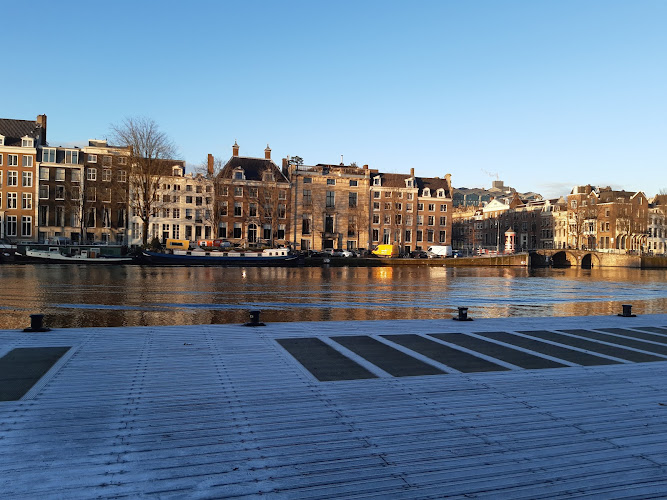
The Six Collection (Collectie Six) is a private family art collection kept in a house at Amstel 218 in central Amsterdam, where descendants of Jan Six still live. Its best-known work is Rembrandt’s 1654 Portrait of Jan Six, which has stayed in the family since it was painted. Visits are free, but you can only get in by requesting a guided visit through the collection’s website, and visits run only on weekday mornings.
What the Six Collection is
This is a lived-in home on the Amstel, not a public museum with a ticket desk. The collection has been at Amstel 218 since 1915 and is held by family foundations. It now includes more than 3,000 paintings, drawings, etchings and other artefacts, along with the family archive. Descendants of Jan Six still curate it.
The house has no sign. Visitors ring the bell at street level, leave coats and bags in the cloakroom, and tour the rooms with a guide. The family lives on the upper floors, which is why the rules are stricter than at a regular museum. Because the house received Dutch government subsidy but kept visitor numbers low, public access was debated for decades. Under the arrangement that settled it, top pieces have been lent to the Rijksmuseum for several months every other year.
Who was Jan Six?
Jan Six (1618–1700) was the son of Jean Six (1575–1617), a cloth merchant, and Anna Wijmer (1584–1654). His father died two months before he was born. His mother bought a house on the Kloveniersburgwal in 1632, and Jan grew up there, a short walk from Rembrandt’s house on the Jodenbreestraat. He studied liberal arts and law in Leiden from 1634.
In the 1640s Six was friends with Rembrandt van Rijn and the poet Joost van den Vondel. He wrote plays, most famously Medea, published in 1648 with an etching by Rembrandt. In 1655 he married Margaretha Tulp, daughter of Nicolaes Tulp, the Amsterdam mayor and surgeon known from Rembrandt’s Anatomy Lesson. That connection helped Six get city posts, first as a magistrate. In 1691, at 73, he became mayor of Amsterdam himself.
The friendship with Rembrandt didn’t last. In 1653 Rembrandt borrowed 1,000 guilders from the Six family, and when it became clear he couldn’t repay the loan, the two drifted apart. The family kept his work anyway. They still own the painted portrait and the original copper plate of the 1647 etching.
Rembrandt’s Portrait of Jan Six
The Portrait of Jan Six (1654, oil on canvas, 112 × 102 cm) is the reason most people visit. Rembrandt painted his friend pulling on a glove, with a red cloak over one shoulder. Up close, the gold braid on the cloak turns out to be just a few quick strokes of paint. That loose brushwork has been read in different ways: some art historians think Rembrandt left the painting unfinished, and others see it as a deliberate, very free technique. The portrait is also unsigned, and that is usually put down to the friendship between painter and sitter.
The painting has never been sold. In 1915, the art historian Cornelis Hofstede de Groot ranked it among Rembrandt’s six most important portraits.
Anna Wijmer and the 1647 etching
The collection also holds a 1641 portrait of Jan’s mother, Anna Wijmer, attributed to Rembrandt. A 1987 account of a visit described the two portraits hanging on facing walls of the front room, which looks out over the Amstel. Rembrandt had already portrayed Jan Six in 1647, in an etching that shows him reading by an open window. You can see an impression of that print in the Rijksmuseum collection, and the Rembrandt House Museum tells the story of the etching and the friendship.
Other artists and the Van Winter paintings
A large part of what makes up the collection today arrived in 1822, when Hendrik Six (1790–1847) married Lucretia Johanna van Winter (1785–1845). Their two family collections were combined, and 171 of the paintings came from the Van Winter side. Lucretia’s sister Anna Louisa married Willem van Loon and took the other half of their father’s collection. A few of those paintings can still be seen at Museum Van Loon on the Keizersgracht.
Besides the Rembrandts, the house holds 17th-century Dutch paintings, furniture and decorative objects gathered over generations. Painters represented include:
- Frans Hals, the Haarlem portrait painter
- Ferdinand Bol, a pupil of Rembrandt
- Govert Flinck, another painter trained in Rembrandt’s circle
- Paulus Potter, known for his paintings of animals and pastures
- Gerard ter Borch, Nicolaes Maes and Michiel van Mierevelt
The Vermeers that left the family
Some listings say the Six Collection has a Vermeer. It doesn’t anymore. Two Vermeers came into the family through the Van Winter marriage: The Milkmaid, which Lucretia van Winter had collected herself, and The Little Street. Jan Six tried to sell The Little Street at auction in April 1921, but bidding didn’t reach his price. Oil executive Henri Deterding then bought it privately for 625,000 guilders and gave it to the Dutch state. Both paintings are now in the Rijksmuseum.
The house at Amstel 218
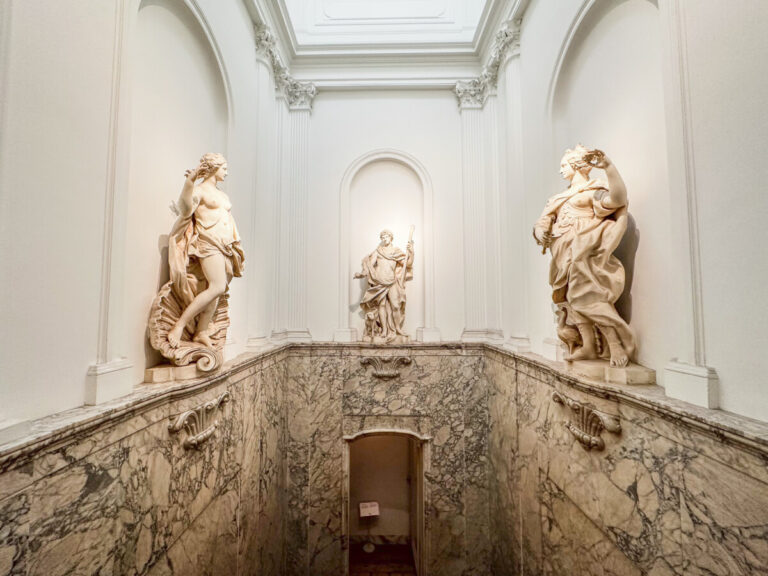
The family used to live and keep the collection at Herengracht 509–511. In 1915 that house was demolished to widen the Vijzelstraat. The City of Amsterdam offered Amstel 218 in exchange, and the old interiors, including the wall panelling, were moved to the new house. That is why the rooms feel older than the move date suggests.
How to visit the Six Collection
There are no tickets to buy. You fill in the visit request form on the collection’s website. If a place is available, you get a personal invitation for a guided visit. Check the official site for the latest rules before you plan around a date, because the details below come from the collection’s listings and from visitor reports.
| Detail | What to expect |
|---|---|
| Address | Amstel 218, 1017 AJ Amsterdam |
| How to get in | Request a visit through the form at collectiesix.nl, then wait for your invitation |
| When | Weekday mornings only (listed as 10:00–12:30); visitors report tours starting at 10:00 and 11:00 |
| Closed | Weekends and public holidays |
| Price | Free |
| Length | About one hour, always with a guide |
| Language | English or Dutch |
| How far ahead | Visitors report booking six weeks to two months ahead |
| House rules | No photography; coats and bags go in the cloakroom; visitors report that children under 10 are not admitted |
Tips before you go
- Send your request as soon as your travel dates are fixed, and give more than one possible weekday.
- Choose English as your tour language when you book if you don’t speak Dutch.
- Arrive on time and travel light, since everything except what you’re wearing goes in the cloakroom.
- Pair the visit with the Rijksmuseum, where you can see the Jan Six etching and both former Six Vermeers, or with Museum Van Loon for the other half of the Van Winter story.
Is the Six Collection worth the effort?
If you care about Rembrandt or about how Amsterdam’s old regent families lived, it is a rare chance to see a major portrait in the family home that still owns it, with a small group and a guide. It is less suited to travellers who want to decide on the day, families with young children, or anyone who wants photos. For those visitors, the Rijksmuseum is the easier way to see Rembrandt in Amsterdam.
Frequently asked questions
Is the Six Collection still open to visitors?
Yes. Some older travel sites say it has closed, but the collection still accepts visit requests through its website for weekday mornings. It is closed on weekends and public holidays.
Is there a Vermeer at the Six Collection?
No. The Milkmaid and The Little Street both once belonged to the Six family, but they left the collection long ago. Both now hang in the Rijksmuseum.
Is the Six Collection the same as the art dealer Jan Six?
No. The Six Collection is the historic family collection at Amstel 218. Jan Six XI is a present-day descendant who runs his own art dealership, separate from the collection.