Our Lord in the Attic Museum is worth visiting if you want a compact Amsterdam museum that combines a 17th-century canal house, domestic history and a complete Catholic house church in a single visit. Most people need about 50 to 90 minutes. The included audio tour adds essential context, but the historic route has many narrow, steep stairs.
Visitor information at a glance
| Official name | Museum Ons’ Lieve Heer op Solder (Our Lord in the Attic Museum) |
|---|---|
| Address | Oudezijds Voorburgwal 38–40, 1012 GD Amsterdam |
| Opening hours | Daily, 10:00–18:00. On the first Sunday of each month from September through June, general museum entry starts at 11:00 because of church services. Check the official opening-hours page for exceptions. |
| Ticket prices | Adults €18; children ages 5–17 €7.50; children up to age 4 free. See the current ticket page. |
| Passes | Museumkaart and the I amsterdam City Card include admission. Reserve a free time slot when possible. |
| Time needed | About 50 minutes to 1.5 hours |
| Audio tour | Included with admission and available in multiple languages |
| Accessibility | The historic house has many narrow, steep stairs. Wheelchairs, walkers and prams cannot enter the monument. |
| Last verified | 14 August 2026 |
Opening hours, holiday closures and prices can change. Check the museum’s official website shortly before your visit, especially if you are going on a public holiday or the first Sunday of the month.
Why this museum is worth visiting
The strongest part of the experience is the sequence of the route. You enter what appears to be a typical Amsterdam canal house, move through living rooms, kitchens and sleeping alcoves, and only later reach a surprisingly large church across the upper floors. The building itself explains the history more effectively than a display of objects alone.
This is a focused historic-house museum rather than a large art collection. The €18 adult ticket is easiest to justify when you use the included audio tour and allow at least an hour. Travelers primarily seeking major Dutch paintings, step-free access or a quick photo stop may prefer another museum.
What you will see inside
A preserved 17th-century canal house
The route passes historically furnished domestic rooms, kitchens, bedsteads and narrow corridors. These spaces show how a wealthy merchant family lived and how the private home connected to a much larger religious community.
A church built across three attics
Catholic merchant Jan Hartman bought the canal house and two adjoining properties in 1661. He combined their upper levels to create the church, which was inaugurated in 1663. The resulting space could accommodate about 150 worshippers and includes an altar, galleries and rooms used by clergy and the congregation. The museum’s monument history explains how the three buildings were joined.
Religious objects and an included audio tour
The collection includes paintings, prints, books, liturgical objects, garments and devotional items connected with Amsterdam’s Catholic history. The multilingual audio tour explains both the household and the church; a children’s version is available in Dutch and English. Temporary presentations may add another layer to the visit, so check the museum agenda before arriving.
Why was a Catholic church hidden in an Amsterdam house?
After Amsterdam’s Protestant takeover in 1578, Catholics could no longer worship publicly in the city’s former Catholic churches. Private house churches, known in Dutch as schuilkerken, offered an alternative. City authorities generally knew these places existed but tolerated them as long as worship remained out of public view.
That distinction matters: Our Lord in the Attic was concealed from the street, but it was not necessarily secret from city officials. The building shows how legal restriction, private belief and practical tolerance coexisted in 17th-century Amsterdam. For related religious sites, see our guide to Catholic churches in Amsterdam.
The church served its congregation until 1887. The Catholic association De Amstelkring then saved the property from demolition and opened it to the public as a museum in 1888, making it Amsterdam’s second-oldest museum after the Rijksmuseum. The site also holds the European Heritage Label for its connection to freedom of conscience and religion.
Tickets, opening hours and the best time to visit
Current admission and accepted passes
- Adults: €18
- Children ages 5–17: €7.50
- Children up to age 4: free
- CJP, Dutch Student Card or ISIC: €11.50; other foreign student cards are not listed as accepted
- Museumkaart and I amsterdam City Card: free admission
Online booking is recommended rather than compulsory. It secures a time slot, while walk-up tickets may also be available. The museum is cashless and currently accepts major credit and debit cards except American Express, so bring another card if you plan to buy at the entrance.
When to go
Regular hours are 10:00–18:00 every day. From September through June, general admission starts at 11:00 on the first Sunday of the month because Mass is held in the attic church. The museum is closed on 25 December and 27 April. Because the rooms and staircases are narrow, an opening-time weekday slot is the safest choice for more space; this is practical guidance rather than published crowd data.
Accessibility, stairs and museum rules
The historic canal house is not step-free. Visitors climb several narrow and sometimes steep 17th-century staircases, and wheelchairs, walkers and prams cannot enter the monument. The newer entrance building, temporary exhibition area, café and shop are accessible by elevator and include an adapted toilet. Contact the museum before visiting if anyone in your group has mobility or sensory-access needs; its accessibility page lists current options.
- Bags: backpacks and bags larger than A4 size must go in the free lockers. The museum cannot store large suitcases.
- Food and drinks: not permitted in the historic rooms, including water bottles.
- Photography: personal photos are normally allowed without flash; temporary exhibitions may have additional restrictions.
- Children: family activities and a children’s audio tour are available, but prams cannot enter the historic house.
- Footwear and equipment: stiletto heels, sharp-tipped walking sticks and umbrellas are not allowed on the original floors.
Review the museum’s visitor rules before bringing luggage, mobility equipment or young children.
How to get there
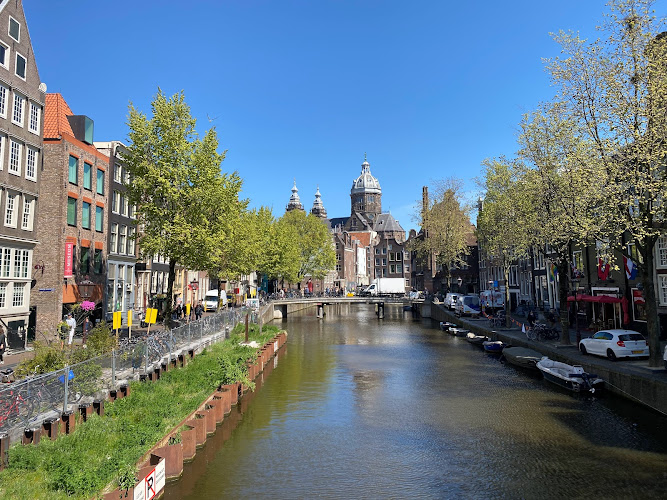
Museum Ons’ Lieve Heer op Solder is at Oudezijds Voorburgwal 38–40 in Amsterdam’s old city centre. It is about a five-minute walk from both Amsterdam Centraal and Nieuwmarkt metro station. Trams 4, 14 and 24 stop at Dam, also roughly five minutes away on foot. The official practical-information page includes transport and parking guidance.
The location makes the museum easy to combine with a walk through De Wallen or another historic church in the old centre. Allow additional time if you need to store a suitcase at Centraal Station before the visit.
Who will enjoy it—and who may want to skip it?
A good fit for
- Travelers interested in Amsterdam’s religious and social history
- Visitors who prefer smaller, focused museums
- Architecture and historic-interior enthusiasts
- Families with school-age children who can manage the stairs
- Anyone looking for an indoor activity near Amsterdam Centraal
Consider another option if
- You cannot comfortably climb repeated narrow staircases
- You need to keep a wheelchair, walker or pram with you
- You are carrying large luggage
- You mainly want a broad collection of Dutch master paintings
- You have less than 45 minutes and do not plan to use the audio tour
Bottom line
Choose Our Lord in the Attic Museum for architecture, domestic history and a clear explanation of Amsterdam’s religious past in one compact route. Allow at least an hour, use the audio tour and confirm the official hours before setting out.
Frequently asked questions
Is Our Lord in the Attic Museum worth visiting?
Yes, if you want a focused museum that combines a preserved canal house, domestic life and Amsterdam’s religious history. The visit is strongest when you use the included audio tour and allow about an hour.
How long should I allow?
The museum recommends allowing roughly 50 minutes to 1.5 hours. One hour is usually enough for the main route, while history-focused visitors may want longer.
Is the audio tour included?
Yes. A multilingual audio tour is included with admission, and a children’s version is available in Dutch and English.
Should I book tickets in advance?
Advance online booking is recommended because it secures a time slot, although walk-up tickets may also be available at the museum.
Is admission free with the I amsterdam City Card or Museumkaart?
Yes. The museum currently lists both the I amsterdam City Card and Museumkaart for free admission. Reserving a free time slot is still advisable.
Is the historic house wheelchair accessible?
No. The monument contains many narrow, steep stairs, and wheelchairs, walkers and prams cannot enter the historic route. The newer entrance building, café, shop and temporary exhibition area are accessible by elevator.
Is Mass still held in the attic church?
Yes. Mass is normally celebrated on the first Sunday of the month except in July and August. Check the museum agenda before visiting because dates and public-entry times can change.