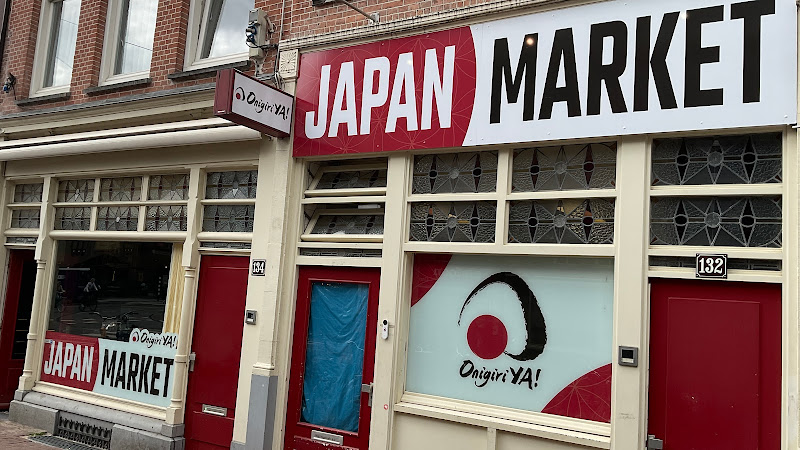
Onigiri YA! – Japan Market is a small Japanese takeaway and mini-market in Amsterdam’s De Pijp neighbourhood, specialising in hand-shaped rice balls made fresh each day. It sits at Ferdinand Bolstraat 132–134 and is open daily from 11:00 to 20:00, though popular fillings often sell out well before closing.
What Onigiri YA! actually is
This is a compact takeaway counter with a small retail section, not a sit-down restaurant. The kitchen makes onigiri fresh on site, and the shop has operated on a takeaway-only basis, with fresh onigiri and miso soup prepared daily. Reviewers consistently describe it in the same three words: simple, excellent, cheap.
Onigiri is not sushi. It is a rice ball made from steamed Japanese rice, shaped by hand, usually filled with fish, meat or vegetables and often wrapped in a sheet of nori. In Japan it fills the same everyday role that a sandwich does in the Netherlands, which is why it works so well as a walking lunch between Albert Cuypmarkt and the Rijksmuseum.
Menu and prices
The daily line-up rotates, and the shop posts it on its own site and social channels each morning. A representative day in late August 2026 looked like this:
| Item | Price |
|---|---|
| Grilled salmon | €3.00 |
| Tuna mayo | €3.00 |
| Spicy shrimp | €3.50 |
| Chicken karaage | €3.00 |
| Unagi (freshwater eel) | €3.00 |
| Ikura (salmon roe) | €3.20 |
| Devil’s | €3.00 |
| Chashu (braised pork) | €3.00 |
| Kombu (vegan) | €3.00 |
| Umeboshi, edamame, kampyo, wasabi & crispy (vegan) | €2.80 |
| Wakame & tofu miso soup (vegan) | €2.50 |
Two onigiri plus a miso soup lands around €8, which makes this one of the cheapest genuinely satisfying lunches in central Amsterdam. Four or more of the daily fillings are typically plant-based, so vegans usually have real choice rather than a single token option.
What to order first
- Grilled salmon — the default benchmark order, and the one reviewers name most often.
- Devil’s — the house speciality regulars point newcomers toward.
- Umeboshi — intensely sour pickled plum, the most traditional and most polarising filling on the board.
- Ikura — salmon roe, the small splurge at €3.20.
- Miso soup — order it alongside rather than instead of a second rice ball; it is the cheapest item on the menu.
Best time to visit
Go early. The single most repeated piece of practical advice about this shop is that it sells onigiri until supplies run out, and by evening the best fillings are frequently gone. Arriving between opening at 11:00 and the start of the lunch rush gives you the full board rather than whatever is left.
- 11:00–12:00: full selection, shortest queue, best odds on limited fillings such as ikura and unagi.
- 12:00–14:00: busiest stretch, with local office and market traffic; the counter is small, so expect to wait outside.
- Mid-afternoon: calmer browsing, but the board is already thinning.
- After 18:00: viable only if you are flexible about what you get.
Because it is takeaway-focused, weather matters more here than at a normal café. There is minimal shelter, so on wet days plan where you will actually eat — Sarphatipark is a two-minute walk and has covered benches.
How to get there
The address is Ferdinand Bolstraat 132–134, 1072 LR Amsterdam, in Oude Pijp. Note that some directory listings and older reviews still show Ferdinand Bolstraat 37, an earlier address on the same street; if you follow an outdated pin you will end up a few hundred metres north of the current shop.
- Metro: De Pijp station on the Noord/Zuidlijn (line 52) exits directly onto Ferdinand Bolstraat, a short walk away.
- Tram: tram 24 runs the length of Ferdinand Bolstraat; Marie Heinekenplein and Albert Cuypstraat are the closest stops.
- On foot: roughly 10 minutes south of the Rijksmuseum and Museumplein.
- By bike: straightforward, but Ferdinand Bolstraat is a busy corridor — use the marked racks on the side streets rather than blocking the pavement.
- Journey planning: the Dutch national 9292 app or NS/GVB apps give live tram and metro times.
Don’t confuse it with the other onigiri shops
Amsterdam’s onigiri scene has expanded, and several similarly named businesses now trade nearby. Onigiri YA! is the long-established De Pijp original; the others are separate operations with separate menus and hours.
| Business | Location | Notes |
|---|---|---|
| Onigiri YA! – Japan Market | Ferdinand Bolstraat 132–134 | The subject of this guide; daily 11:00–20:00 |
| Wagaya Onigiri | Wibautstraat metro station, plus Ferdinand Bolstraat 50H and Waterlooplein | Newer multi-site operator, made throughout the day |
| Little Tokyo | Singel 412 | Takeaway with bento, mochi and rotating specials |
| Shilla | Gelderlandplein 187 | Korean-Japanese supermarket; onigiri sell out by afternoon |
| Hinata | Westerstraat 40H | Sit-down restaurant with ramen and several onigiri types |
Practical tips
- Check the day’s board before you commit — the filling list changes daily and the posted menu is the reliable source.
- Bring a card and a little cash; small independent Amsterdam shops vary in what they accept, and Dutch venues frequently take Maestro or debit only rather than credit cards.
- Buy two or three at a time. At under €3.50 each, a single rice ball is a snack rather than a meal.
- Eat onigiri the day you buy it. Refrigeration hardens the rice and ruins the texture.
- Bring your own bag — Dutch retailers charge for carrier bags by law.
- Combine the stop with Albert Cuypmarkt, a five-minute walk east, for a cheap two-stop food circuit.
Frequently asked questions
Where is Onigiri YA! in Amsterdam?
Onigiri YA! – Japan Market is at Ferdinand Bolstraat 132–134, 1072 LR Amsterdam, in the Oude Pijp neighbourhood. Some older listings still show Ferdinand Bolstraat 37, a previous address on the same street.
What are the opening hours?
The shop is open every day from 11:00 to 20:00, but it sells fresh onigiri only while supplies last, so the selection narrows through the day.
How much does onigiri cost there?
Most onigiri are priced between €2.80 and €3.50, and miso soup is €2.50, which makes a filling lunch possible for well under €10.
Are there vegan or vegetarian options?
Yes. Plant-based fillings such as kombu, umeboshi, edamame, kampyo and wasabi crispy appear regularly, and the wakame and tofu miso soup is also vegan.
Is onigiri the same as sushi?
No. Onigiri is a hand-shaped ball of steamed rice with a filling, eaten as an everyday snack or lunch in Japan, while sushi uses vinegared rice and is a distinct preparation.
Can you sit down and eat there?
It functions primarily as a takeaway counter with a small Japanese grocery section, so most customers eat elsewhere. Sarphatipark nearby is a convenient spot.