Diemerpark is Amsterdam’s largest city park: roughly 90 hectares (about 220 acres) of dune-like grassland, reed beds and marsh between the IJburg islands and the Amsterdam-Rhine Canal, or about twice the size of the Vondelpark. It is free, open year-round, and has no cafe, kiosk or shop inside it. It is also built on top of a sealed former chemical-waste landfill, which is why you cannot dig, barbecue, fish, fly a kite or hammer in a tent peg. The park officially opened on 3 March 2004.
A park built on a capped toxic landfill
The Diemerzeedijk, the old sea dike running through the site, was built in the 13th century to hold back the Zuiderzee, according to Waterschap Amstel, Gooi en Vecht. The land outside that dike had a much rougher 20th century. From 1959 to 1982 the City of Amsterdam tipped roughly four million cubic metres of household waste and construction rubble here, and until 1973 chemical waste from the Amsterdam port area was burned on site. That combination made the Diemerzeedijk one of the most polluted places in the Netherlands.
When the city began planning the IJburg housing islands, the contaminated ground had to be dealt with. Rather than excavate waste whose exact composition was never fully mapped, engineers isolated it: steel sheet piling was driven around the tip and the whole area was capped with a sand-bentonite-polymer sealing layer and covered with soil. Groundwater inside the enclosure is held lower than the water outside it and is pumped out and treated, so contaminated water cannot escape. Monitoring is permanent, not temporary.
The city’s own description is blunt and useful: the waste sits inside what amounts to an upturned box, and the park on top is effectively a very large roof garden. That single fact explains almost every rule and every design quirk you will notice on a visit, including why large trees only grow along the northern edge and in the strip beside the Amsterdam-Rhine Canal, where the sealing layer is not underneath.
Park rules that actually matter here
These are municipal rules tied to the sealing layer and to the park’s protected nature status, not general park etiquette. The City of Amsterdam publishes them on its Diemerpark page.
- No digging, by people or by dogs, and no driving in stakes or tent pegs. Anything that punctures the cap is a problem.
- No barbecuing anywhere in the park.
- No kite flying, because high-voltage pylons cross the park.
- No fishing in the park’s ponds and ditches.
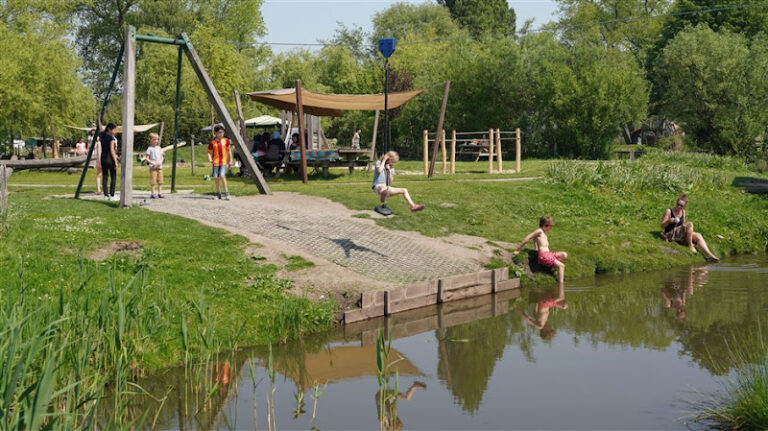
- Swimming is allowed only at the small beach on the IJmeer side, not in the inland water bodies.
- Dogs must be leashed except in the designated off-leash zones described below.
- Most of the park is designated struingebied, meaning you may roam off the paths, but the marshy southeastern tip is largely inaccessible and is left to develop on its own.
Dog zones, the beach and swimming
Amsterdam-Oost reorganised the dog areas in 2024 into three categories: zones where dogs are not allowed, free off-leash zones, and the rest of the park where a leash is required. The off-leash areas are the hill in the middle of the park plus two strips at the entrances from the Oeverzeggestraat and from Rietlandeiland Oost. A dedicated dog swimming spot was added at the jetty on the northeast side.
The sandy beach faces the IJmeer with a view back toward IJburg, and it is the only legal swimming spot inside the park. Under the municipal designation, dogs are banned from the beach from 1 April to 30 September; outside that window they may swim there. Bring your own food and drink: there is no beach cafe, and the only catering inside the park is the sports clubs’ canteens. The nearest cafes and restaurants are along the IJburglaan and at the IJburg shopping centre, a short walk or ride from the western entrance. Public toilets are limited, so check the city’s public-toilet map before a long visit with kids.
Wildlife: what you can realistically see
Diemerpark has the highest biodiversity of any Amsterdam park. Around 200 bird species have been recorded over the years, but the number that matters for a visit is smaller: roughly 60 species breed here, including the largest concentration of Dutch Red List breeding birds in the city. Amsterdam-Oost lists nightingale, icterine warbler, cuckoo, kestrel, linnet, Savi’s warbler and willow tit among them.
The park is a national hotspot for the grass snake, which is non-venomous and harmless to people, and for the natterjack toad. Foxes, stoats, shrews, bats and large numbers of rabbits also live here; the rabbit grazing is part of what gives the central mounds their dune-like look. Around 200 plant species have been counted, including marsh helleborine, southern marsh orchid and bee orchid. The strip between the Diemerzeedijk and the Amsterdam-Rhine Canal functions as an ecological corridor within the Dutch National Ecological Network, linking North Holland to the Flevopolders, and it holds the park’s only mature trees and the Akkerswade pond with its large reed field.
For a low-effort way to learn what lives here, look at the painted manhole covers along the paths: each one shows an animal found in the park, and the free “Verborgen Dieren Diemerpark” app explains them.
Things to do
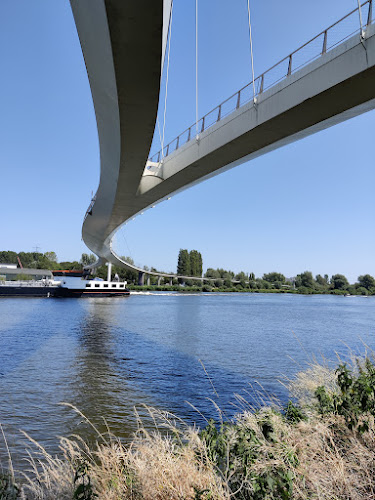
The path network is the main attraction. The largest loop is about five kilometres, the hard-surfaced paths suit road cycling, skating and running, and the flat terrain plus the 780-metre Nesciobrug make it a favourite of Amsterdam runners. Cyclists can continue east along the dike toward Muiden.
On the west side, Sportpark IJburg has three football pitches and three hockey fields, home to AFC IJburg and AHC IJburg, with matches most weekends during the season. There is an open-air theatre in the park; programming is occasional rather than scheduled, and the Diemerpark theatre festival of street performance, music, puppetry and dance last ran on 9 September 2012. Volunteer nature work days, including grass snake egg counts, are organised through the Vrienden van het Diemerpark association.
How to get to Diemerpark
The park sits in Amsterdam-Oost and has no car access for general visitors, so plan on tram, bike or foot.
| Route | Details | Good to know |
|---|---|---|
| Tram 26 | From Amsterdam Centraal toward IJburg. Useful stops: Vennepluimstraat, Diemerparklaan and Lumierestraat | From Vennepluimstraat it is roughly a 10-minute walk to the west entrance via the Oeverzeggestraat bridge |
| Bicycle | About 7 to 8 km from Amsterdam Centraal, typically 25 to 35 minutes | Bring a lock; there is no guarded parking inside the park |
| On foot from IJburg | Bridges connect the park directly to the Rieteilanden | The shortest approach if you are already on the islands |
| Nesciobrug | 780-metre cycling and walking bridge over the Amsterdam-Rhine Canal, open since 2006 | The longest bridge of its kind in the Netherlands; car-free approach from the Watergraafsmeer side |
| Diemerzeedijk | Dike path from the Diemen and Muiden side | Scenic and exposed to wind; the historic route into the park |
| Car | Sportpark IJburg lot, about 42 spaces, entered only via Oeverzeggestraat | Open on match days only, paid, four-hour maximum. When full, use the IJburg shopping centre garage and walk about 10 minutes |
Check current stops and departures on the GVB travel information site, since IJburg’s tram infrastructure has been extended as the islands grow.
Best time to visit
The park is open all year and has no gates or admission. Late April through June is the strongest window: nightingales and warblers are singing, the orchids flower in the damper sections, and the grassland is green before midsummer dries it out. July and August suit beach visits and long evenings, but the open terrain has little shade.
Autumn brings colour along the canal strip, where the only large trees stand, and better light for photography. Winter is bare, windy and quiet, which is when the waterbirds on the Akkerswade pond and the IJmeer are easiest to see. Weekend afternoons in good weather are the busiest, partly because of matches at the sports park; a weekday morning gives you a near-empty park and better wildlife odds. Dress for open water: there is no shelter in the middle of the park when the wind comes off the IJmeer.
Practical details at a glance
| Location | Between IJburg and the Amsterdam-Rhine Canal, Amsterdam-Oost |
|---|---|
| Size | About 90 hectares (220 acres), Amsterdam’s largest park |
| Opened | 3 March 2004, after soil remediation from 1998 to 2001 |
| Admission and hours | Free, unfenced, open all year |
| Food and drink | None in the park except sports club canteens; nearest options on the IJburglaan |
| Swimming | Beach on the IJmeer side only |
| Dogs | Leashed except in three off-leash zones; banned from the beach 1 April to 30 September |
| Prohibited | Digging, barbecuing, fishing, kite flying, tent pegs and stakes |
| Accessibility | Flat, with paved main paths suitable for wheelchairs and strollers; side trails are unpaved and can be muddy |
Frequently asked questions
Is Diemerpark free to visit?
Yes. Diemerpark is a free public park with no gates or ticket, open all year, in Amsterdam-Oost.
Can you swim in Diemerpark?
Swimming is allowed only at the small sandy beach on the IJmeer side of the park. Swimming in the park’s inland ponds and ditches is not permitted.
Why can’t you dig or pitch a tent in Diemerpark?
The park sits on a former household and chemical waste landfill that was sealed with sheet piling and a waterproof capping layer between 1998 and 2001. Digging, stakes and tent pegs could damage that cap, so they are prohibited for people and dogs alike.
Are dogs allowed off leash in Diemerpark?
Only in the designated off-leash areas: the hill in the centre of the park and two strips at the Oeverzeggestraat and Rietlandeiland Oost entrances. Elsewhere dogs must be leashed, and dogs are not allowed on the beach from 1 April to 30 September.
Is there a cafe or toilet in Diemerpark?
There is no cafe or kiosk in the park apart from the sports club canteens, and toilets are limited. Bring your own food and water, or use the cafes and shops along the IJburglaan.