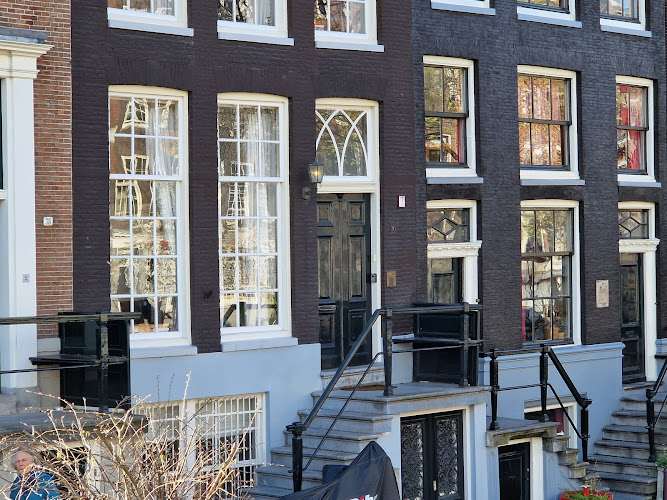
Reguliersgracht 36 stands as one of Amsterdam’s most distinctive canal houses and a genuine piece of cinema history. This slender black-façaded building with crisp white window frames served as the exterior of Tiffany Case’s apartment in the 1971 James Bond film Diamonds Are Forever, marking Sean Connery’s return to the role of 007.
The house occupies a prime position on one of Amsterdam’s most photogenic canals, where the intersection with Keizersgracht offers the famous view of seven bridges stretching in a perfect line. For film enthusiasts and architecture lovers alike, this location delivers a rare combination: authentic Golden Age heritage fused with Hollywood glamour.
Cinematic history at Reguliersgracht
In July 1971, the production crew of Diamonds Are Forever descended on Amsterdam to film key scenes involving Bond’s encounter with the diamond smuggler Tiffany Case, played by American actress Jill St. John. Director Guy Hamilton chose Reguliersgracht 36 for the exterior shots of Tiffany’s apartment, with the camera capturing Bond’s arrival in a yellow Triumph Stag as he drove along the canal from the south, crossing the small bridge at Keizersgracht before reaching her door.
The film shows Bond, disguised as smuggler Peter Franks, ascending a few steps and ringing the doorbell. The camera then zooms up to the third floor, where Tiffany’s apartment is located. When the real Peter Franks arrives later in the film, the same exterior appears in night shots that precede the famous elevator fight sequence.
All interior scenes, including that elevator confrontation, were filmed in studio sets at Pinewood rather than inside the actual building. The house’s characteristically narrow Amsterdam proportions made interior filming impractical—a limitation that production notes confirm influenced this decision. The building retains its original appearance and remains virtually unchanged from how it looked in the film more than fifty years ago.
Diamonds Are Forever was Connery’s sixth and final official Bond film for Eon Productions. He had returned to the role after George Lazenby’s single appearance in On Her Majesty’s Secret Service, reportedly receiving a then-record fee of $1.25 million (which he donated to his Scottish education charity) plus 12.5% of profits.
A canal house on the Seven Bridges view
The building at Reguliersgracht 36 dates from the 17th century, constructed during Amsterdam’s massive Golden Age canal expansion that transformed the city. The Reguliersgracht was completed and ready for development by September 1664 as part of the fourth major city extension (vierde uitleg). The canal takes its name from the Reguliers monastery that stood nearby from 1394 to 1592, at what is now the intersection of Keizersgracht and Utrechtsestraat.
This particular stretch of canal became legendary for its visual impact. From the bridge where Reguliersgracht meets Herengracht, seven bridges align in a row, creating one of Amsterdam’s most photographed perspectives. The view is best appreciated from a canal boat at water level, where the arched bridges form a perfect sequence. At dusk, when streetlights illuminate the bridges and surrounding canal houses, the scene becomes particularly striking.
The Reguliersgracht nearly vanished in 1901. City planners proposed filling it in to create a southern traffic route, but fierce opposition led by artist Jan Veth and the Amstelodamum heritage society prevented the demolition. Veth’s passionate pamphlet Stedenschennis (City Destruction) galvanized public opinion, and the Seven Bridges were saved. The entire canal belt became a UNESCO World Heritage Site in 2010, recognized for its exceptional urban planning and hydraulic engineering.
Directly opposite the Tiffany Case House sits the Seven Bridges Hotel, a 300-year-old boutique property occupying an authentic canal house. The hotel takes its name from the famous viewpoint and provides guests with an immersive experience of historic Amsterdam living, complete with antique furnishings from the Baroque, Louis XVI, Empire, Biedermeier, and Art Deco periods.
Visiting the Tiffany Case House
The house is located within the Grachtengordel (Canal Ring), making it accessible from multiple directions through Amsterdam’s compact city center.
Getting there
Tram line 4 provides the most convenient access. From Amsterdam Centraal, take tram 4 toward Station RAI and alight at either the Keizersgracht stop (then walk 100 meters right along the canal) or Rembrandtplein (then walk toward the canal district). The journey from Central Station takes approximately 8 to 10 minutes.
The area is also ideal for walking. From Rembrandtplein, head west toward the canals and turn south along Reguliersgracht. From Leidseplein, walk east through the canal district. The relatively flat terrain and dedicated cycling lanes make bicycles an equally practical option.
Finding the exact location
The house is the second building from the corner where Reguliersgracht meets Keizersgracht. Its black façade with white window frames and decorative gable make it readily identifiable against the lighter-colored neighboring properties. The stepped gable (trapgevel), a hallmark of Dutch Renaissance architecture, adds visual interest to the roofline.
Photography tips
For the best exterior shots, position yourself on the bridge where Reguliersgracht intersects Keizersgracht. Early morning offers softer light and fewer passersby, while late afternoon delivers the warm golden tones that make Amsterdam’s canal scenes so appealing. During the December-January Amsterdam Light Festival, bridge illuminations add another dimension to evening photography.
The canal remains an active residential street with boats passing regularly. Patience often rewards photographers with both clear shots and authentic local atmosphere—vessels gliding under bridges, cyclists crossing, and residents going about daily routines.
Beyond the film location
The surrounding neighborhood offers several worthwhile stops within a short walk.
The Rembrandtplein lies a few minutes east, a lively square named after the 17th-century master painter who lived nearby. The area buzzes with cafés, restaurants, and nightlife venues. A bronze statue of Rembrandt stands at the square’s center, surrounded by smaller statues depicting figures from his famous painting The Night Watch.
Heading south, the De Pijp neighborhood presents a different character entirely. This former working-class district has evolved into one of Amsterdam’s most vibrant areas, known for its multicultural dining scene and independent boutiques. The Albert Cuyp Market, operating since 1905, stretches along Albert Cuypstraat with more than 260 stalls selling everything from fresh produce and Dutch street food to clothing and household items. The market runs Monday through Saturday and serves as the neighborhood’s energetic heart.
The canal district itself rewards extended exploration. Walking along Keizersgracht or Herengracht reveals the architectural variety of Amsterdam’s merchant houses—elaborate gables, hoisting beams that once lifted cargo, and the characteristic forward lean built into façades to prevent goods from scraping against walls during loading operations.
Practical information
Address: Reguliersgracht 36, 1017 LS Amsterdam
Access: The Tiffany Case House is a private residence and cannot be entered. Visitors can view the exterior from the street and canal banks.
Best viewing times: The house is visible around the clock. For photography, early morning or late afternoon light proves most flattering. Evening illumination during winter months creates atmospheric conditions.
Nearest public transport: Tram line 4 to Keizersgracht or Rembrandtplein
Nearby attractions:
- Seven Bridges viewpoint (immediate vicinity)
- Rembrandtplein (5-minute walk)
- Magere Brug / Skinny Bridge (10-minute walk)
- De Pijp and Albert Cuyp Market (15-minute walk)
- Herengracht and the Golden Bend (10-minute walk)
- Museum of the Canals at Herengracht 386 (15-minute walk)
Frequently asked questions
Can you go inside the Tiffany Case House?
No. The building remains a private residence and is not open to visitors. The exterior can be viewed freely from the street and adjacent bridges.
Were any interior scenes filmed in Amsterdam?
All interior sequences in Diamonds Are Forever, including the elevator fight between Bond and Peter Franks, were shot at Pinewood Studios in England. Only exterior footage was captured at Reguliersgracht 36.
What floor was Tiffany Case’s apartment?
In the film, Tiffany’s apartment is depicted as being on the third floor. The camera zooms up to this level when Bond arrives at the building.
Is the Seven Bridges view nearby?
Yes. The famous Seven Bridges view is visible from the intersection of Reguliersgracht and Herengracht, just steps from the Tiffany Case House. This perspective shows seven bridges aligned in a row along the canal—best appreciated from a boat at water level.
When was Diamonds Are Forever filmed in Amsterdam?
The Amsterdam scenes were shot in July 1971. Documentary footage from journalist Simon van Collem captured Sean Connery and the production crew at work during this period.