The short version: The “Red Light District scam” almost always means street drug dealers. They stand in the dark alleys of De Wallen and near Centraal Station, whisper “coke, coke” or “xtc” as you pass, and sell crushed paracetamol, baking soda, or – in the worst cases – something genuinely dangerous. The single rule that keeps you safe: never buy anything off the street in Amsterdam. If you want cannabis, buy it inside a licensed coffeeshop. Everything sold on the street is either fake, illegal, or both.
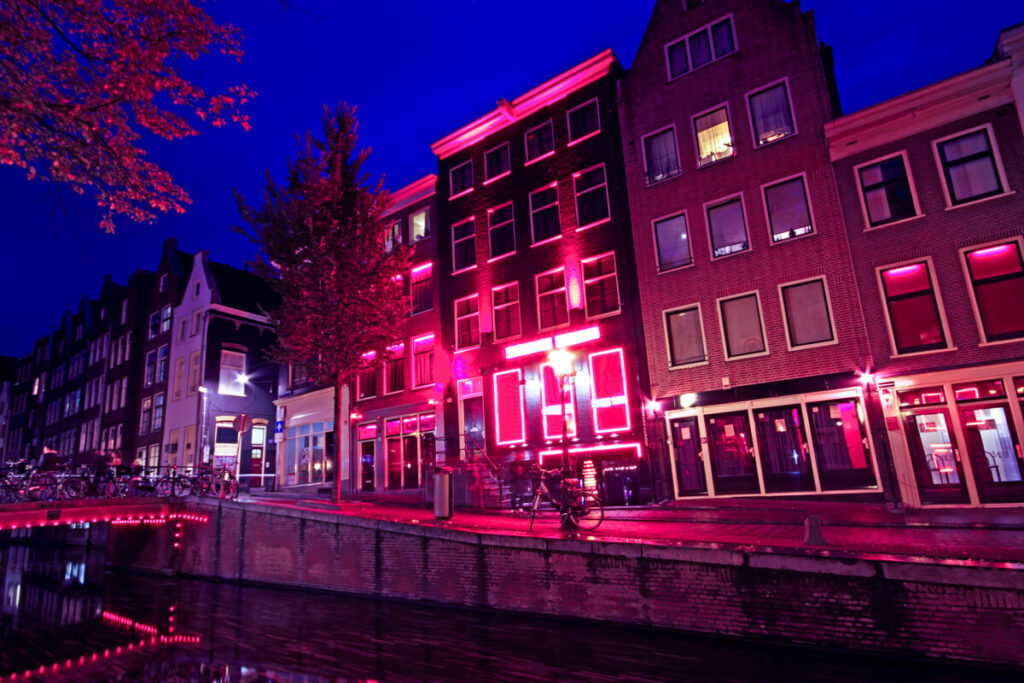
If you’re reading this on your phone while standing in the Red Light District feeling a little uneasy, here’s the reassurance you need: the area is busy, watched, and mostly safe, and the men whispering at you are running a predictable, avoidable scam. This guide explains exactly how that scam works, where it happens, why Amsterdam takes it so seriously, and the one-line rule that ends the problem entirely.
What Is the “Red Light District Scam”?
The most common Red Light District scam is street drug dealers selling fake or dangerous substances to tourists. These are not real suppliers – they’re opportunists working the crowds in Amsterdam’s Red Light District (known locally as De Wallen) and the surrounding nightlife streets. They target visitors who assume that because Amsterdam is relaxed about cannabis, buying “a bit of coke” on the street is normal here. It isn’t. Hard drugs are illegal under the Dutch Opium Act, and what changes hands on the street is rarely what was promised.
There’s a second scam tourists lump under the same search: the window overcharge, where a visitor agrees a price with a sex worker, hands over cash, and is then told the “time is up” or asked for more. We cover both below – but street dealers are the one you’re far more likely to meet.
How the Street Dealer Scam Works, Step by Step
The scam follows the same script every night. Recognising it is half the defence.
- The whisper. A man falls into step beside you in a quiet alley and mutters “coke, coke,” “charlie,” or “xtc, pills” under his breath. He won’t say much – he’s testing whether you slow down or make eye contact.
- The bait-and-switch. If you engage, he sells you a small wrap fast, in the dark, for €20-€50. Inside is almost never a real drug. The classic fillers are crushed paracetamol or aspirin, baking soda, or ground-up headache tablets sold as cocaine, and pressed sugar or caffeine sold as “MDMA.”
- The intimidation. This is the part Reddit threads warn about. If you realise it’s fake and ask for your money back, the dealer is suddenly joined by two or three “friends” who appear from nearby doorways. The goal is to surround you, make you feel outnumbered, and get you to walk away rather than make a scene. Sometimes the same crew pickpockets you during the confusion.
Because the deal happens in seconds and the product is worthless, there’s no realistic way to “win.” Once cash leaves your hand, it’s gone – and arguing only escalates the intimidation step.

Why Street Drugs in Amsterdam Can Be Deadly: The 2014 “White Heroin” Deaths
The reason the city warns tourists so aggressively isn’t just lost money – it’s that you genuinely don’t know what you’re buying. In late 2014, a street dealer in Amsterdam’s city centre sold white heroin disguised as cocaine, and it killed people. Two British tourists died in a hotel room in November 2014 after snorting it as if it were coke, and authorities linked roughly three deaths and several hospitalisations to the same “killer coke” over a few weeks.
A dealer known in court as Flip S. was later sentenced to a year in prison for selling white heroin as cocaine to Danish tourists who ended up in hospital. Tellingly, street white heroin costs roughly three times what cocaine does – so investigators doubted the substitution was an accident. The lesson stands either way: a powder bought from a stranger in the dark can contain anything, and the people selling it have no incentive to care what’s in it.
See Related: How to Get Around Amsterdam: Insider Secrets for Easy City Navigation
Where It Happens: Amsterdam’s Street-Dealer Hotspots
Street dealing clusters in a handful of predictable spots – almost all of them dark, narrow, or transitional areas where people are moving between bars and stations late at night. Be on higher alert in these places:
- The narrow alleys of De Wallen, especially the side lanes connecting the main canals around Oudezijds Achterburgwal and Oudezijds Voorburgwal – the heart of the Red Light District.
- Around Amsterdam Centraal Station late at night, where dealers catch tourists walking in from the last trains.
- The bridges and squares near Leidseplein and Rembrandtplein, the two big late-night drinking hubs, where intoxicated crowds make easy targets.
- Quiet stretches of the canal belt just outside the busy core, where a dealer can isolate you away from the crowds and cameras.
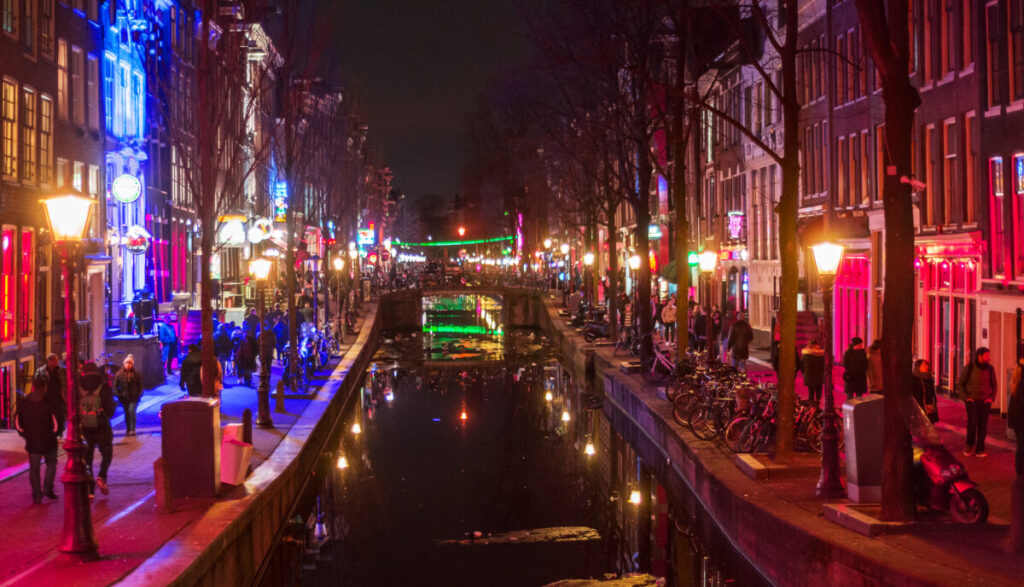
Pattern to remember: the busier and brighter the street, the safer you are. Dealers want you one turn away from the crowd, not in the middle of it.
The Other Red Light District Scam: Window Overcharging
The second scam tourists search for is the window overcharge. Sex work behind the famous windows is legal and regulated, and most interactions are straightforward – but a minority of disputes follow a pattern: a price is agreed at the window, money changes hands, and the visitor is then told the time is already up or pressured for extra cash. Reviews describe small “extras” of €5-€10 added after the fact, or a timer used to inflate the original quote.
Protect yourself the same way you would anywhere: confirm exactly what’s included and for how long before any money is handed over, and don’t pay upfront for vague terms. If something feels off, walk away before you pay, not after.
The Golden Local Rule: Never Buy Anything on the Street
Here’s the rule every Amsterdammer would give you, stated plainly: nothing sold on the street is worth buying. Break it down:
- Cannabis is the only thing you can legally buy – and only inside a licensed coffeeshop, never from a person on the street.
- Cocaine, MDMA, pills, ketamine and other hard drugs are illegal in the Netherlands. The Dutch tolerance policy covers soft drugs in coffeeshops only; it does not make street dealing legal or safe.
- Buying on the street marks you as an easy target. The moment you engage, you’ve signalled you’re a tourist willing to break the rules in a dark alley – exactly the person these crews look for.

Is the Red Light District Safe to Walk at Night?
Yes – the Red Light District is generally safe to walk at night, and it’s one of the most heavily policed and camera-covered parts of Amsterdam. The risks are nuisance crimes, not violent ones: pushy street dealers, pickpockets working the crowds, and aggressive drunk groups, especially late on weekends. Treat it like any busy nightlife district in a major European city. Stay on the main, well-lit canals, keep your phone and wallet secure, and you’ll be fine.
If you’re exploring the city after dark on your own, our solo travel guide to Amsterdam has more on staying confident and aware in the evening.
What to Do if a Street Dealer Approaches You
If a dealer whispers at you, do nothing that signals interest. The entire scam depends on a moment of engagement.
- Keep walking at the same pace. Don’t slow down or stop.
- Don’t make eye contact and don’t answer – not even “no thanks.” A reply is an opening.
- Don’t get drawn into “just look” or “check the quality.” Inspecting the product is how you get steered into a doorway or robbed.
- Head toward a crowd or a lit main street. Dealers disengage the moment you’re surrounded by people.
- If you feel genuinely threatened, call 112 (the EU emergency number) or step into an open bar or shop.
How Amsterdam Is Fighting Back
The city has stopped pretending the problem away. In April 2022, Amsterdam installed street signs and large electronic boards warning visitors against buying from street dealers, backed by the city’s health service (GGD), the addiction-care organisation Jellinek, and the police. In 2023 the city went further with its blunt “Stay Away” video campaign aimed at young British visitors. Jellinek even offers free, anonymous drug testing that doesn’t involve the police – a harm-reduction step that exists precisely because street product is so unreliable.
Researchers have found that even better lighting reduces dealer activity in the Red Light District – when an alley is brightly lit, dealers move on. It’s one more reason the well-lit canals are your safest route through De Wallen.
See Related: The Green Guide: A Sustainable Traveler’s Journey Through Amsterdam
A Smarter Way to See the Red Light District
If the idea of dodging whispers in dark alleys is putting you off, see De Wallen with a local guide instead. An organised, small-group walking tour keeps you on the right streets, explains the real history behind the windows, and means you’re never the lone tourist a dealer picks out – you’ll learn far more than you would wandering in on your own. Our full Red Light District guide covers the best way to visit, what’s worth seeing, and the etiquette to know before you go.
Whether you join a tour or explore solo, the playbook is the same: stick to the busy, well-lit canals, keep your phone and wallet zipped away from the crowds, and ignore anyone selling on the street. Do that and the Red Light District is simply one of the most fascinating corners of the city – not a place to be nervous about.
Frequently Asked Questions
Is it safe to walk in the Red Light District at night?
Yes. The Red Light District is generally safe to walk at night and is heavily policed and well covered by cameras. The main risks are nuisance crimes – pushy street dealers, pickpockets, and drunk crowds – not violence. Stay on the busy, well-lit canals, keep your valuables secure, and you’ll be fine.
What should I do if a street dealer approaches me in Amsterdam?
Keep walking, don’t make eye contact, and don’t reply – not even “no thanks.” Never agree to “check the quality,” and head toward a crowd or a lit main street. Engagement is what the scam depends on, so the safest response is no response.
Can you buy cocaine in Amsterdam?
No – cocaine and other hard drugs are illegal in the Netherlands. Anyone selling “coke” on the street is committing a crime and almost always selling a fake substance such as crushed paracetamol or baking soda. The Dutch tolerance policy only covers cannabis bought inside licensed coffeeshops.
Are the drugs sold by street dealers in Amsterdam real?
Usually not. Street “drugs” in the Red Light District are overwhelmingly fake – paracetamol, aspirin, baking soda, or caffeine sold as cocaine or MDMA. In rare but serious cases they’ve contained genuinely dangerous substances, which is why Amsterdam warns tourists never to buy them.
Where can you legally buy cannabis in Amsterdam?
Only inside a licensed coffeeshop. Coffeeshops are the single legal place to buy cannabis in Amsterdam, and they’re tolerated under Dutch policy. Cannabis sold by anyone on the street is illegal and unsafe.
Amsterdam’s real magic is its canals, museums, history, and coffeeshop culture – not a wrap of baking soda from a stranger in an alley. Skip the street dealers entirely, keep to the bright canals, and the Red Light District is just another fascinating, well-watched corner of one of Europe’s great cities.