
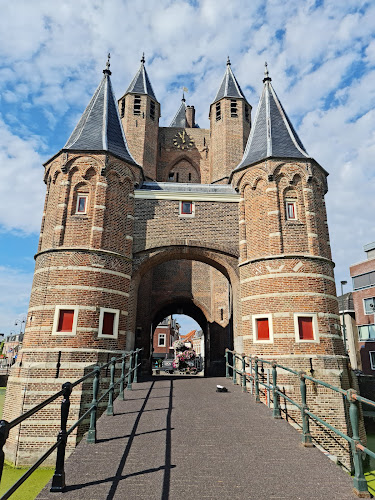
The Oude Stad (Old City) of Haarlem is the historic heart of this Dutch Golden Age city, with origins dating to the 10th century. By the 12th century, Haarlem had become a fortified town and residence of the counts of Holland, receiving city status in 1245.
After being recaptured by William of Orange in 1577, Haarlem entered a period of prosperity peaking in the 17th century as a refuge for Huguenots and an artistic center. Between the 16th and 17th centuries, it flourished as the artistic capital of the Dutch Golden Age, giving rise to masters like Frans Hals, Cornelis van Haarlem and Jan Steen.
The Grote Markt (market square) features the 13th-century town hall with 17th-century additions, the Vleeshal (Meat Market from 1603), and the magnificent Great Church (St. Bavokerk, 1397-1496) with its 80-meter tower and famous Christian Müller pipe organ from 1738.
Haarlem’s old town is characterized by numerous canals, gabled houses, and 19 hofjes – almshouses built around courtyards. The Hofje van Bakenes, founded in 1395, is the oldest remaining example. The city’s museums include the Frans Hals Museum with its important collection of Haarlem school paintings.